

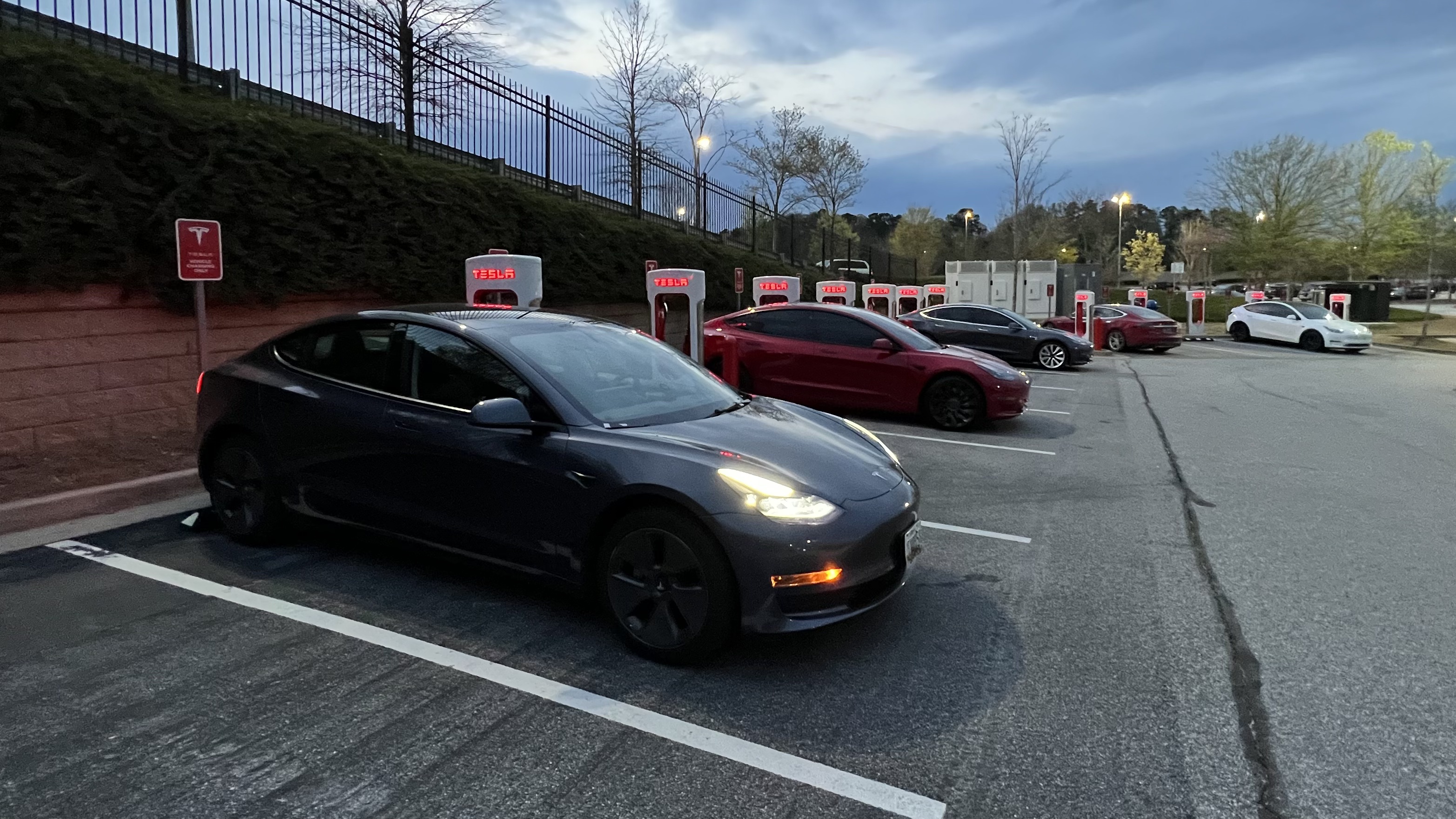

Recently, and in a very short time frame, popularity of Tesla’s North American Charging Standard (NACS) has skyrocketed. Tesla has begun opening its Supercharger network and the unique charging plug associated with it, prompting other automakers to embrace the long gatekept standard.
For nearly the last decade, the Combined Charging System (CCS) has been the default for electric vehicle fast charging in the United States, with the exception of Nissan, who still uses the CHAdeMO port on the Leaf hatchback. Every other automaker has included CCS port on its EVs since then, while some have shown an even higher level of commitment. Volkswagen, as part of its Dieselgate settlement in 2016, pledged to spend $2billion on CCS and other public charging infrastructure under its Electrify America subsidiary. The Electrify America network is now the second largest fast charging network in the country, behind only Tesla’s Superchargers.
The problem, however, lies in the actual usability of the chargers. Electrify America has garnered a reputation for its stations being unreliable and inconsistent. The availability of two different charging connectors has meant that non-Tesla vehicles could not use the Supercharger network, and Tesla only just recently released an official adapter to allow its buyers to charge on CCS stations. In the last twelve months, Tesla has also modified a handful of its Superchargers to include a CCS adapter for other electric car drivers to use.
However, that progression will change significantly in the next two years with the newly-announced commitments of several major automakers to ditch CCS in favor of NACS.
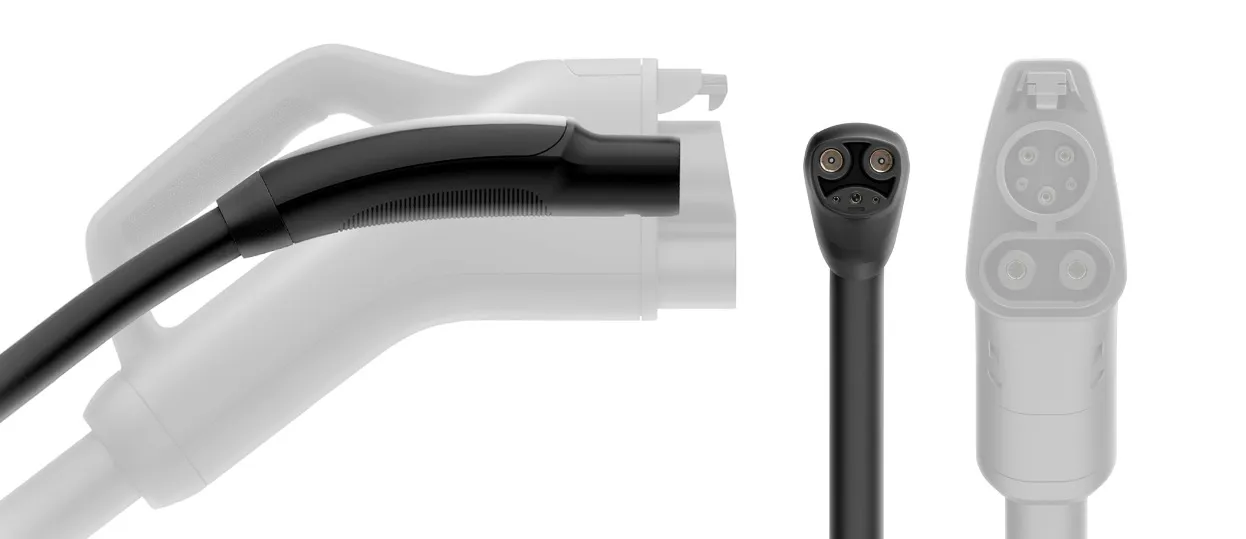
The benefits and drawbacks are pretty simple. For one, roughly 17,000 Tesla charging stations will become available for their buyers to use. The NACS connector also offers not only enhanced maneuverability due to its lighter design but also boasts a more compact size, resulting in a reduced charging port, making the design process easier. For Tesla owners, the payment process is also streamlined—simply plug your vehicle in, and the charger system promptly recognizes your car, with the associated account being billed for the charging session. While the compatibility of this functionality with other vehicle brands remains uncertain, its potential adoption could significantly simplify the payment process for charging across the board.
One of the larger cons is charging speed. Right now, Superchargers have a max output of 250 kW, with some older stations still being limited to 150 kW. With some EVs featuring higher voltage architectures (think Hyundai/Kia and Lucid), the higher 350 kW cap of Electrify America’s stations can be a significant upside. That said, I suspect a reliable and consistent 250 kW network will still be preferable to most people. The entire industry will also experience a period of time where some buyers will be forced to use adapters, which can be expensive and confusing.
Ford was the first major automaker to announce that it will be switching to NACS. In a Twitter event with Elon Musk, Ford’s execs stated that in early 2024 the company will begin offering adapters for its current EVs so that they can use Tesla Superchargers. Starting in the 2025 model year, the Mustang Mach E, F-150 Lightning, and E-Transit van will come standard with the NACS port equipped.
General Motors followed closely behind Ford, announcing its rollout of adapters in 2024 and full switch to NACS in 2025. Expect to see the new Blazer EV and Equinox EV using NACS while the Silverado EV will launch initially with CCS.
Rivian, despite being one of Tesla’s largest sources of competition for SUVs and pickup trucks, has also worked out a deal to switch to NACS on its vehicles going forward. The timeline has also been set for 2025. It is presumed that Rivian’s own Adventure charging network will also be converted to the new plug.
Volvo and Polestar, once again, will be following a similar rollout to Ford and GM, with adapters being made available to current customers in 2024, and a full conversion in 2025.
Mercedes-Benz has also vowed to adopt the same timeline as the others. However, Mercedes is also keen to jump into the US market with its own network of charging stations, stating it plans to open around 2,500 public fast charging locations. The first batch are scheduled to open towards the end of this year.
Nissan announced as of mid-July that the Ariya electric SUV will begin offering a NACS connection in 2025, with adapters available sometime before then. No comment was made on the CHAdeMO holdout Leaf, although it wouldn’t be surprising if the Leaf is discontinued soon anyway.
Volkswagen Group is still “actively discussing opportunities with Tesla to optimize NACS performance and value for [its] customers,” according to statements made to Motor Trend. However, its Electrify America subsidiary has already committed to offering NACS plugs on 850 of its stations by 2025.
Honda and Acura have communicated to Motor Trend that they “are focused on providing the best electric vehicle ownership experience for our customers, and [will] continue to investigate all possible options to ensure an excellent user experience and access to reliable public charging options” as they prepare to launch their first dedicated electric models, the Prologue and ZDX SUVs.
Stellantis, BMW Group, Toyota/Lexus, Hyundai/Kia, and Lucid have also not yet made any official announcements. In an investor presentation, Hyundai/Kia stated that it was still looking into the feasibility of adopting Tesla’s NACS connector. Toyota simply stated that they “have nothing to announce at this time.”
As far as other entities, ChargePoint will begin converting its network to offer NACS plugs by the end of this year. The Society of Automotive Engineers (SAE) International will now adopt NACS as the standard charging plug, too. According to SAE International, “The standardization process is the next step to establish a consensus-based approach for maintaining NACS and validating its ability to meet performance and interoperability criteria.”
Overall, the change in charging standard should be a positive one in the long run. The next couple years will be an odd in-between period, similar to the initial rollout of CCS but on a much larger scale. We’ll have to wait and see exactly how it plays out, but I suspect the benefits of NACS in the long term will certainly be welcome.
 Also Andrew