
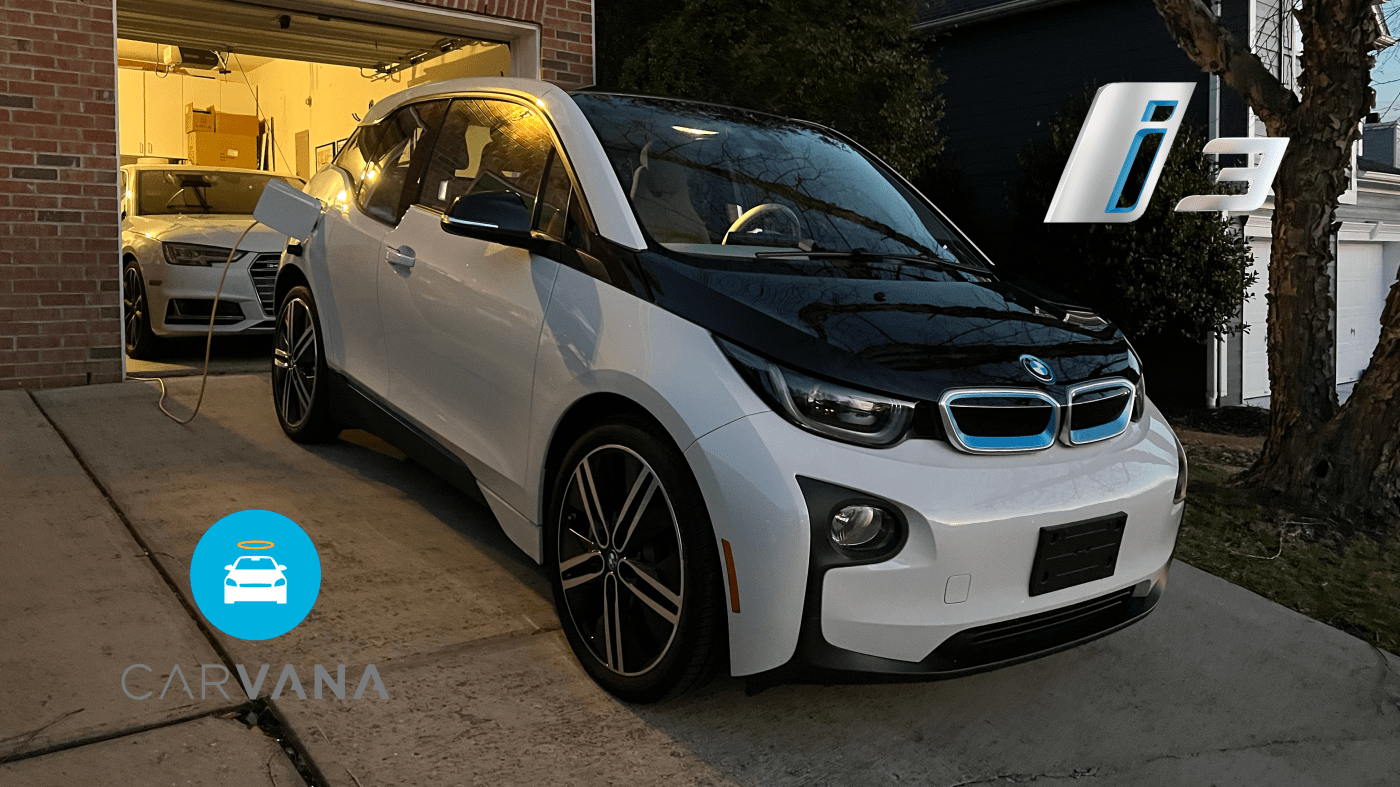
Founded in 2012, Carvana is an online platform for buying and selling used cars. Their intention was to revolutionize the car buying experience by allowing customers to browse, finance, and purchase vehicles entirely online. They advertise a 100-day, 4,000 mile “Worry Free Guarantee” (basically a limited warranty) as well as a 7-day return policy, similar to physical retail giant CarMax. The company experienced massive growth as consumers appreciated the simple, dealership-free model. However, they’ve also experienced lots of legal issues, drawn heavy criticism over their handling of certain DMV and paperwork-related matters, and nearly gone bankrupt more than once.
I’ve never personally purchased a car from Carvana (though I’ve come close several times), but as of recently I have now sold one of my cars to them. Overall, it was a good experience, but it wasn’t as smooth as it could have been.
In January of this year, I purchased a 2015 BMW i3 as a bit of an experiment. In theory, it was the perfect daily driver for me – low miles, decent tech/features, and I could charge it at my work completely free. The range was not an issue, because at the time I owned two other gas-powered vehicles. I also had a business use for it, and at the time the government had just begun a revised tax credit program offering a credit on pre-owned EVs for the first time.
However, in late April/early May I packed up and moved to a new city and state. My new residence and job didn’t offer a place for me to charge an electric car, and the logistics and cost of actually transporting or driving the car 2.5 hours away were not favorable either. I wasn’t planning on buying another car at the time, so trading the i3 in to a dealership was not really an option. I could have sold it to a dealership, but I wouldn’t have had much negotiating power as I wasn’t buying another car. I listed it on Facebook Marketplace and AutoTrader, but didn’t receive much attention (probably because it’s a fairly niche car and not super desirable for most EV buyers).
Enter Carvana, the company that claims to take the stress out of this very experience.
Plugging the VIN and details into several different car buying services (CarMax, AuctionDirect, Vroom, etc.), Carvana came back with the highest offer. I was asking $16,000 for the i3 on Facebook (in line with retail book value and similar to what I had paid for the car a few months prior), and most of the offers I received were in the $11-12,000 range. Carvana, to my surprise, offered just under $15,000.
As I needed to get rid of the car fairly quickly, I accepted the offer and began the selling process. I was prompted to digitally upload several documents, including my driver’s license, the vehicle registration, a photo of the odometer, and loan payoff information (if applicable). After those items had been reviewed (I’m not sure whether by a real person or an algorithm), I received an email to schedule a time to have the vehicle picked up.
That’s where the interesting part of my situation came in. Carvana doesn’t currently offer pickup or delivery services in the Lynchburg, Virginia area, where I now resided. Granted, Lynchburg is far from the biggest city in the state, but the only option I was presented with was dropping the vehicle off in Richmond, roughly two hours away. That said, due to the logistics of the move, the i3 was actually still hanging out at my old house in North Carolina. Luckily, Carvana does serve the Raleigh/Durham area. Since the keys were also in the hands of a family member down there, I figured I could just schedule the appointment to have the car picked up from them.
But despite the claim of a fully online experience, certain sale paperwork still had to be completed in person, meaning I still had to drive two hours back to NC for my pickup appointment. The appointment in itself was super easy, taking less than 20 minutes for the Carvana representative to take photos of the car, verify its condition, and get my signature on the required documents.
I realize that the physical document requirement is not Carvana’s fault. I’m glad they’re actually following regulations, unlike some other news stories you’ve probably heard about. I just wish the sale experience could have been fully remote in my situation.
It’s also worth noting that the car was not picked up by a delivery truck as portrayed online and in all of their commercials. Instead, the Carvana employee showed up in a Toyota Tacoma with no plates (probably another vehicle that had just been purchased), and the i3 was left on the street in front of the house for two full days before it was picked up.
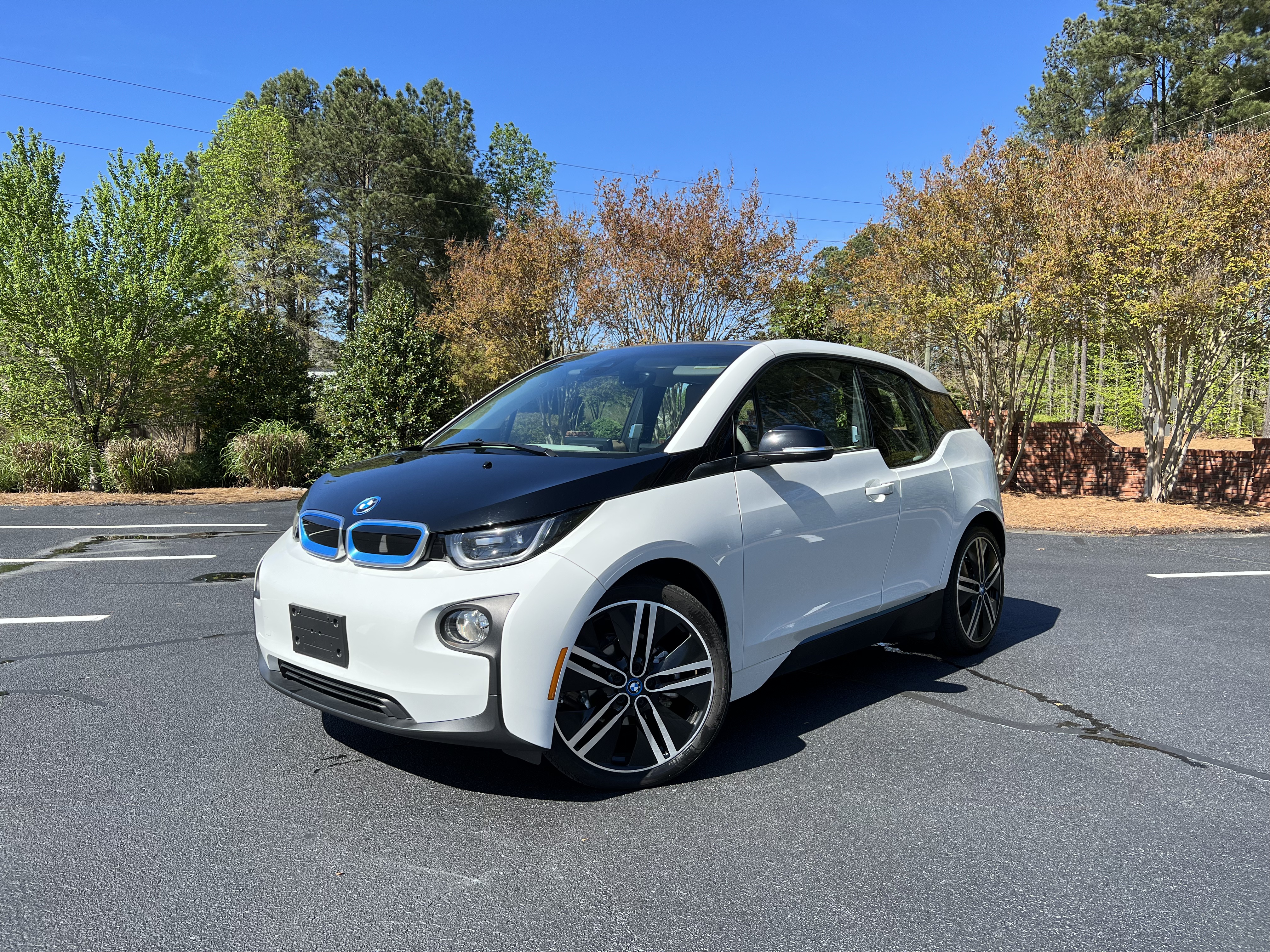
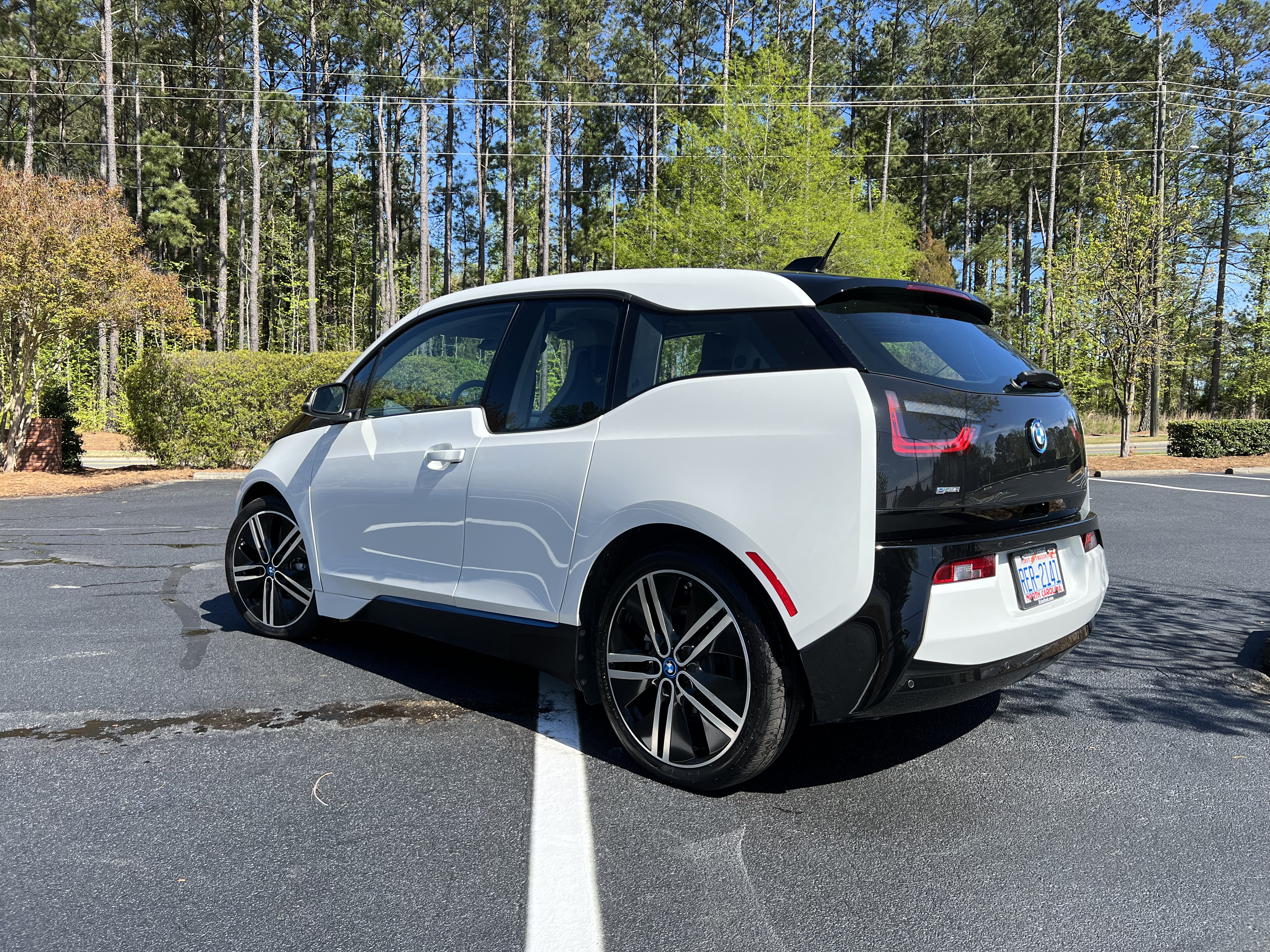


Now that it’s gone, how would I summarize my ownership of the i3? In short, gone too soon. Ever since its launch in 2013, the i3 has been a hugely polarizing car. Buyers either hated it for its short range and weird styling or loved it for its ethos and weird styling. I happen to fall into the latter camp.
Yes, the sub-100 mile range is a dealbreaker for a lot of folks, and there are plenty of unique design choices to go around. But what other car has a carbon fiber composite body structure and backwards-opening rear doors? You also can’t ignore the fact the i3 is rear wheel drive, weighs less than a Golf GTI, and has surprisingly good steering. The 155-section tires are both hilarious for their off-the-line chirping ability and awful for their decreased stability at highway speeds.
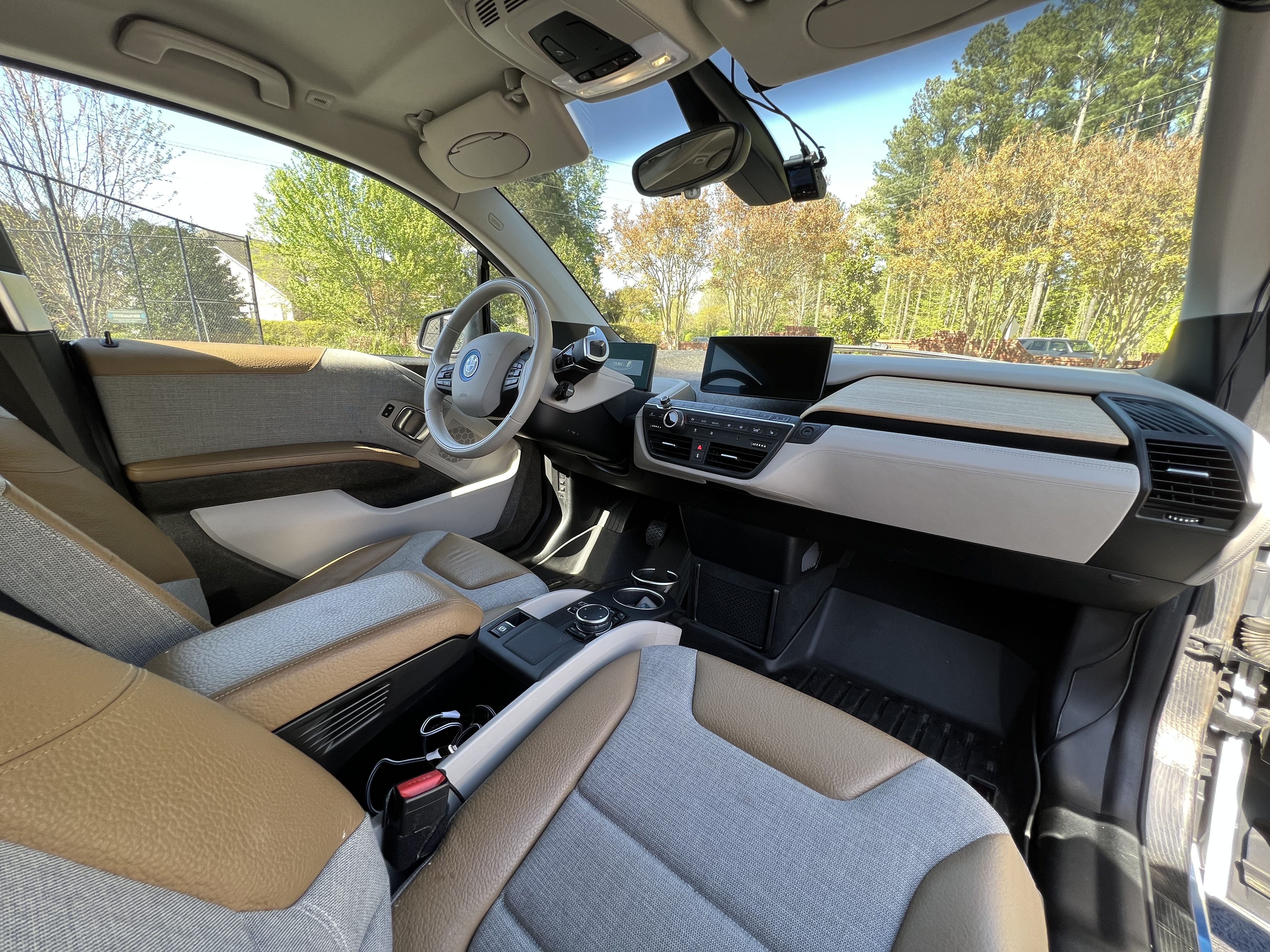
The interior of the i3 continues the quirky design and features mostly eco-friendly materials. There’s a giant slab of reclaimed wood on the dashboard, while the seats and door panels combine fabric and faux leather. The entire cabin feels extremely upscale, and the large amount of glass helps it feel open and airy. Storage is plentiful for a small car, with large door bins, a decent size glovebox, and space in between the front seats, thanks to the lack of a transmission tunnel. With the front seats in a modest position, there’s an adequate amount of space for rear passengers to be comfortable. The cargo area is on the small side, but the rear seatbacks fold in a 50/50 split. You’ll also find a small storage compartment under the hood (it’s really not big enough to be called a trunk) that’s perfect for storing your tool kit and charging cable.
My only gripe was the weird combination of features. Being a mid-level Giga World trim, such things as adaptive LED headlights, heated seats, and radar cruise control were included. On the other hand, the front seats are not power adjustable and there’s no backup camera.
Overall, the i3 fit my use case perfectly, as expected. It worked well for commuting, and my charging cost was basically zero. I never needed to fast charge it; a connection to a wall outlet overnight or a Level 2 charger at my day job were more than enough. It made me money with my part-time gig work, and I never drove more than 50-60 miles at a time anyway. Battery degradation proved to be fairly minimal after 7 years and 30,000 miles on the clock; most full charges I was able to achieve around 70 miles of range.
When you consider the original MSRP of the i3, just shy of $50,000, the whole car seems absurd. But thanks to depreciation (and frankly the lack of demand for these cars), i3s are readily available pre-owned for $15,000, like mine. Personally, I would recommend staying away from the early Range Extender versions and stick with a full electric one for the sake of reliability. If you’re willing to spend a few thousand dollars more, you may be able to find a nice facelift example or even an i3S, which both featured larger batteries and therefore greater range.
Do I regret selling my i3 so soon? Absolutely. If I could justify keeping it, I would have. I mean, where else will I find a car with a wool-covered owners manual?!
| Vehicle Tested | 2015 BMW i3 Giga World BEV |
| Color | Capparis White & Frozen Blue / Giga Cassia & Spice Grey |
| Drivetrain | Electric motor / Single speed transmission / Rear wheel drive |
| HP / Torque / Range | 170 horsepower / 184 ft-lbs / 83 miles (EPA) |
| Curb Weight | 3,130 lbs (est.) |
| 0-60 mph | 7.0 seconds (est.) |
| MSRP | $47,395 |


hey
cool blog 🙂 will give it a follow and a like !
LikeLike