
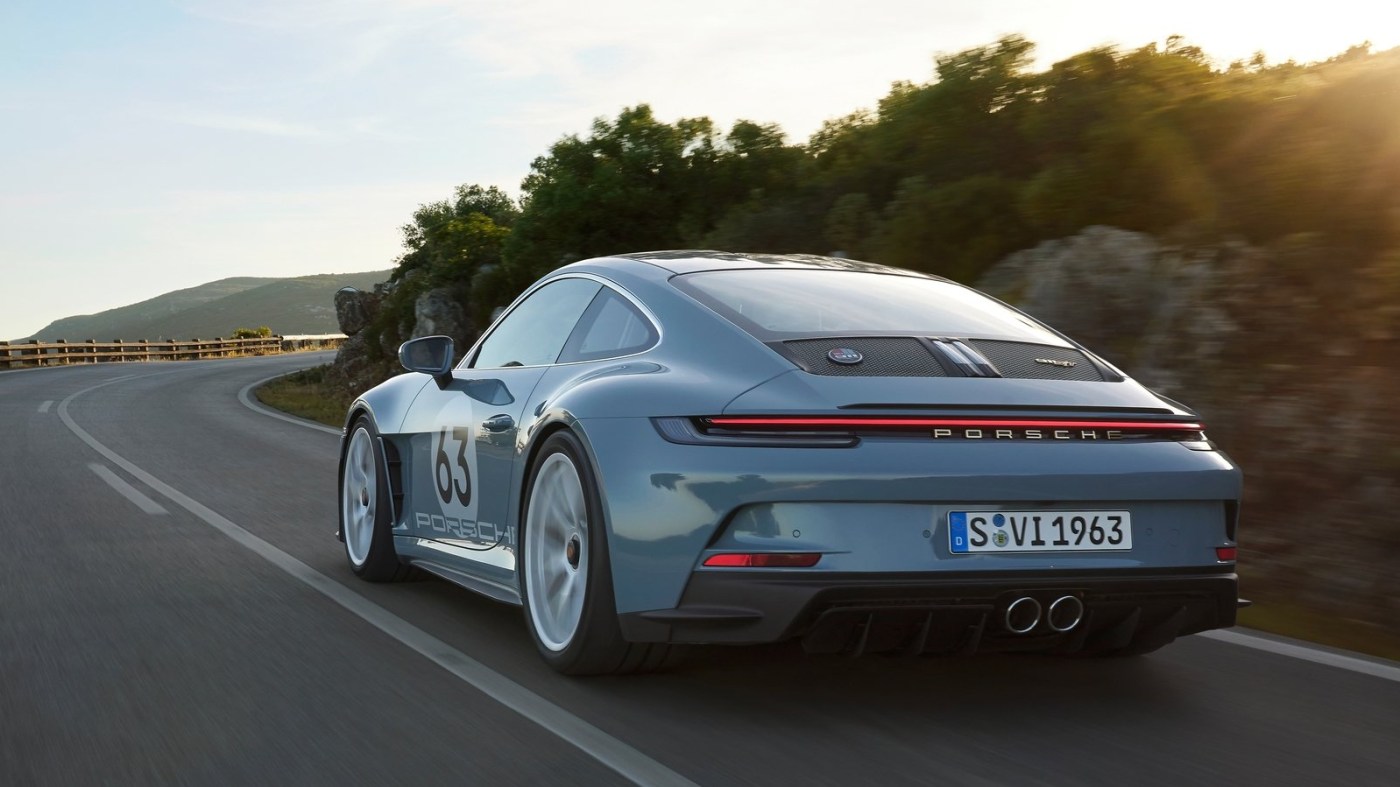
Porsche 911 S/T Will Be Leased Initially To Deter Flippers
In recent years, flipping just-released limited-production cars has become incredibly popular, especially in the United States. Everything from Honda Civic Type Rs to Porsche 911 GT3s can be resold for a profit.
Some manufacturers have tried to limit the resale of their cars in various ways. Ford, for instance, made those interested in the GT go through an extensive application process, and the lucky buyers were forced to sign a special contract agreeing they would not sell their car for at least two years. This resulted in mixed success, with Ford eventually suing a number of dealers and individuals, including actor John Cena and Mecum Auctions, one of the largest car auction houses in the country.
Porsche, on the other hand, is now taking a slightly different route by not actually selling the cars at all, at least for the first year. The new flagship 911, the S/T, has already cemented itself as one of the greatest sports cars to ever come out of Weissach. With only 1,963 units set to be produced, demand for an allocation is fierce. Frank Moser, Porsche’s vice president of the 718 and 911 model lines, detailed their approach at an event in California this past weekend.
“We want to ensure that cars are available [to] reach true enthusiasts, to be driven and enjoyed for years to come,” said Moser. “For this reason, those allocated a 911 S/T in the U.S. will be required to adhere to an agreed minimum retention period, set at one year. In practice, this will mean that cars in the US will initially be leased for this period, before ownership is transferred. This process is currently unique to the 911 S/T, with the first cars due to arrive in the US in Spring 2024.”
Of course, this method will likely be of limited effectiveness; all it really does is just slightly delay the S/Ts’ arrival on the used market. But, perhaps it will set a precedent for other models to come, and maybe the scalping trend will eventually die down a bit. Maybe.
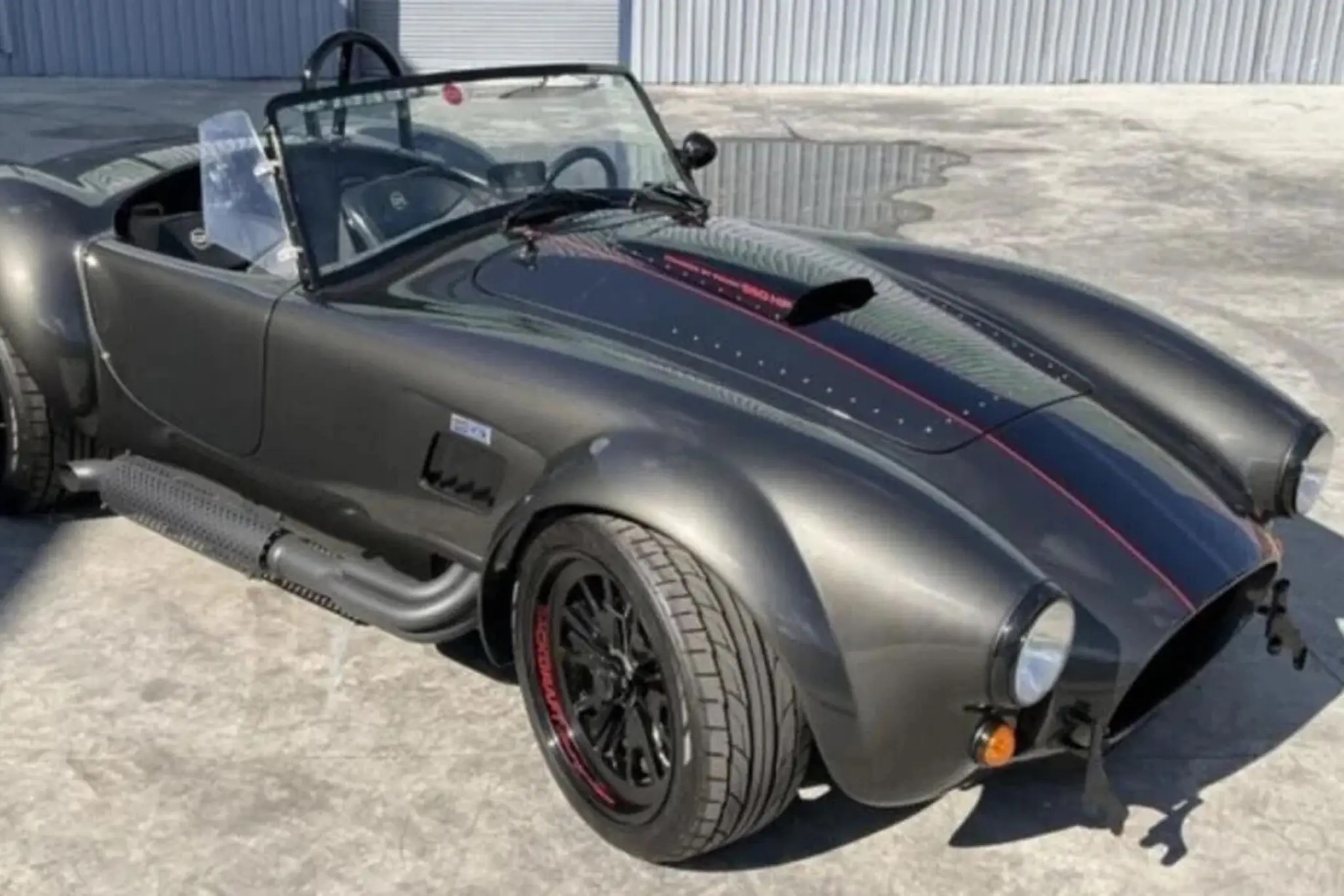



Feds Auctioning YouTuber’s Car Collection After Fraud Indictment
If you’ve ever wanted a Power Rangers-wrapped Lamborghini Aventador or a delivery mileage Chevy Impala SS, now may be your chance, following the conviction of former YouTuber and rapper Omi in a Hellcat.
According to the Department of Justice, Bill Omar Carrasquillo was sentenced to 66 months in prison and subsequent five years of supervised release for “piracy of cable TV, access device fraud, wire fraud, money laundering, and hundreds of thousands of dollars in copyright infringement.” Over a period between March 2016 and November 2019, Carrasquillo and his co-defendants earned more than $30 million from the scheme.
A “large portion” of that money was converted into vehicles and houses. On October 13, 2023, a live auction will be held for the seized motorized assets, which include 32 cars and 25 motorcycles and ATVs. The aforementioned Aventador is arguably the star of the show, but plenty of others are up for grabs as well. Most of the cars are frankly generic (including two pickup trucks, a minivan, and an EcoBoost Mustang), but there are a few connoisseurs’ choices mixed in.
Our favorites are a 2019 Honda Civic Type R, Backdraft Roadster (Shelby Cobra replica), and a 1996 Impala SS with just 12 original miles on the clock. Befitting of Carrasquillo’s online name, there are three Hellcat models, two Jeep Trackhawks, and a Dodge Durango SRT. Aside from the Aventador, there are also two Huracans and an Urus.
Apart from cars, the collection of bikes and ATVs includes seven Hondas, six KTMs, five Yamahas, three Suzukis, three Polaris models, and one Can-Am Ryker. Our personal picks are the 2018 KTM 1290 Super Duke R motorcycle and a 2019 Polaris Ranger XP 1000 with a snow plow attachment.
Online bidding has already begun via Apple Auctioneering Co., and is set to close with the live auction in Baltimore, Maryland on the 13th.
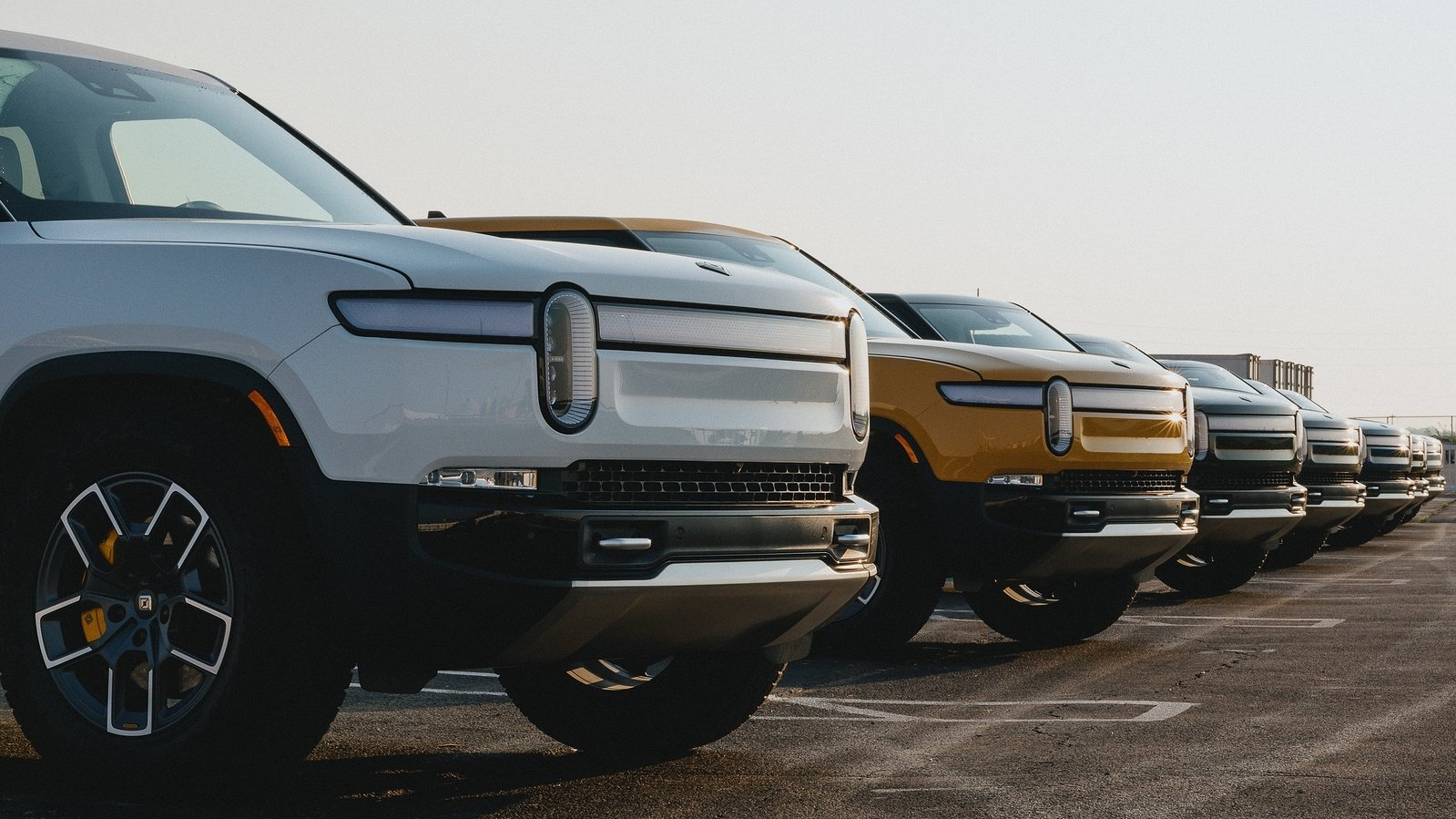
Rivian’s Q3 Losses Are Massive, But Slowly Decreasing
On the outside, Rivian is thus far incredibly successful as far as startup electric car companies go. It brought the first electric pickup truck to market, the R1T, landed a deal with Amazon to produce a large fleet of delivery vans, followed up the R1T with the super-popular R1S SUV, and had an absolute blockbuster IPO. Yet, despite all that, Rivian is still losing a massive amount of money on every vehicle it sells.
In its Q2 2023 letter to shareholders, the company revealed that it lost $32,595 for every vehicle sold that quarter. Ultimately, it comes down to a few things. From a WSJ report, analysts have called out Rivian’s engineering practices for being too costly. For one, Rivian wanted the R1T to be the best performing truck in its class in crash safety tests, which was done by adding more metal, and therefore more cost and weight. Citing current and former employees, the vehicles’ skateboard chassis is also “complicated to assemble,” and some areas of the chassis need to be welded twice: once by a robot and again by hand.
Upon being asked about these complexities and future plans to become profitable, a Rivian spokesperson provided the following statement to Motor Trend: “As RJ [Scaringe] noted on CNBC, Q3 deliveries exceeded analyst expectations, demand is strong, and our ramp continues to make progress. Loss per vehicle has improved quarter over quarter, and the path to profitability remains our objective.”
Once again referring to Rivian’s shareholder letter, the automaker’s gross profit margin per vehicle has in fact been steadily improving. While it lost over $32,500 per vehicle in Q2, in Q1 it was losing $67,329 per vehicle, and a staggering $124,162 per vehicle in the quarter before that. As long as Rivian continues to increase its production volume, the path may not be much longer. With 13,992 vehicles produced in Q2 and 16,034 in Q3, total production for this year is expected to be around 60,000 units.
CEO RJ Scaringe noted as much in his interview with CNBC. “What we’re gonna see as we go forward is a very clear staircase or step or set of steps that gets us to profitability as a business and of course that’s the objective,” said Scaringe. “The ramp of our production plant is foundational and key for that.”
By comparison, Ford assembled over 1.8 million vehicles in the US alone in 2022, and Tesla built over 1.3 million. While we don’t know whether Rivian is aspiring for those kinds of numbers, there is certainly light at the end of the tunnel soon enough.

2025 Volvo EX30 May Be One Of The Best-Value EVs
In the world of electric cars, there are very few affordable options. The Chevrolet Bolt is the cheapest brand new, starting under $30,000, but isn’t exactly premium or the longest-distance option available. On the used market, BMW i3s and Volkswagen e-Golfs can be had for under $20,000, but are severely lacking in the range department.
On paper, the recently-revealed 2025 Volvo EX30 appears to be a truly good value entry into the segment. As the first ground-up EV sold under the Volvo name, the EX30 has been revealed to start at $36,245 with an EPA-estimated 275 miles of range.
In the standard single-motor RWD configuration, the EX30 produces 268 horsepower and 253 lb-ft of torque, and will be available in three trim levels: Core, Plus, and Ultra. The top-end Ultra only adds around $5,600 to the MSRP, and brings plenty of features including Pilot Assist, a 360-degree camera, a Harman Kardon sound system, and 19-inch wheels.
Upgrading to the dual motor all-wheel-drive version bumps output to 422 horsepower and 400 lb-ft, but range drops slightly to 265 miles (EPA). However, the performance boost makes the EX30 good for a 0-60 mph time of just 3.4 seconds, very nearly as quick as a Tesla Model 3 Performance. Whereas a new Model 3 Performance is over $50,000, though, the Ultra trim with the AWD drivetrain only costs $47,895.
Being a Volvo, the EX30 will also undoubtedly be more luxurious and better built than the Tesla. According to the Swedish manufacturer, pre-orders are scheduled to begin later this fall with the first deliveries taking place in the first quarter of 2024.

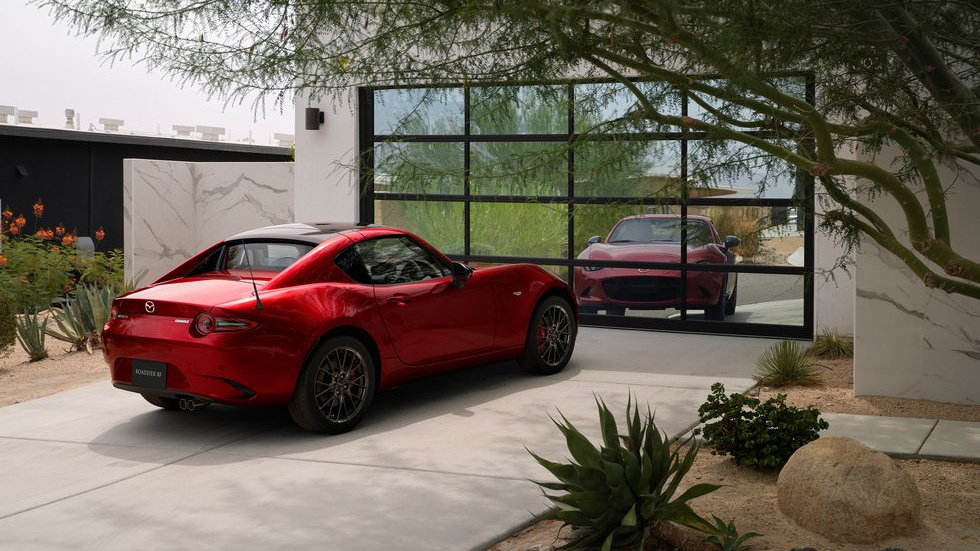

Updated Mazda MX-5 Miata Revealed For Japanese Market
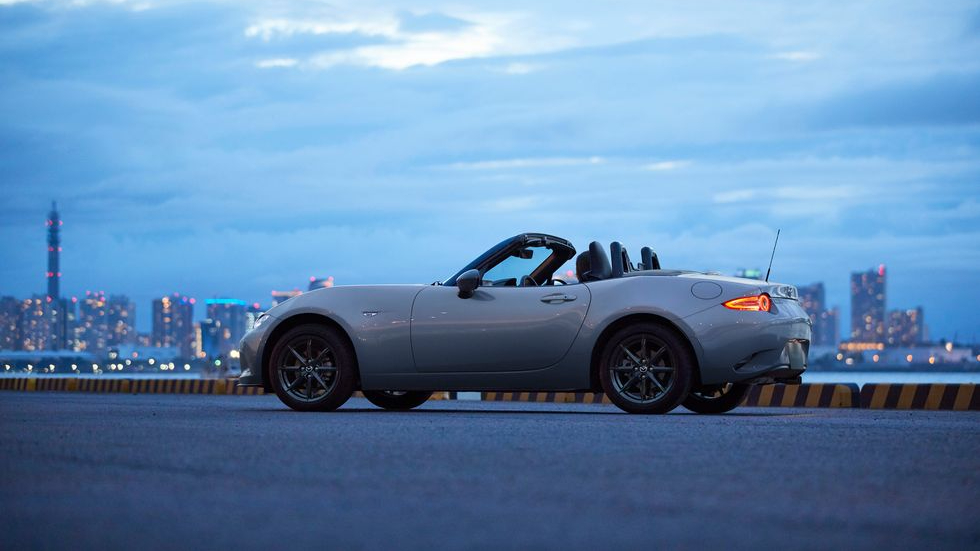
The current-generation “ND” Mazda MX-5 Miata (or Eunos Roadster, depending on where you’re from) has been on sale globally for something like eight years at this point. That said, it’s aging fairly well thus far, and certainly doesn’t appear to be going anywhere yet.
In 2019, minor updates were introduced to the Miata, referred to as the ND2, which included a dual-mass flywheel, 26 extra horsepower, and different color combinations. While those changes mainly enhanced the already excellent driving experience, they didn’t really modernize the Miata in a few key areas where it could’ve been appreciated.
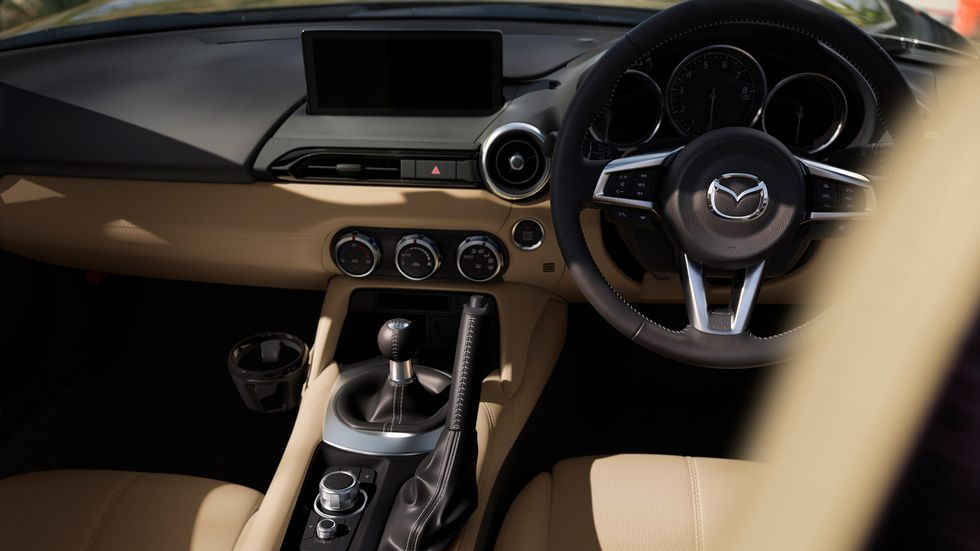
This week, Mazda revealed another update for the MX-5 (ND3, if you will) for the Japanese market with a few more significant changes. The two-seat convertible has long been one of the best simple driver’s cars on the market, but Mazda is aiming to make it even more enjoyable on a day-to-day basis. Exterior lighting has been revised to be fully-LED, but more importantly, the infotainment system on the inside has been upgraded to the latest software and a larger 8.8-inch display. A few driver assistance features have also been added, including adaptive cruise control and Smart Brake Support.
However, If you thought Mazda was solely focusing on dulling the driving experience, you’d be wrong. New for 2024 is an asymmetric limited-slip differential, which they say makes the handling more stable by reducing liftoff oversteer and creating more linear turning behavior. It’s also claimed to be more nimble around town, although the Miata already felt sprightly among America’s sea of trucks and SUVs.
The differential is only equipped on manual-transmission Miatas, but all Miatas also come with revised electric power steering said to minimize friction and provide more natural feedback. Stick-shift variants also now feature a less-intrusive track setting for the stability control.
While the ND3 updates have not yet been officially confirmed for our market, Mazda has not yet released information for the 2024 MX-5 in the US, suggesting they’re imminent. A minor price increase should also be expected.

Toyota Tundra 1794 Limited Edition Takes Leather To A New Level
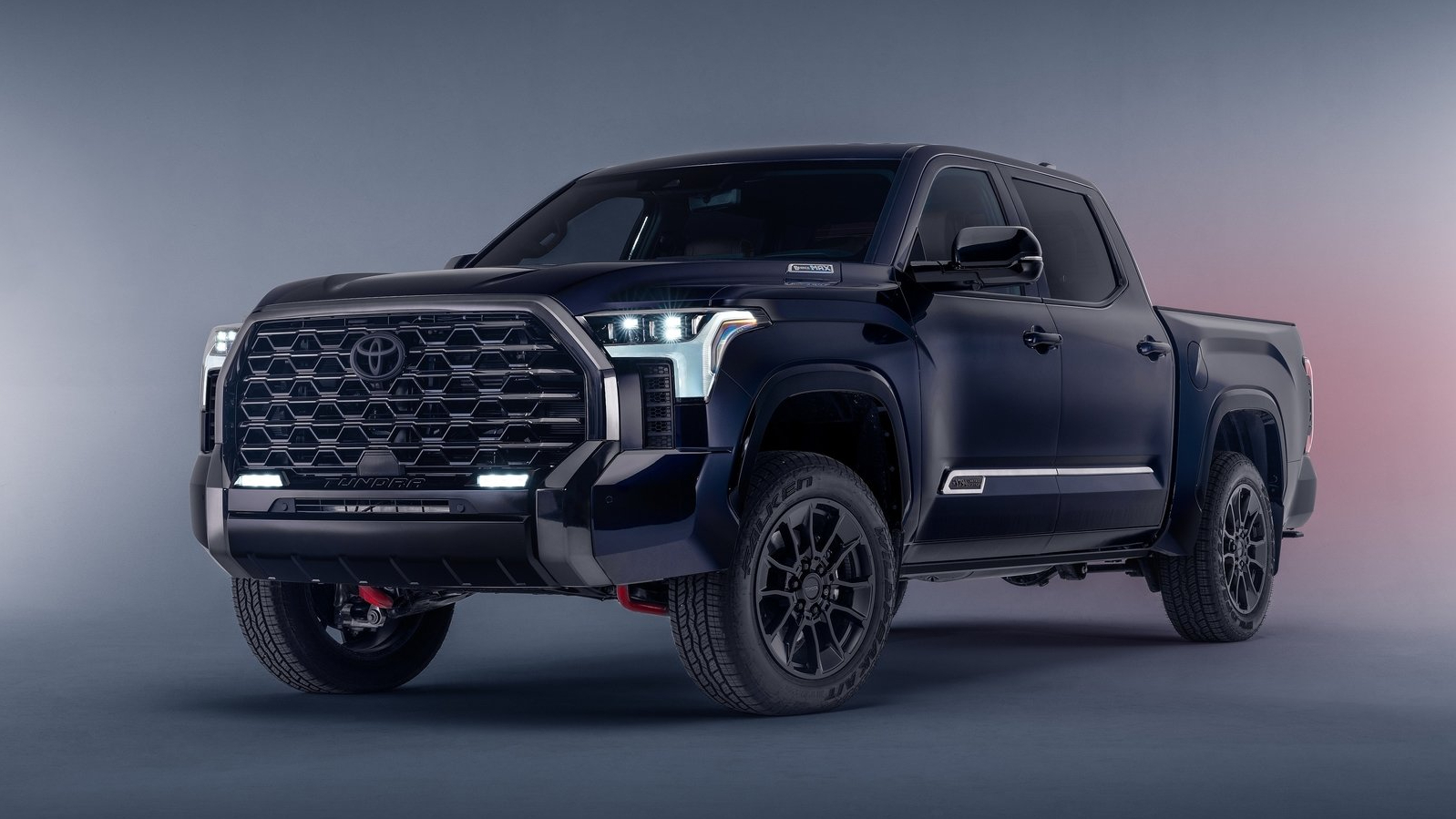
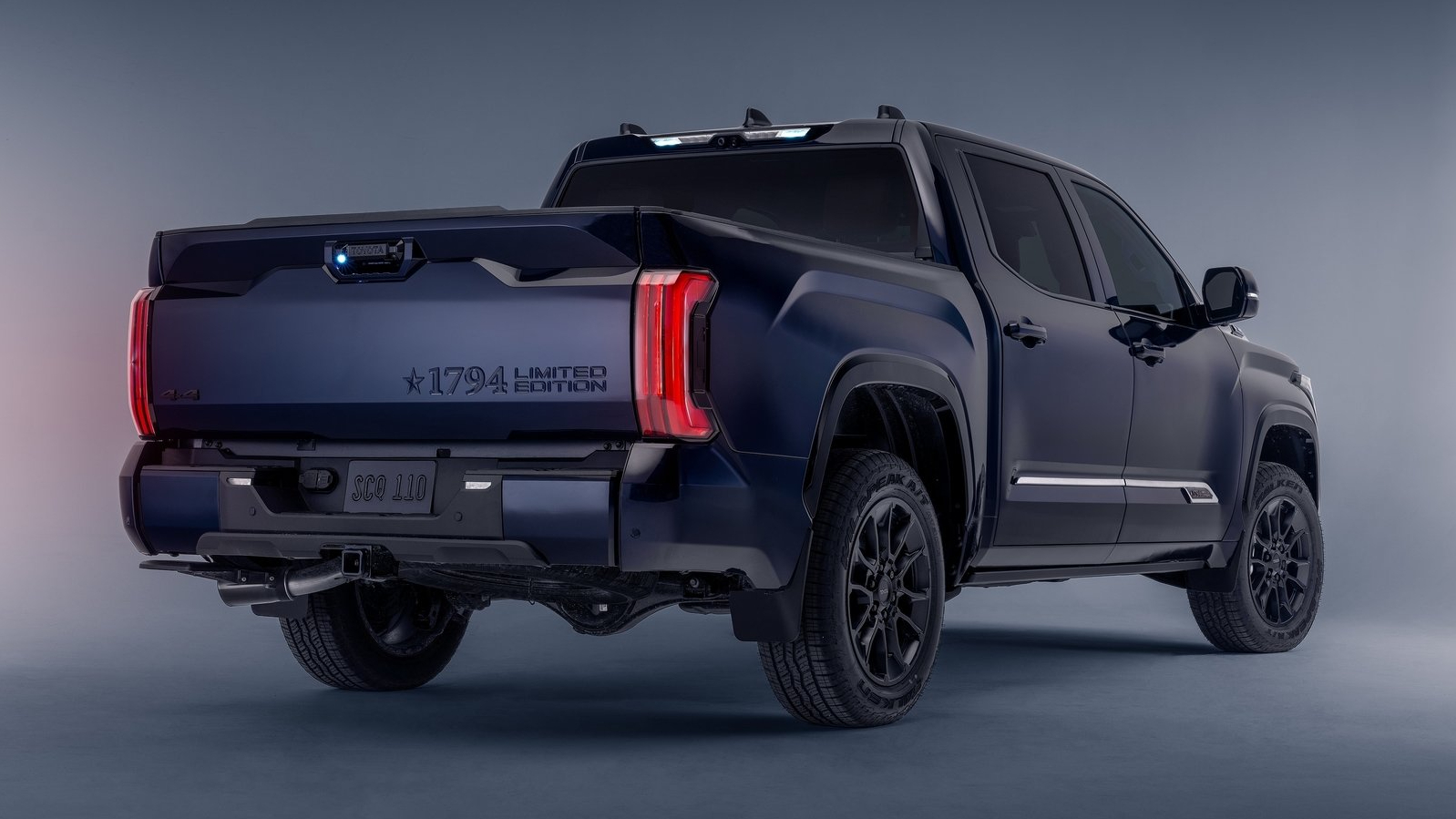
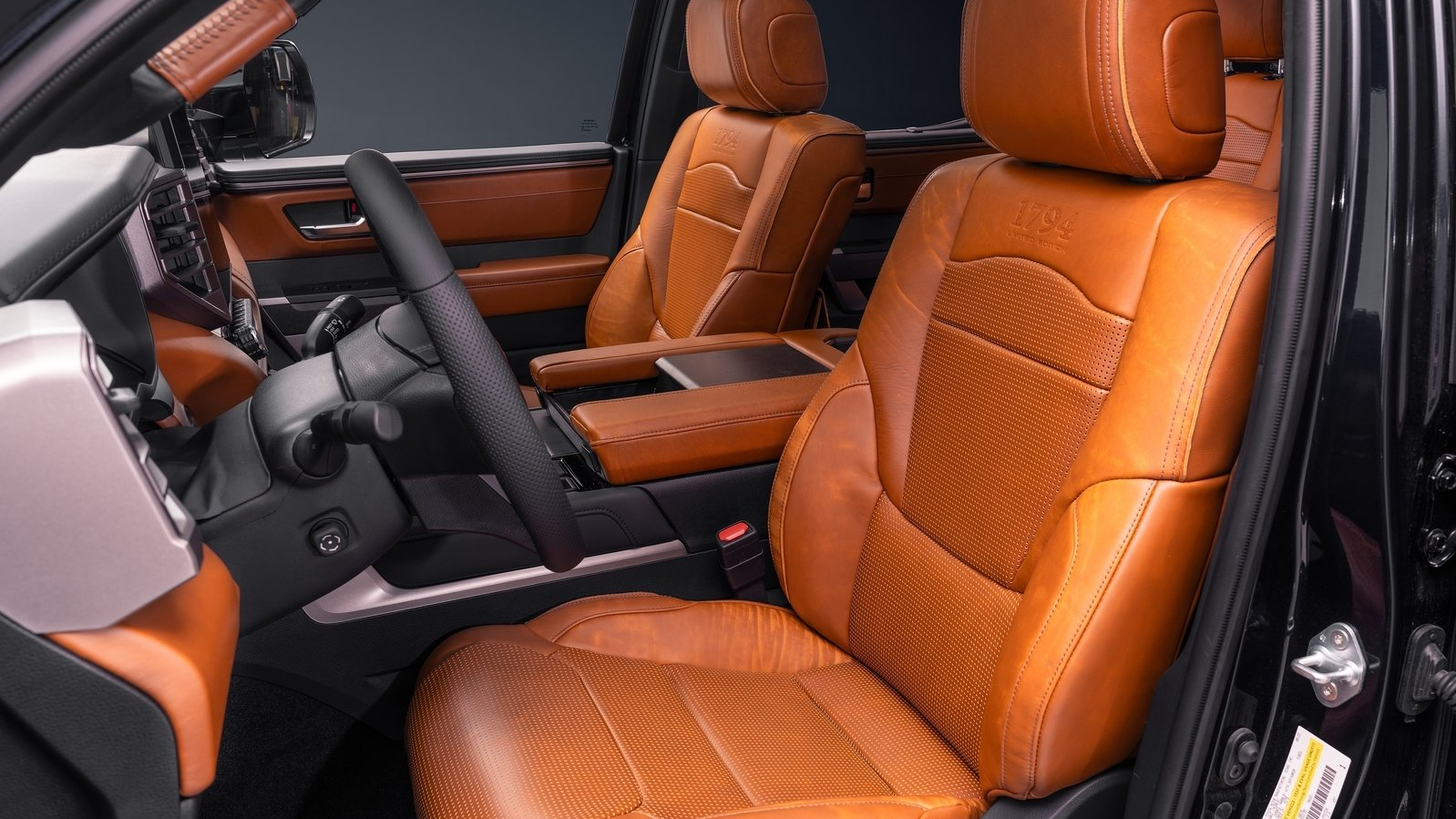
The new Toyota Tundra 1794 Edition certainly wasn’t short on leather, but Toyota is taking it to the absolute max with the confusingly-named 2024 1794 Limited Edition.
Fittingly introduced at the State Fair of Texas, the 1794 Limited adds gorgeous tan leather to almost every non-metal or plastic surface within the truck. On top of that, the front seatbacks feature saddle bags with functional flaps and buckles. Buyers also receive a few matching accessories from the Saddleback Leather Company, with which Toyota collaborated to source the leather, including an overnight luggage bag, tool roll, owner’s portfolio, and key fob pouch. All of the accessories have embossing that matches the specific truck’s production number.
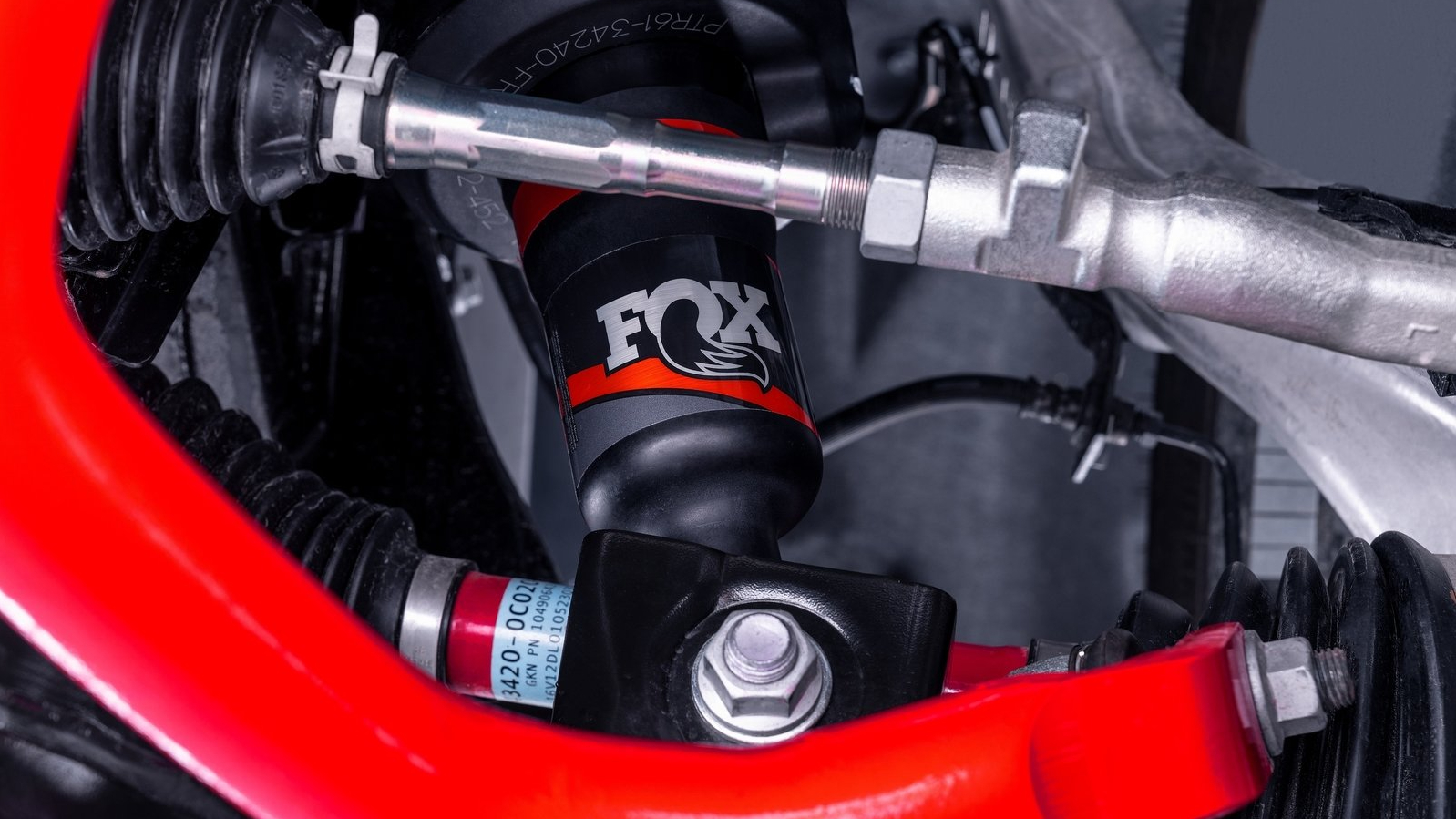
Underneath, Toyota aims to help manage the weight of the extra cows with suspension and wheel upgrades. All 1794 Limiteds feature 2.5-inch Fox internal bypass shocks with piggyback reservoirs and a 1.1-inch lift, as well as all-terrain tires. That’s similar to what you’ll find on the off-road focused Tundra TRD Pro.
Also similar to the TRD Pro, the 1974 Limited Edition is only offered with the CrewMax cab and 5.5-foot bed configuration. Under the hood you’ll find the i-ForceMAX hybrid V6 engine producing 437 horsepower and 583 lb-ft of torque, paired with four-wheel-drive. Only four exterior colors will be available: Wind Chill Pearl, Midnight Black Metallic, Blueprint (shown above), and Smoked Mesquite.
Only 1,500 units of the 1794 Limited Edition will be produced, with deliveries beginning in spring 2024. The regular 1794 Edition will also still be available in normal quantities.
New Chevy Trax Already Outselling Entire Cadillac Brand
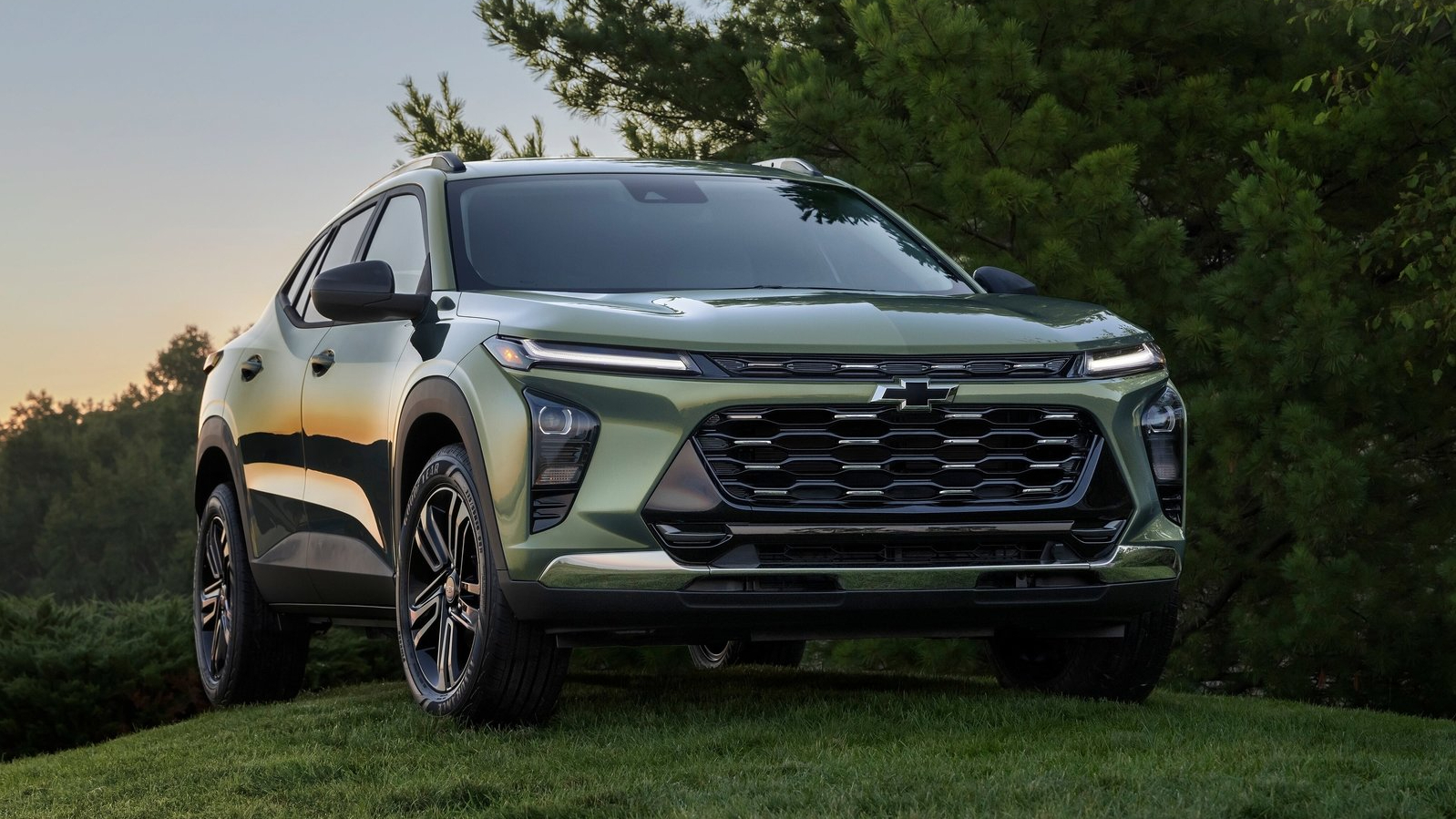
As cheap cars are becoming harder to find, the redesigned 2024 Chevrolet Trax has quickly become popular with cost-conscious buyers. With prices of all trim levels of the brand-new crossover starting under $25,000, that’s not much of a surprise.
While the first-generation Trax was not particularly highly regarded, the new model is way more impressive. It’s moderately larger, much nicer to drive, and offers a good level of standard features. It shows, as the Trax’s Q3 2023 sales result is up 498% compared to last year.
That figure is a little bit misleading, as sales in 2022 were limited by the discontinuation of the old model fairly early in the year. Still, with 37,869 units sold in Q3 of this year, the new Trax is currently Chevrolet’s third-best-selling vehicle, behind the Silverado and Equinox. That puts year-to-date sales at 65,255 units in total, which is almost as many as were sold in 2021 and 2022 combined.
Amusingly, the Trax is also currently outselling the entire Cadillac brand. Yes, that’s right, GM only managed to move 35,638 vehicles of the luxury moniker in the third quarter combined.
With the impending death of the Mitsubishi Mirage and Kia Rio, two of the cheapest new cars on sale in the US, the Trax’s momentum likely won’t slow down anytime soon. It’s one of the best-value new vehicles on sale in this country, and a genuinely good vehicle at that.
 Also Andrew
Leave a comment