
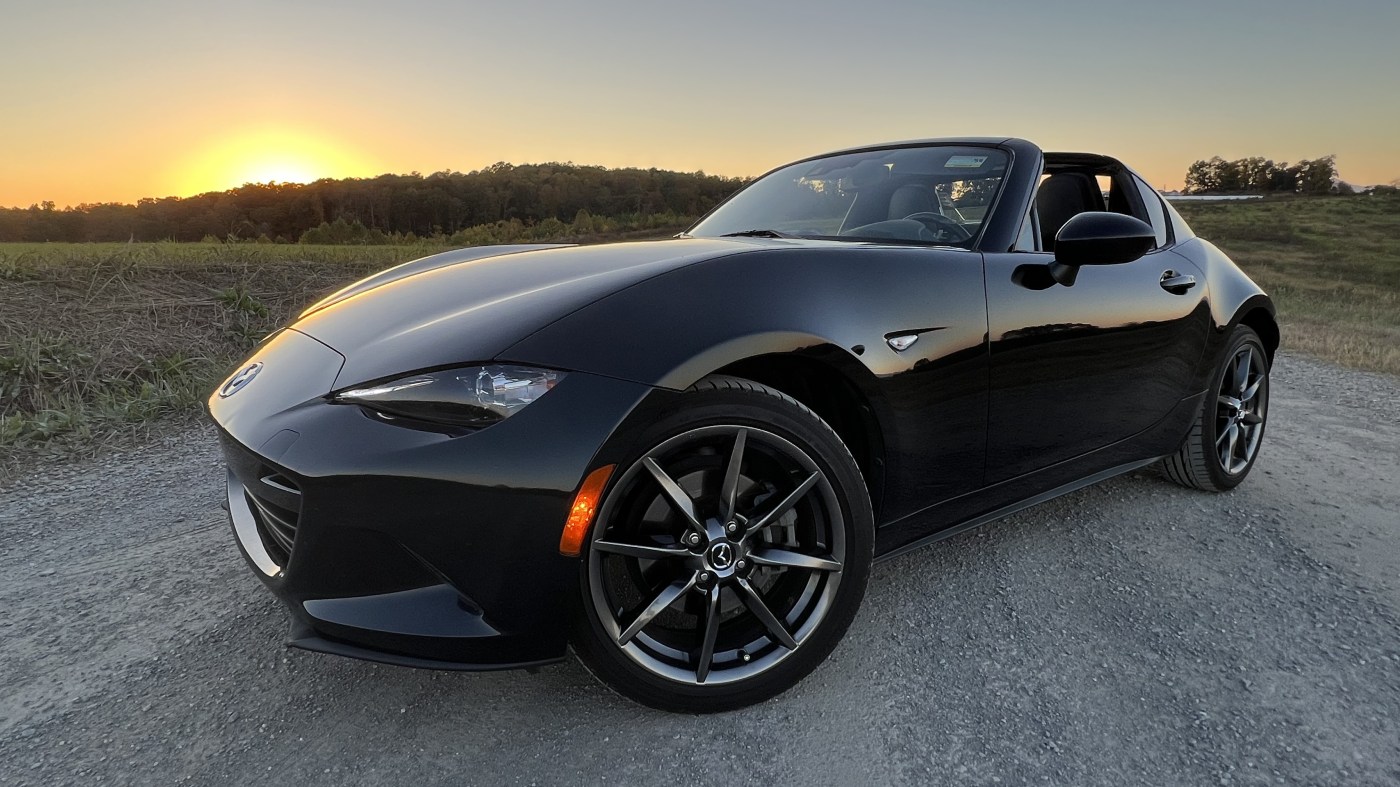
Having now put over 3,000 miles on my 2017 Mazda Miata RF over the past few months, including a thousand-mile road trip to Tail of the Dragon, I still love the car just as much as when I bought it. However, in living with it, there are a few big things that I’ve noticed and come to really dislike about it — every car has flaws, and these are my top five with the Miata.
Interestingly, three of them are related to the RF’s power retractable hardtop. As I’ve mentioned previously, I initially attempted to purchase a regular soft-top MX-5; I ended up with the RF because the deal (i.e. my S4’s trade-in value) worked out more favorably. So, in a way, some of my biggest complaints with the car are ironically somewhat self-inflicted. It’s worth noting that the following five gripes are not in any particular order, other than beginning with the hardtop.
1. The top is pretty severely speed-restricted.
Most modern convertibles, whether they feature a cloth soft-top like the standard Miata or a metal hard-top like the RF, have the ability to operate their power-opening and -closing shells at significant speeds. For instance, drivers of the BMW Z4 can raise or lower its roof at up to 31 mph, while a C8 Chevrolet Corvette convertible is capable up to 30 mph.
The top of the Miata RF, on the other hand, has its operation limited to just six miles per hour. That’s right, six. You might as well just be stopped. In fairness, the roof folds in about 13 seconds, which is the quickest hard-top currently on the market. It’s definitely doable at a traffic light if needed, but that or a parking lot are about the only places you can realistically put the RF’s top up or down.
In a soft-top Miata, the roof is fully manual, meaning the driver or passenger can theoretically raise or lower the roof at any speed (well, until the wind physically restricts your ability, anyway).

2. The control for the roof is backwards.
By comparison, the RF features a silver switch below the climate controls for the roof operation. Depending on how your brain works and how you think about it, though, the toggle may be backwards. What do I mean by that? You push the switch upwards to put the top down, and push it downwards to put the top back up.
Alternatively, I’ve been told that it’s supposed to match the physical movement of the roof — when the roof opens, it lifts up and folds backwards, and the opposite when it closes. If you look at it that way, the switch makes perfect sense. Unfortunately, my brain tends to see it the other way around, and is therefore repeatedly confused about which way I need to move the toggle.


3. When the top is up, you’d better be grateful for blind spot monitoring.
In the olden days, quarter windows on cars were used as vents for airflow through the cabin. These days, they’re mainly just used for visibility, except on some minivans. With its fixed buttresses, the Miata RF does not feature quarter windows, and the rear glass is also quite small.
Thanks to these two things, the RF has some pretty major blind spots. The drivers’ side is the better of the two, as the mirrors can be adjusted to almost completely mitigate it, and the Grand Touring trim features electronic blind spot monitoring. On the passenger side, visibility is just as bad as a Camaro or Challenger, but is helped slightly by the fact the Miata is much smaller than the average car, so bigger vehicles can’t hide from you as easily.
It’s worth noting that with the roof open and windows down, you can stick your head out around the pillar slightly or lift up in your seat to see over the buttresses. With the roof closed, however, you’re really going to be relying on the blind spot monitoring system or you’ll have to tilt your mirrors very far outwards.
4. You may also be inconvenienced by the sun.
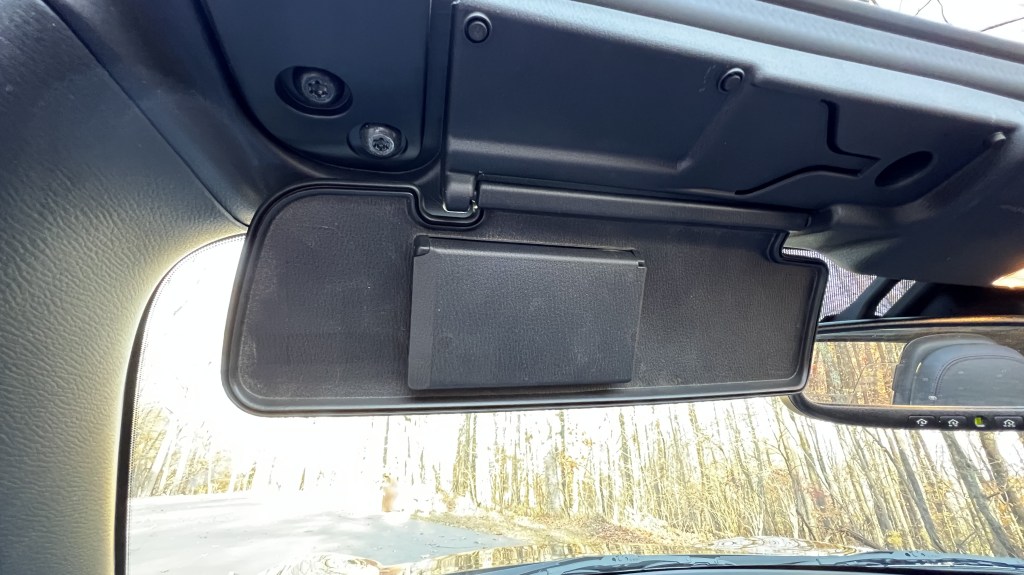
On the subject of being blinded, you may also have visibility issues in the Miata thanks to the sun. Since the Miata is a tiny car, its sun visors are proportionally tiny as well. And since the windshield isn’t very tall, that’s fine. What isn’t fine, though, is the limited action of the visors.
In most cars, the sun visors mounted above the windshield are held on with clips on one end, allowing occupants to unhook them and swivel them around to their respective side windows. Some cars also feature the ability to extend their coverage, either with an extra sliding plastic piece or by sliding the whole visor.
Due to the way the roof is designed in the RF, its visors are completely fixed in place. As such, they neither extend nor swivel, which is hugely annoying in many situations.


5. The infotainment system has a few major shortcomings.
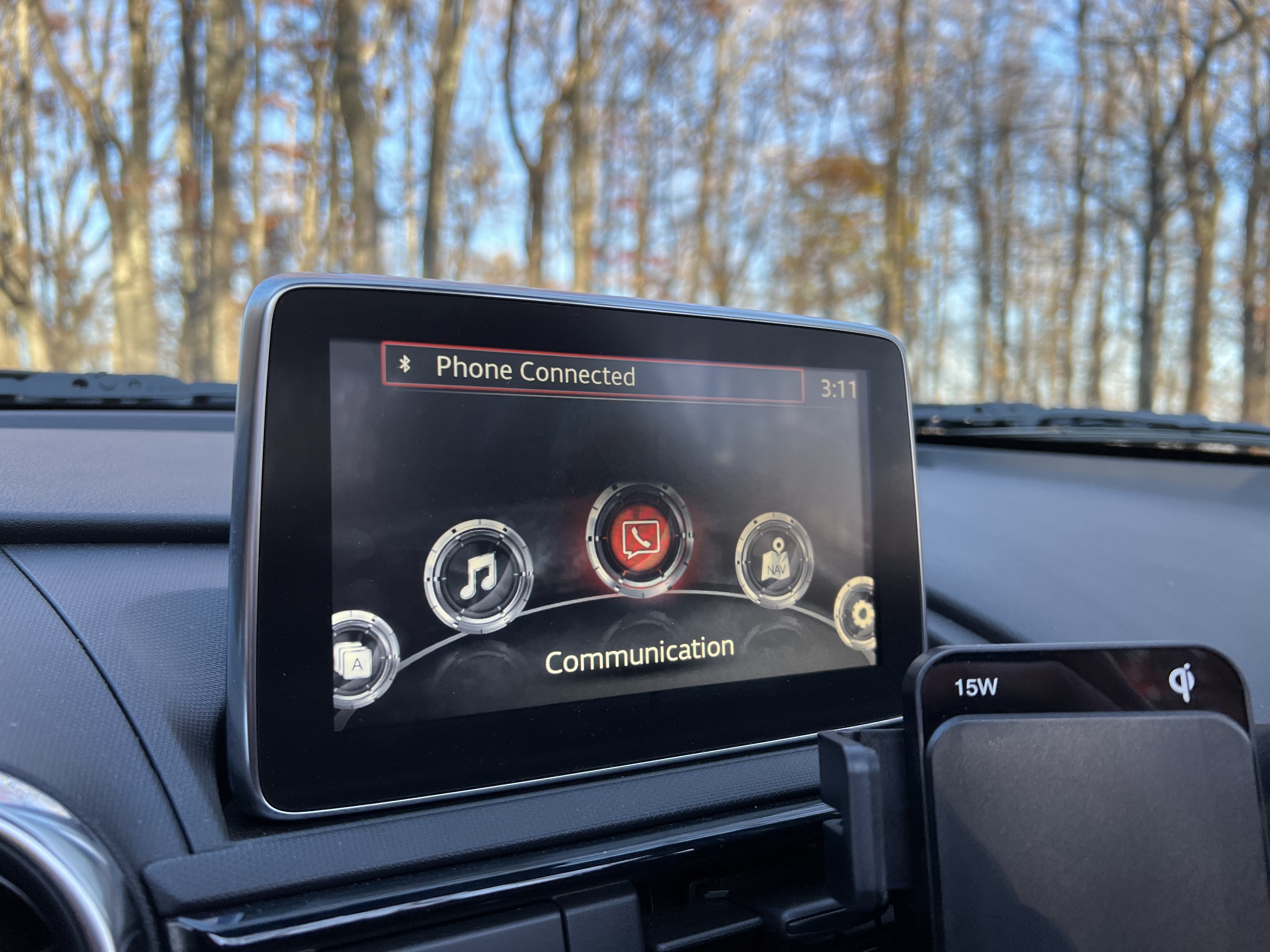
As good as their cars usually are overall, Mazda has never been the greatest at developing infotainment software. Their mid-2010s-era system, as featured in the ND Miata and every other product until 2021, is not the worst one out there but is certainly not without flaws.
For one, the screen isn’t particularly big, but in a small car like the MX-5, that’s not really a big deal. While it does feature a home menu where you can cycle through the typical functions such as navigation, phone, radio, etc., there’s no split-screen view to show more than one page at a time. I suspect the screen size is ultimately the limiting factor there.
Unlike the newer-generation software in the current Mazda3 and others, the old system in the Miata does at least feature a touchscreen. Unfortunately however, for some reason Mazda decided to lock out touch capability when the vehicle is in motion, forcing you to use the rotary dial and buttons instead. There’s nothing objectively wrong with the dial and button controls, but since the screen is well within arms reach, it would just be simpler and easier to use it as a touchscreen.
It’s also lacking a couple features, one being Apple CarPlay. In 2017, CarPlay had only been around for a year or two, but many manufacturers had already adopted the software. It allows easier control and more visibility of your iPhone functions; my favorite is always the ability to have Waze or Google Maps from your phone directly on the car’s screen.
Additionally, backup cameras did not become mandated in the United States until 2018, and Mazda was firmly a holdout. Once again thanks to the size of the Miata, the lack of one is not detrimental, but most new cars already had cameras standard by the time they were mandated — and it’s especially a weird omission on a fully-loaded Grand Touring that was around $35,000 new.
| Vehicle Tested | 2017 Mazda MX-5 Miata RF Grand Touring |
| Color | Jet Black Mica / Black Leather |
| Drivetrain | 2.0L NA I4, 6-spd manual, Rear wheel drive |
| HP / Torque | 155 horsepower / 148 lb-ft |
| Curb Weight | 2,430 lbs (est.) |
| 0-60 mph | 6.1 seconds (est.) |
| EPA Fuel Econ | 26 city / 33 hwy / 29 combined |
| MSRP | $35,520 (est.) |
 Also Andrew