
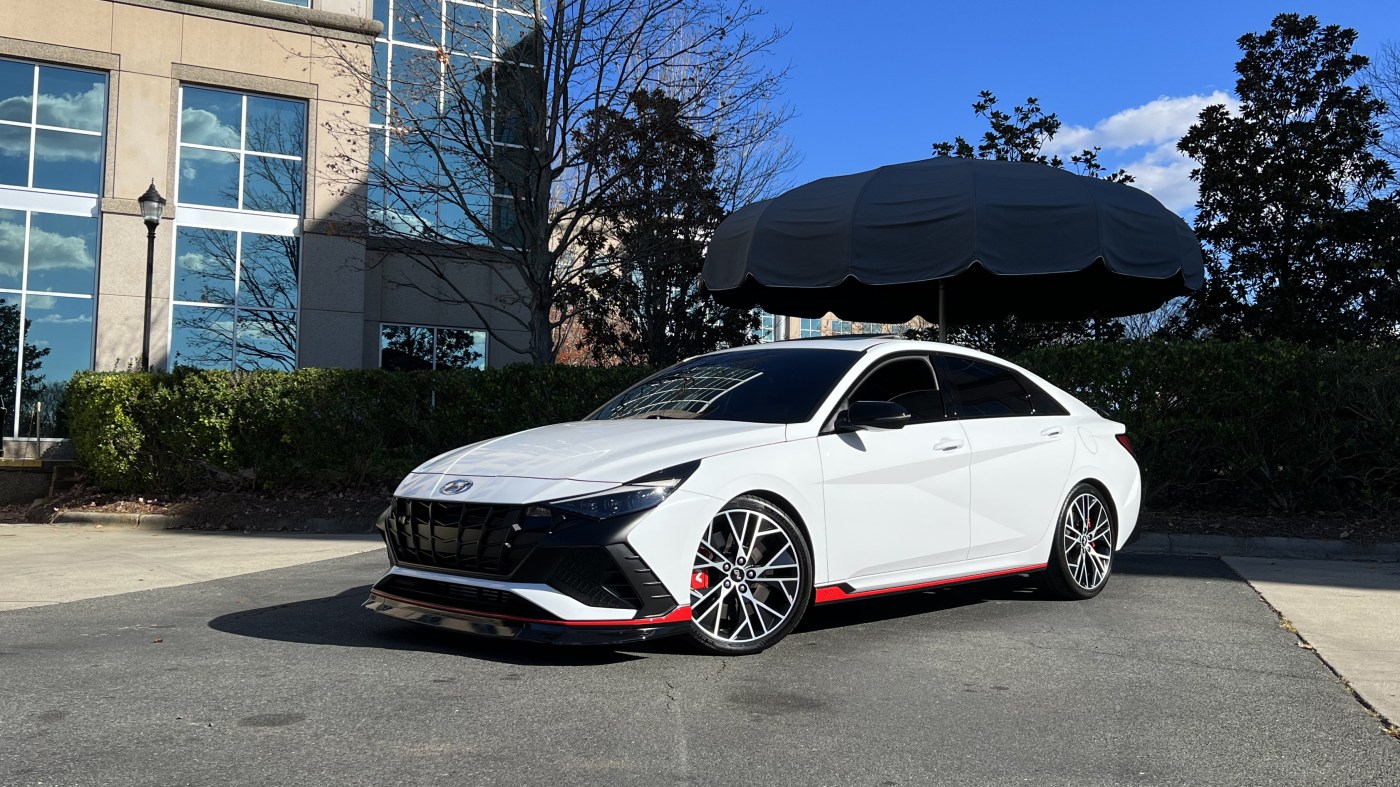

Last year, I came very close to buying a Veloster N, Hyundai’s quirky hot hatchback. The Elantra N takes all of the fun and hilarity of the Veloster and turns the otherwise typical rental car into an excellent performance car, but in usual Korean fashion one that is still slightly flawed. And yet, I desperately love it.
What Hyundai has created is one of the best value sport sedans on sale right now. For one thing, you’ll find a 2.0-liter turbocharged four-cylinder under the hood just like a Volkswagen Golf GTI or Jetta GLI, but one that produces significantly more power. The Elantra shares its horsepower figure with the Veloster, but actually makes more torque thanks to a bigger turbo. In stock form, the Elantra N puts out 276 horsepower, which is a 15 percent increase over a Mk8 GTI. Torque comes in at 289 pound-feet, which is only a 6 percent bump, but it’s still something.
It also sounds fantastic. The Elantra N undoubtedly has the best exhaust note of any car in its class, and is by far the loudest — to the point where it’s famously gotten owners in trouble with the police.
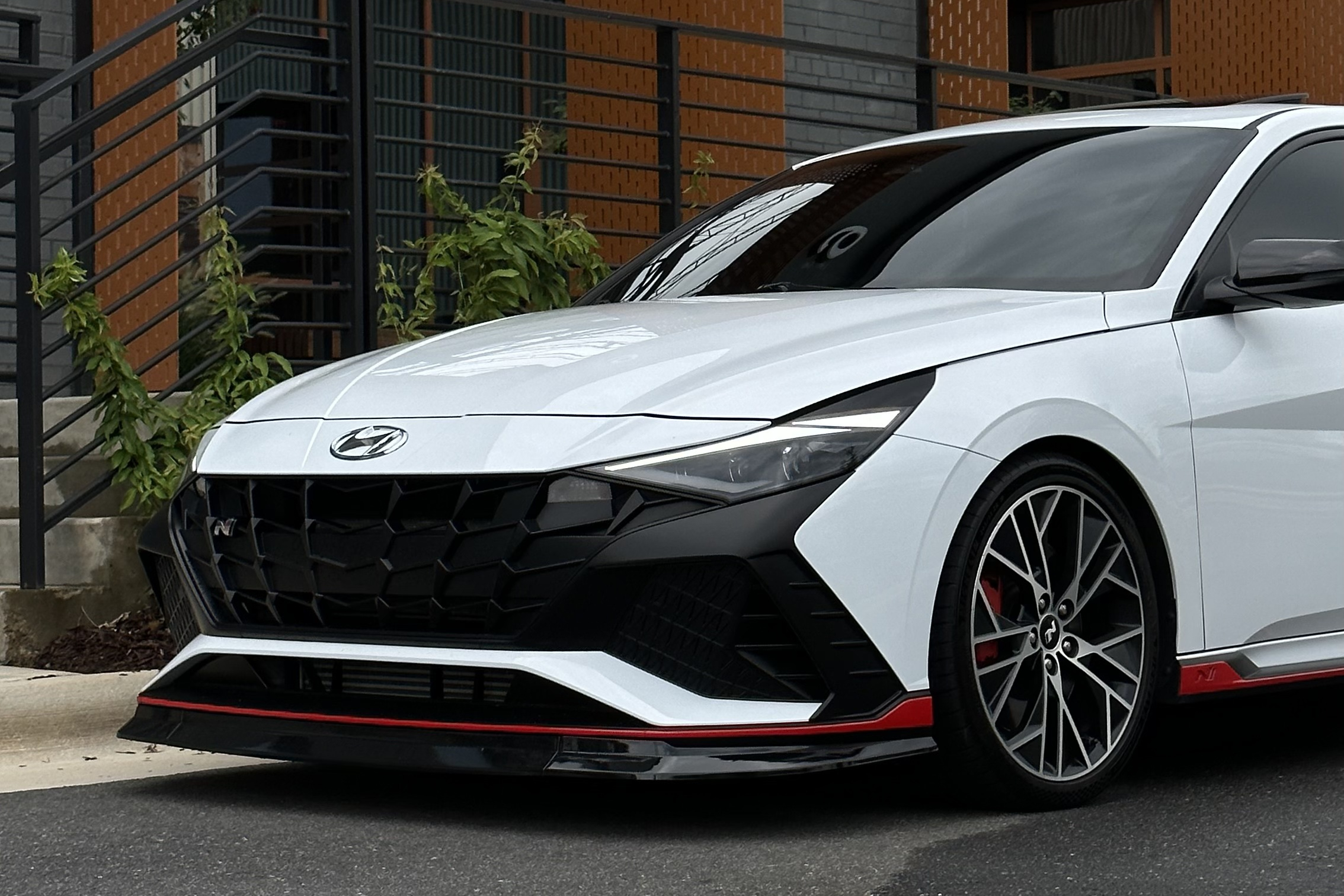
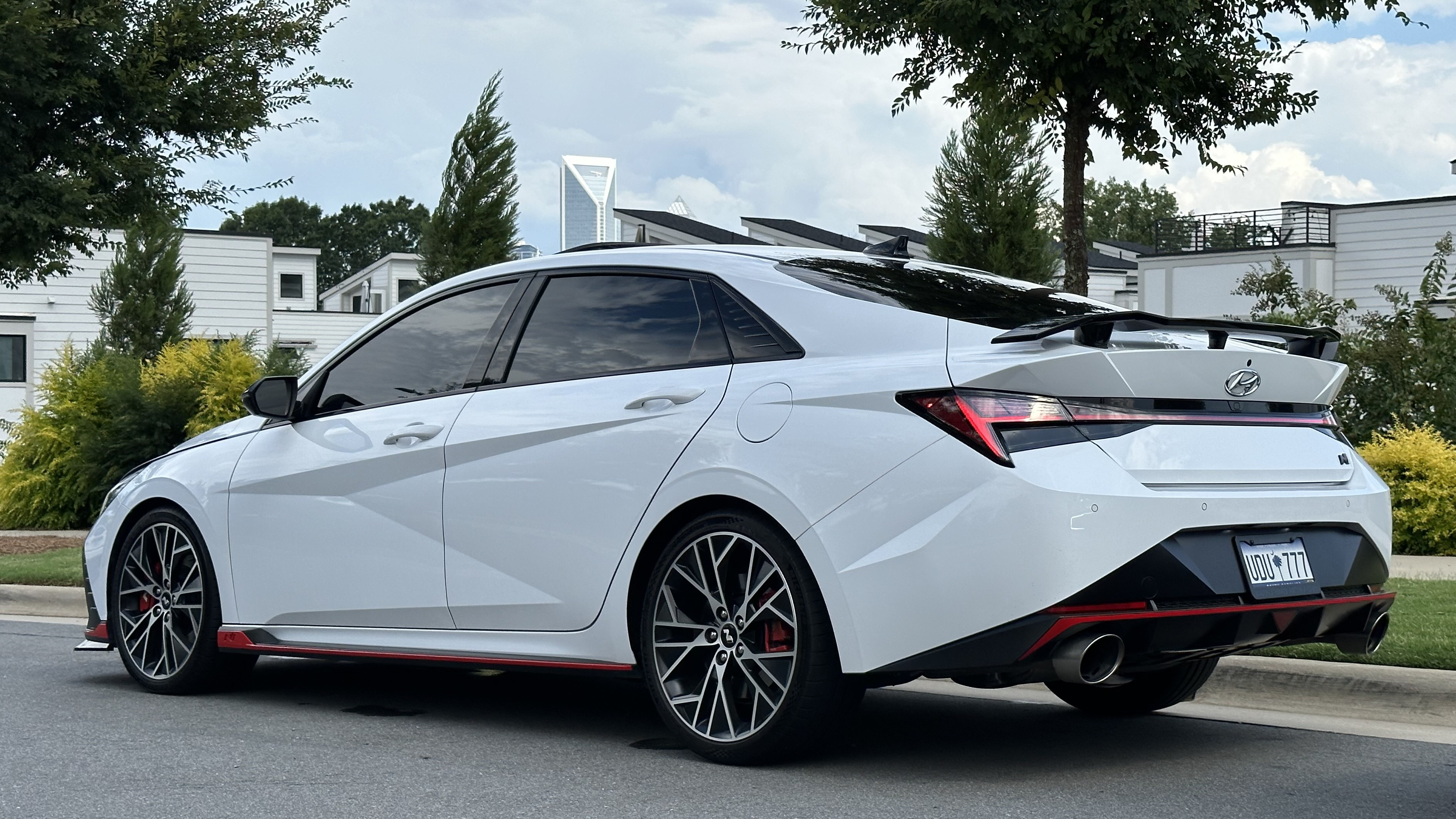
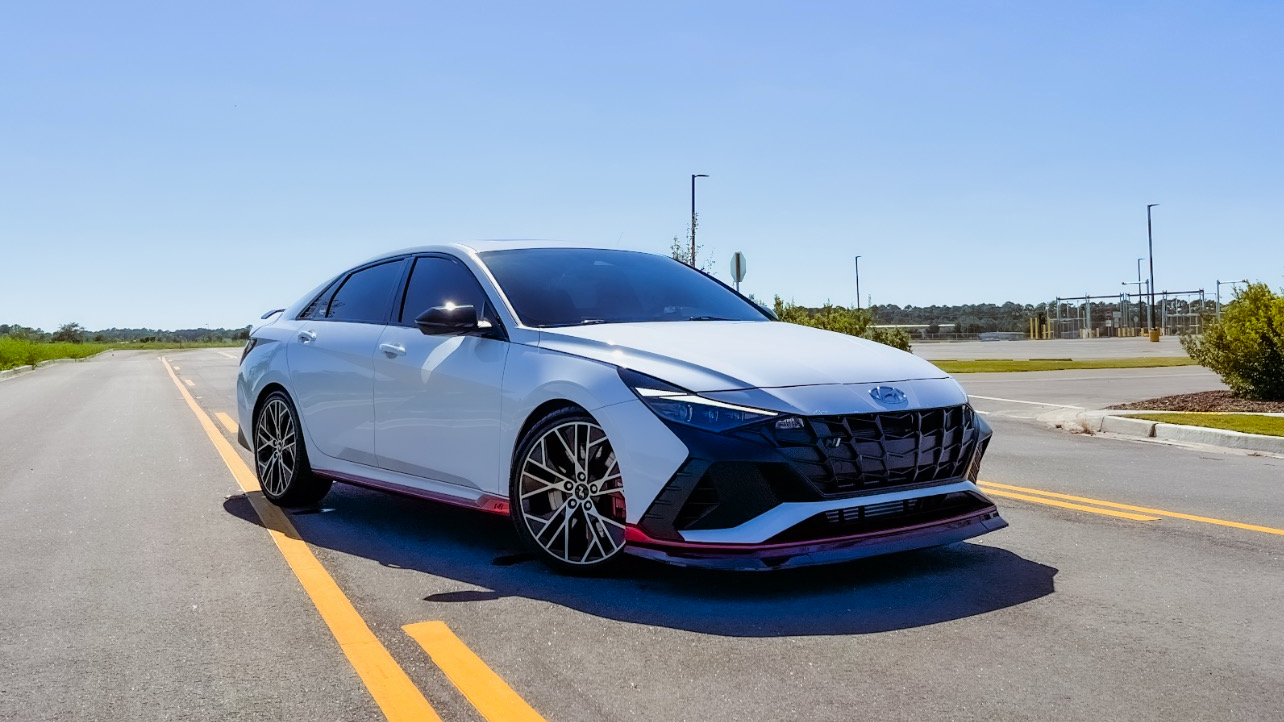
Compared to most VW or Honda offerings where most people wouldn’t be able to tell the performance version from the regular one, the Elantra N certainly stands out. The whole exterior of the N is more aggressive, and while the white/red/black color scheme works pretty well, I don’t love the front grille. Personally, I think black paint with red accents would be the way to go.
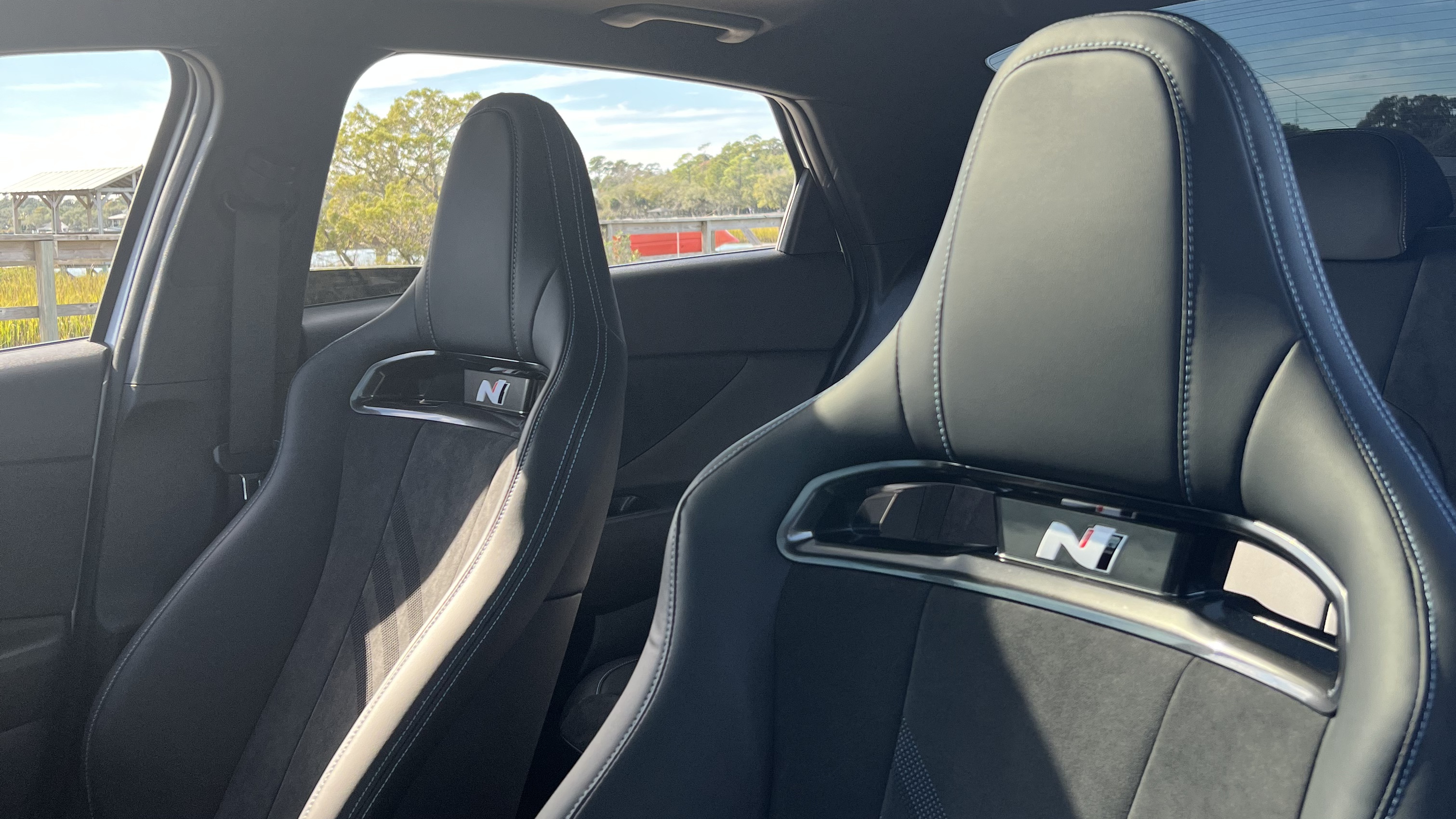
Inside, the N is also noticeably different from the regular Hertz-spec Elantra, but unfortunately a bit overdone in some ways. One of the biggest changes by far are the seats. They’re gorgeous, with a mix of leather and patterned Alcantara (matching the door panels), blue stitching, and light-up N logos, but they’re fully manually adjustable. The Honda Civic Type R features a similar detriment, so it’s not unique to Hyundai. It’s something I also complained about when I reviewed the Audi RS3 last year — I understand the point of the manual seats (weight reduction and so on), but do they really make that much difference in terms of performance?
Either way, the seats are still super comfortable and offer a nice level of bolstering without making entry and exit inconvenient. The rear seats are equally nice — just as visually fancy as the fronts — but in the name of cost cutting are lacking air vents or any other amenities. At 38 inches, the Elantra offers the most rear legroom in the compact sedan segment, as well as a trunk that’s on-par with rivals.
Of course, the rear seat backs fold down, but upon doing so you discover the red triangular metal bracing that lives behind them. The red bars look really cool, and provide extra stiffness and rigidity to the N, but also severely limit practicality. I’m told you can remove the assembly with a few bolts, but who wants to go through the extra hassle of doing that every time you need to carry more stuff with you?
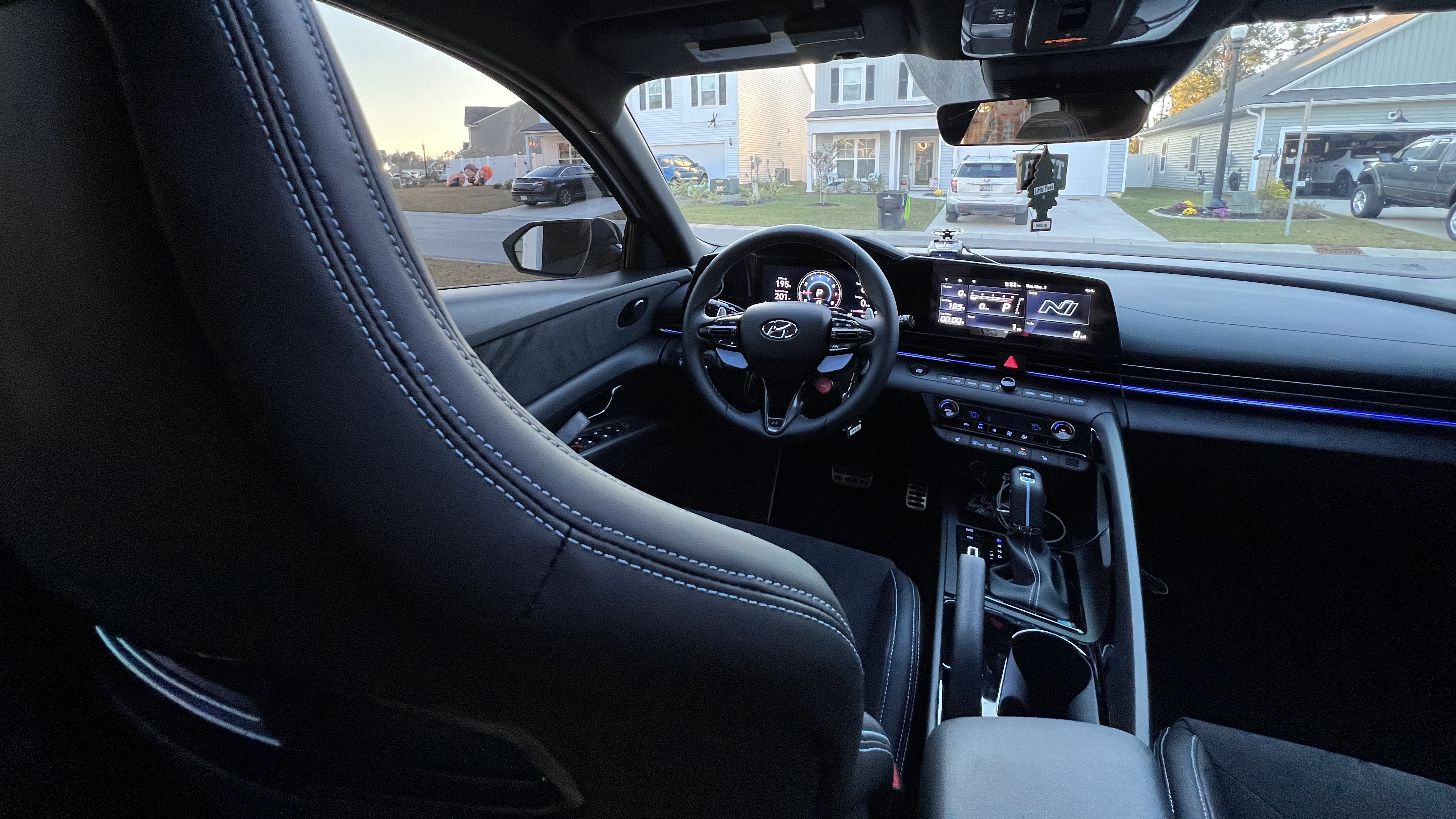
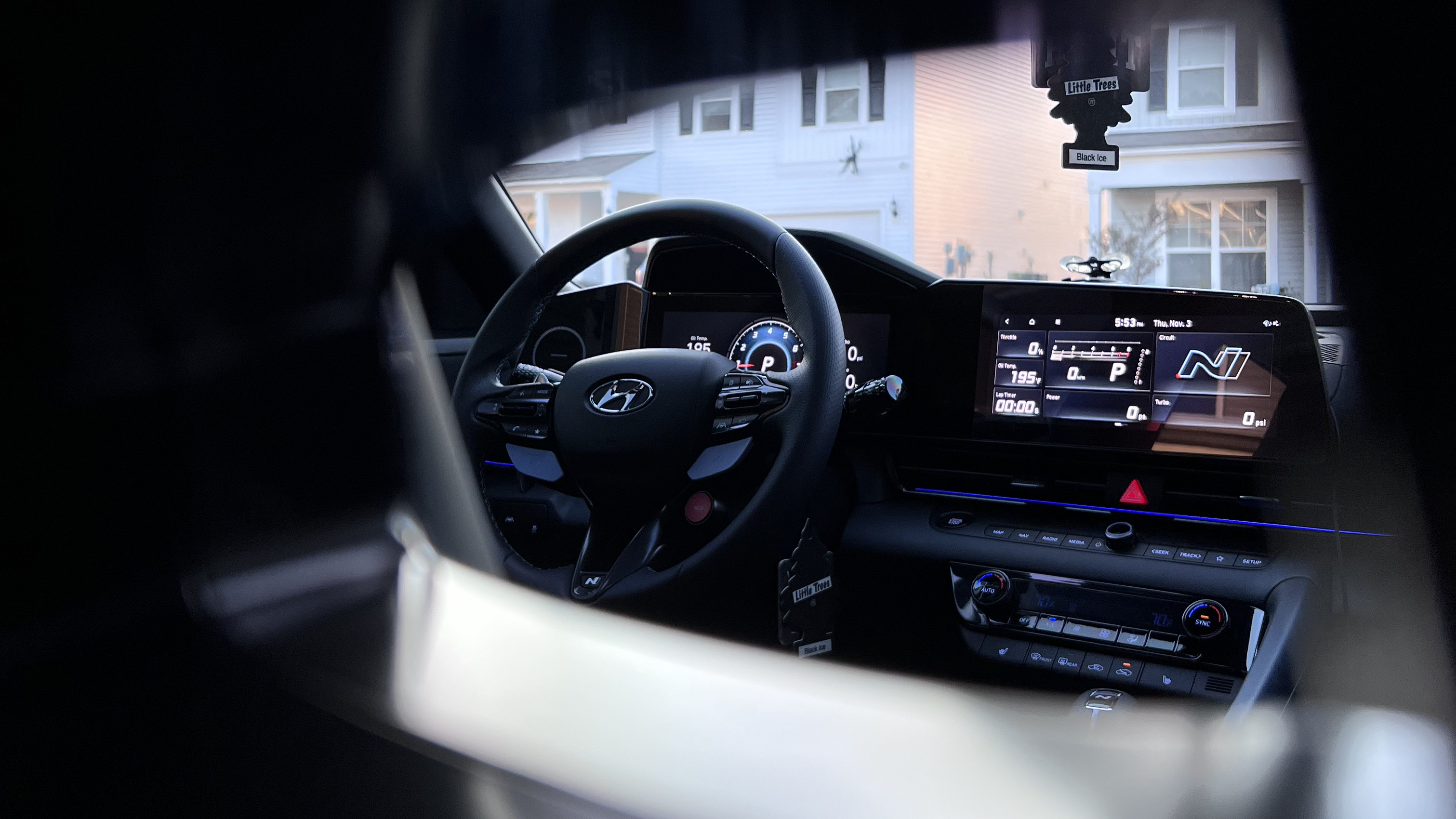
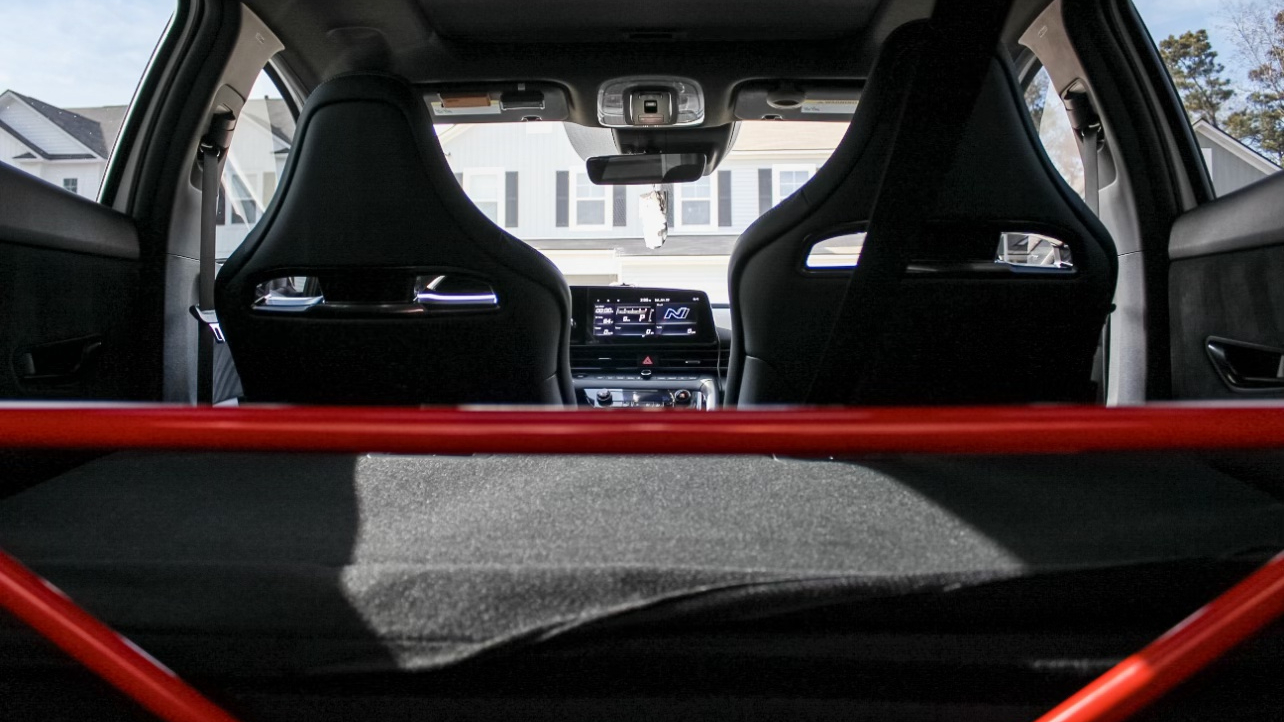
On the subject of stiffness, Hyundai claims the N is 29 percent stiffer in twisting rigidity than a regular Elantra. That figure is apparently achieved by modified underbody mounting points, an exhaust tunnel brace, and a new strut ring (adding reinforcement at the top of the strut tower), in addition to the bracing behind the rear seats.
While I haven’t driven any other Elantra of this generation, I certainly can’t argue that the N isn’t stiff and sharp in every way. Versus the regular car, the N gets adaptive dampers, larger front brakes, a tighter steering ratio, a different front axle setup, and 19-inch wheels with 245-width tires. Oh, and one other thing — a limited-slip diff that Hyundai calls the “N Corner Carving electronic LSD.” That’s almost as stupid as Mercedes’ Magic Vision Control (which is basically just putting the windshield washer jets in the wiper arms), but name aside, it’s excellent.
When pushing on a bit, the Elantra N does carve corners very well. There’s tons of grip, no discernible understeer, and only a little bit of torque steer on corner-exit throttle — but Hyundai says that’s a feature, not a flaw. Albert Biermann, head of research and development for Hyundai Motor Group, says he wants the Elantra N to come alive in your hands without feeling like it’s getting away from you.
And when you provide it with some throttle, it’s seriously quick. The manufacturer-quoted 0-60mph time is 5.2 seconds with the eight-speed DCT, but you can easily enter the high fours with launch control in most conditions. There’s also a red overboost button on the steering wheel labeled NGS, for “N Grin Shift”. When pressed, it unlocks an extra 10 horsepower for a 20-second burst. That’s also a silly name, but much like the differential, it works superbly.
The hilarity of the Elantra N is really what it’s all about. Sure, the Golf GTI is certainly more practical, but also a bit more dull, and considerably more expensive when fully loaded. The Jetta GLI and Honda Civic Si both are significantly less powerful and slower than the N, and while the Golf R and Civic Type R fix that, good luck finding one anywhere near the low-$30,000 price point of the N.
Yes, it’s flawed, but so is just about every other car in some way or another. Once you find yourself on a backroad, you’ll forget about all of its shortcomings — and I really want one. Until I inevitably have to put something long in the back, that is.
| Vehicle Tested | 2022 Hyundai Elantra N |
| Color | Ceramic White / Black |
| Drivetrain | 2.0L turbocharged I-4, 8-speed dual-clutch, Front-wheel-drive |
| HP / Torque | 276 horsepower / 289 lb-ft |
| Curb Weight | 3,295 lbs (est.) |
| 0-60 mph | 4.8 seconds (est.) |
| EPA Fuel Econ | 20 city / 30 hwy / 23 combined |
| MSRP | $34,465 |
 Also Andrew
Leave a comment