

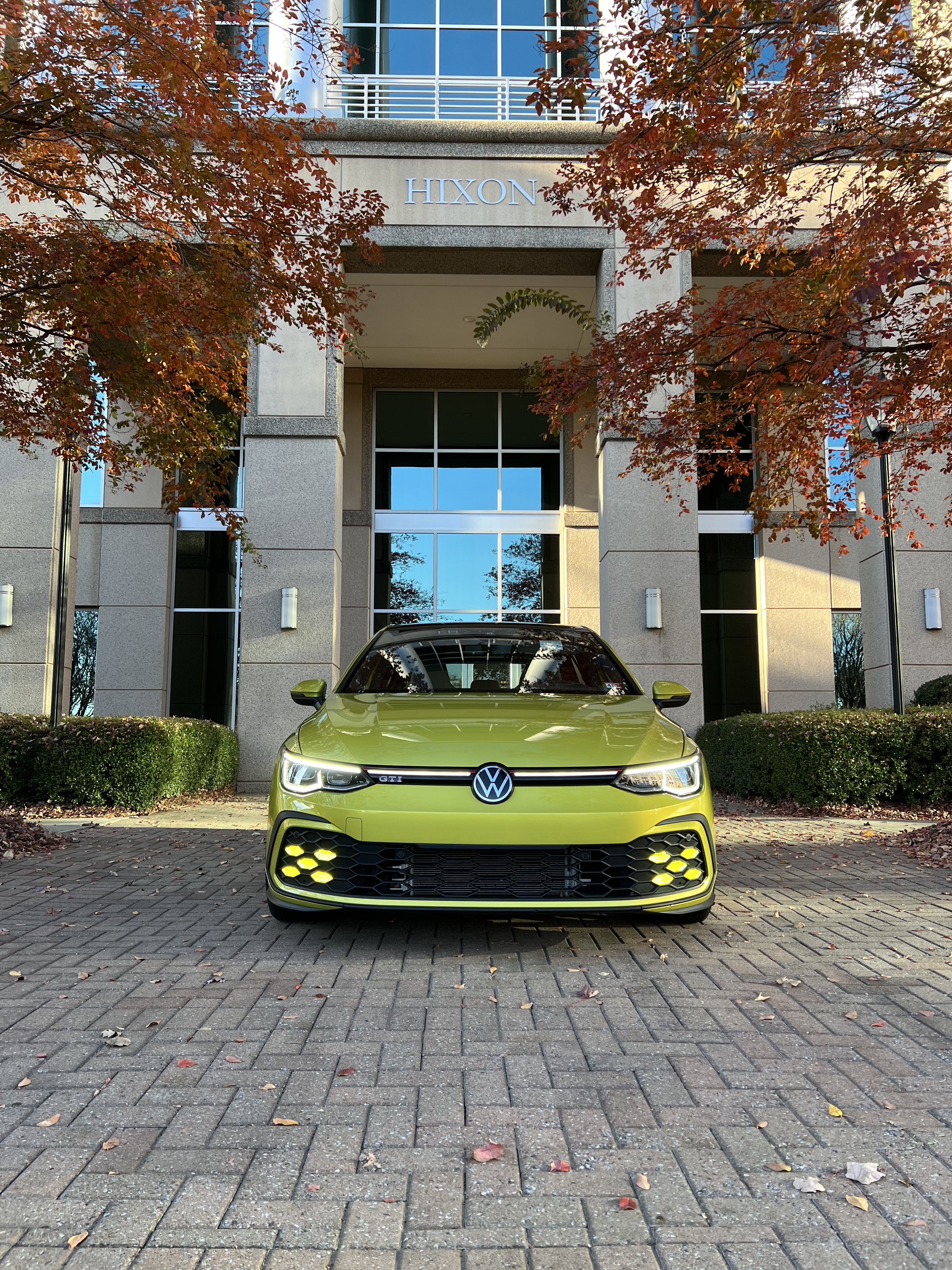


The Volkswagen Golf GTI is known around the world as the hot hatchback. It’s become loved for being a solid, fun, well-rounded car. Now in its eighth iteration since first going on sale forty years ago, Volkswagen has taken its typical evolutionary approach to redesigning their legendary name.
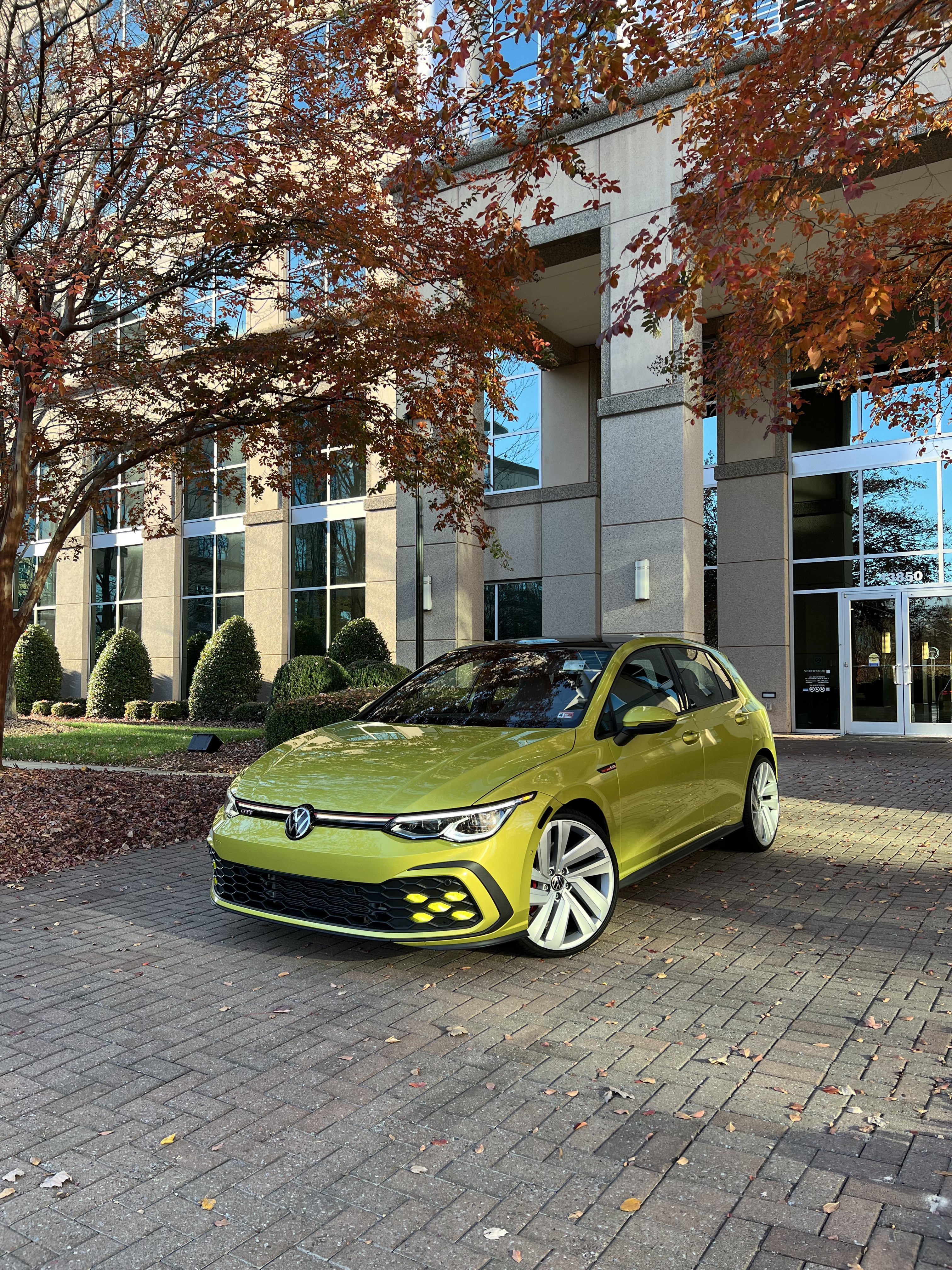
On the outside, you’d be forgiven for mistaking the Mk8 GTI for a facelifted Mk7. Most of the body lines are curvier (whether that’s to your taste or not) and the whole exterior has been modernized, but the overall shape remains very similar. The exterior dimensions are almost exactly the same as the previous GTI, with the biggest change actually being the loss of roughly an inch of height.
In Autobahn trim, you’ll find full LED head- and taillights with switchback amber turn signals, as well as 19-inch alloy wheels. However, our test vehicle instead features a set of wheels from a Volkswagen Atlas and aftermarket European-style lights, which I love.
Aside from the Autobahn, two lower trim levels are also available: S and SE. All three share the same engine and drivetrain options; the sole engine being a turbocharged 2.0-liter inline-four paired with front-wheel-drive and either a six-speed manual transmission or seven-speed DSG. In stock form, it produces 241 horsepower and 273 pound-feet of torque, which are respectable but not over-the-top figures in the hot hatch segment these days.
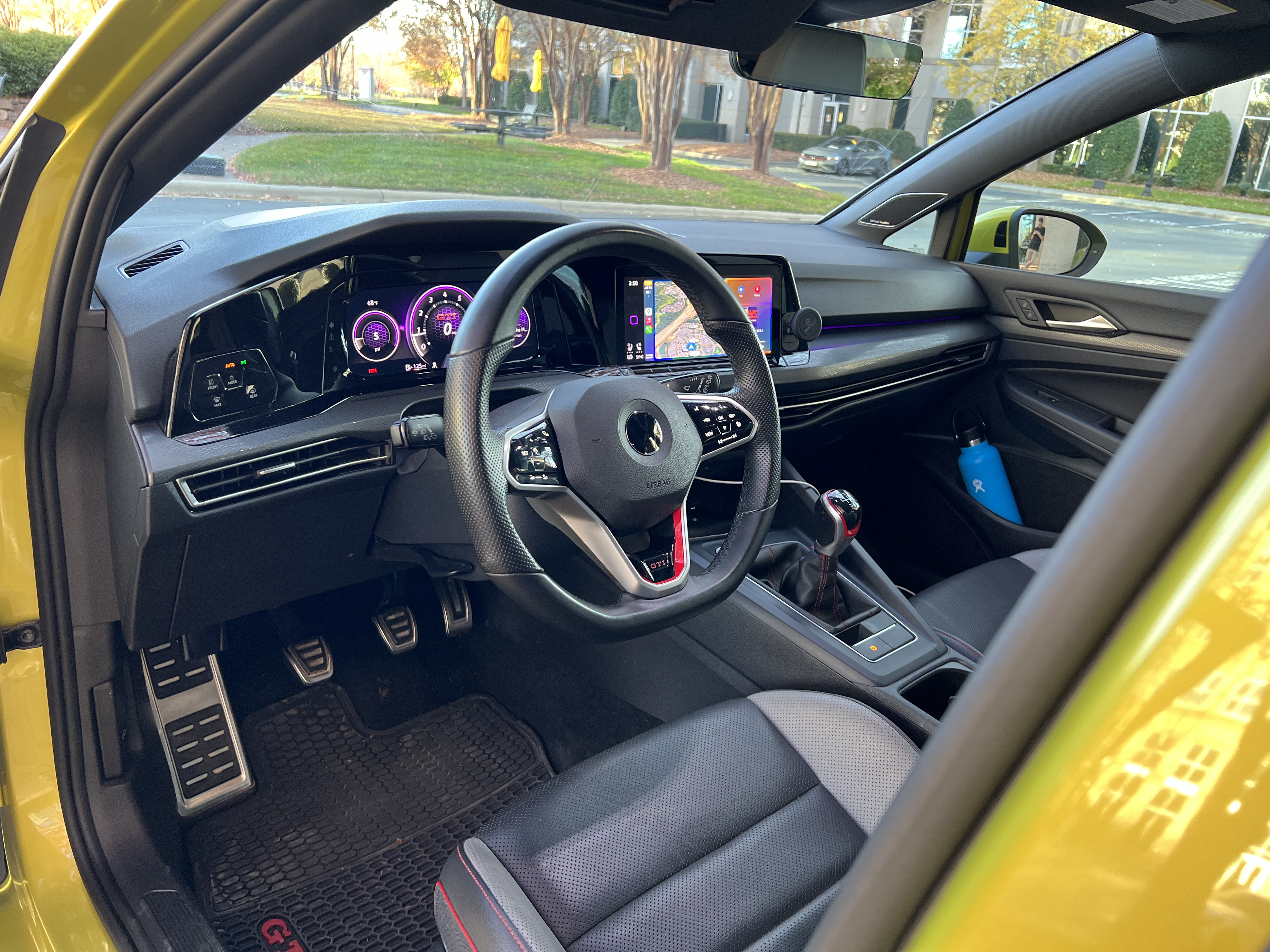
Inside, the cabin feels well put together and surprisingly upmarket, despite being filled with hard plastics in many areas. For instance, the steering wheel is chunky and wrapped in partially-perforated leather, and the manual shifter features a rubberized golf ball texture which I love. Front seat comfort is excellent though not super customizable, and three-zone ambient lighting throughout is a nice touch. The seats lack adjustable side bolsters, but do have three-position memory and allow you to have the heat and ventilation running simultaneously.
Many modern features are now standard across the range, including parking sensors, a heated steering wheel, and a digital gauge cluster. Fully loaded, the Autobahn brings upgrades such as ventilated seats, heated rear seats, a heads-up display, a sunroof, and others, but such things bring the GTI over $40,000 for the first time ever.
One of the largest pain points commonly agreed upon with the Mk8 GTI’s interior is the lack of physical controls for basic functions. As is the trend nowadays, the Mk8 loses most traditional buttons, with some odd exceptions. The larger 10-inch infotainment system on upper trims features a row of touch-sensitive climate buttons along the bottom, but lacks a traditional volume control. I also recently drove a base S model, and was surprised to find volume and tuner dials with the smaller 8-inch display, but in that car VW decided to take away the climate controls! You really can’t win with either setup — while gaining the preferred volume adjustment method, you’re simultaneously forced to use the screen for all temperature and heated seat adjustments. Additionally, the touch bar below the screen is not backlit, and therefore virtually invisible at night.
Regardless of screen size, the user interface is ultimately annoying in most ways. The capacitive steering wheel buttons are overall difficult to use — for instance, the difference in press-firmness needed for adjusting cruise control in 1 mph versus 5 mph increments is very difficult to modulate. The infotainment software isn’t the greatest, but wireless Apple CarPlay works well and I personally just use that instead. In the digital gauge cluster, layouts and customization are excellent as in most VW products; whereas the heads-up display is somewhat lacking. Additionally, if you don’t use the built-in navigation system, the entire HUD appears to be off-center, as your speed and cruise control are offset to the left side.


As ever, the GTI is genuinely excellent to drive. The EA888 turbo-four produces plenty of power and torque stock, but is also highly tune-able if you desire. Our test car does happen to be tuned and runs on E85 flex fuel for even more power. The exhaust is significantly louder than the Mk7 GTI, and sounds rather good as well. The artificial sound generator is surprisingly much more bearable than in the Mk7 GLI I reviewed, but you can still turn it off or completely disconnect it if you really can’t stand it. Equipping the DSG automatic transmission versus the manual yields a full half-second drop in 0-60 time, though 6 seconds with the manual is still respectable.
Of course, the tuned test car is quite a bit quicker than that. The owner tells me it produces around 400 horsepower, which I believe, but much like the tuned Mk7 GTI I’ve driven extensively, it struggles to put that power down until almost third gear.
Speaking of the manual gearbox, gear changes are short, but the shifter is not super crisp; the clutch is light and doesn’t have a very clear engagement point. It’s difficult to get to grips with, even after multiple starts. Despite this, overall driving pleasure is still top-notch. Body control is excellent, and the retuned electronic limited-slip differential eradicates an impressive amount of understeer. The ride is well controlled but very stiff, though apparently the Dynamic Chassis Control’s adaptive shocks react more quickly than before.
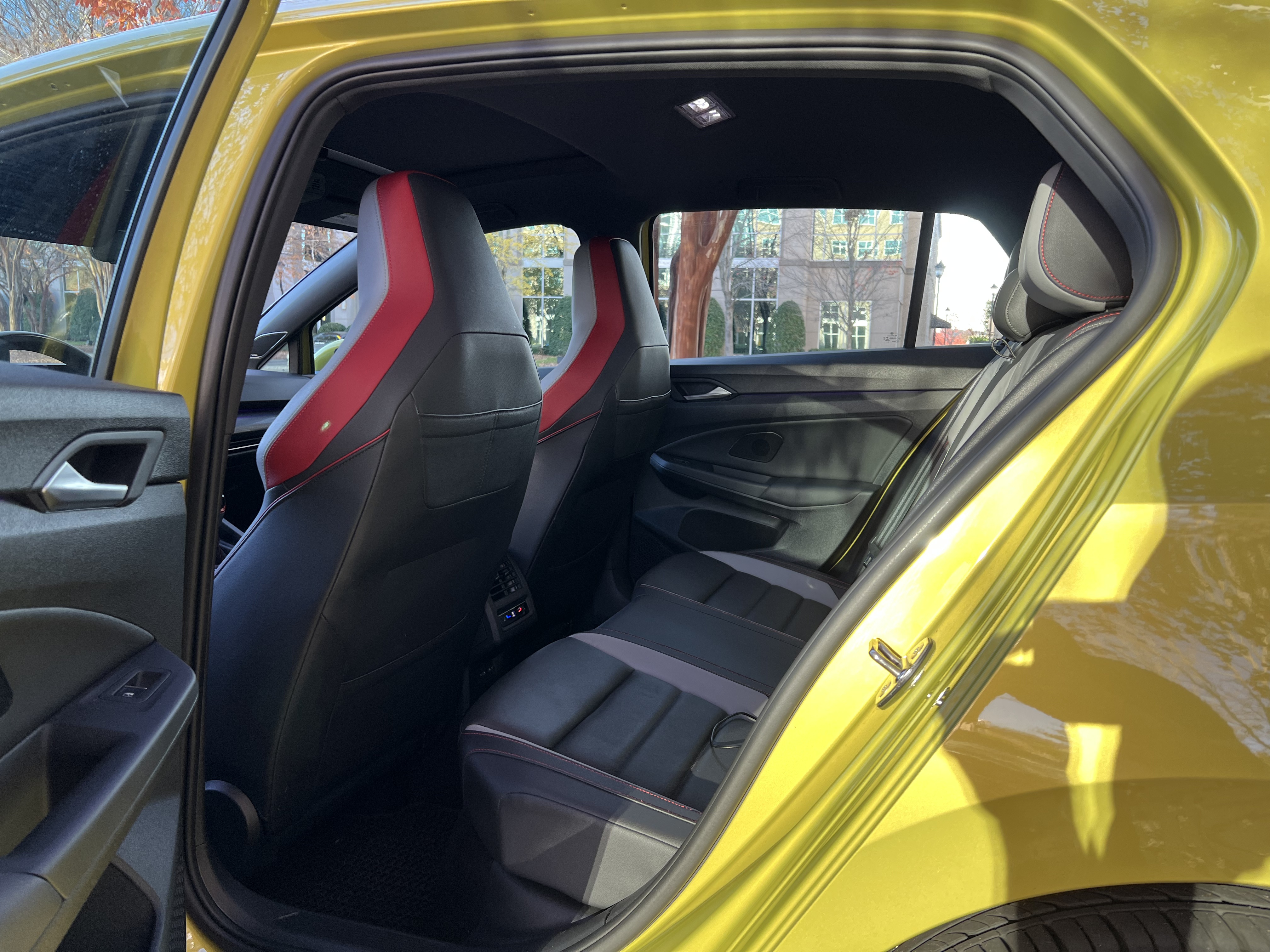
Overall, the GTI continues to be a well-rounded daily driver. Sure, cargo space and rear legroom are slightly compromised compared to the Taos crossover, but the Golf is still plenty practical and fits four adults comfortably. Per the EPA, fuel economy is average, but I have personally achieved over 40 MPG highway in the Mk7, so I suspect the Mk8 is equally underrated. Running E85 always drops fuel economy significantly, so I can’t get a true comparison with this particular car, despite having done over 600 miles in it.
Personally, I wouldn’t be able to justify spending over $40,000 on a GTI. The base S model boasts a solid feature-set (yes, you lose some things like the adaptive dampers and cooled leather seats, but all the basics are still present) and comes in nearly ten grand cheaper depending on color and transmission selection. I would also be tempted by a pre-owned Mk7.5 Golf R in the high-$30,000 range, which produces more power than a stock GTI, adds all-wheel-drive, and features an arguably better interior from a technology standpoint.
That said, these days there’s really not much competition left for the GTI or Golf R. Ford’s hatchbacks are gone from the US market, and every other performance rival is a sedan or crossover. If you can live with the awful infotainment, the GTI is still an easy top pick. Just leave the temperature on the same setting forever — simple enough, right?
| Vehicle Tested | 2023 Volkswagen Golf GTI Autobahn |
| Color | Pomelo Yellow Metallic / Titan Black |
| Drivetrain | 2.0L turbocharged I-4, 6-speed manual, Front-wheel-drive |
| HP / Torque | 241 horsepower / 273 lb-ft |
| Curb Weight | 3,205 lbs (est.) |
| 0-60 mph | 6.1 seconds (est.) |
| EPA Fuel Econ | 24 city / 34 hwy / 28 combined |
| MSRP | $40,305 |
 Also Andrew