

Volvo To Stop Funding Polestar EV Brand
Polestar, what was once a Swedish touring car racing team and then a manufacturer-backed Volvo tuner akin to AMG, is now being forced into a slightly different direction once again. Six years ago, Volvo Cars and Geely, the parent company of both, made the decision to spin off the Polestar brand into its own entity, focusing on performance-oriented electric vehicles.
Now, Volvo and Polestar are becoming one step further separated. According to a press release, Volvo will no longer fund the Polestar brand; Geely will now provide full operational and financial support to the EV manufacturer. Geely could also become a “significant new shareholder.” While Volvo won’t be giving Polestar any money anymore, the two companies will continue to collaborate on R&D and manufacturing activities.
Of course, Volvo has the benefit of continuing to produce internal combustion engine cars and SUVs alongside its purpose-built EVs such as the upcoming EX30 and EX90. Polestar exclusively sells electric models, which are currently seeing a decline in sales all around the world. Being a lesser-known brand with a tiny portfolio (just one model currently sold in the US) has caused the company to struggle in its current format.
Reuters reported that after Volvo made the announcement, its stock was up more than 30 percent at market open. Since Polestar went public in June 2022, its shares are down more over 83 percent. To address its financial woes, Polestar said it has “reduced its expected external funding need to approximately $1.3 billion until targeted cash flow break-even in 2025.”


2025 Ford Explorer Has A New Face, New Interior, New Tech
Depending on how you perceive it, the Ford Explorer deserves a large amount of credit or blame for helping create the American public’s desire for sport utility vehicles. The original Explorer debuted for the 1991 model year, and the most recent generation went on sale in 2020, returning to its rear-wheel-drive roots.
While its underpinnings, powertrains, and most body panels remain the same, the 2025 Explorer brings a modest refresh that includes a streamlined trim lineup, a fully-redone interior, and tons of technology changes.
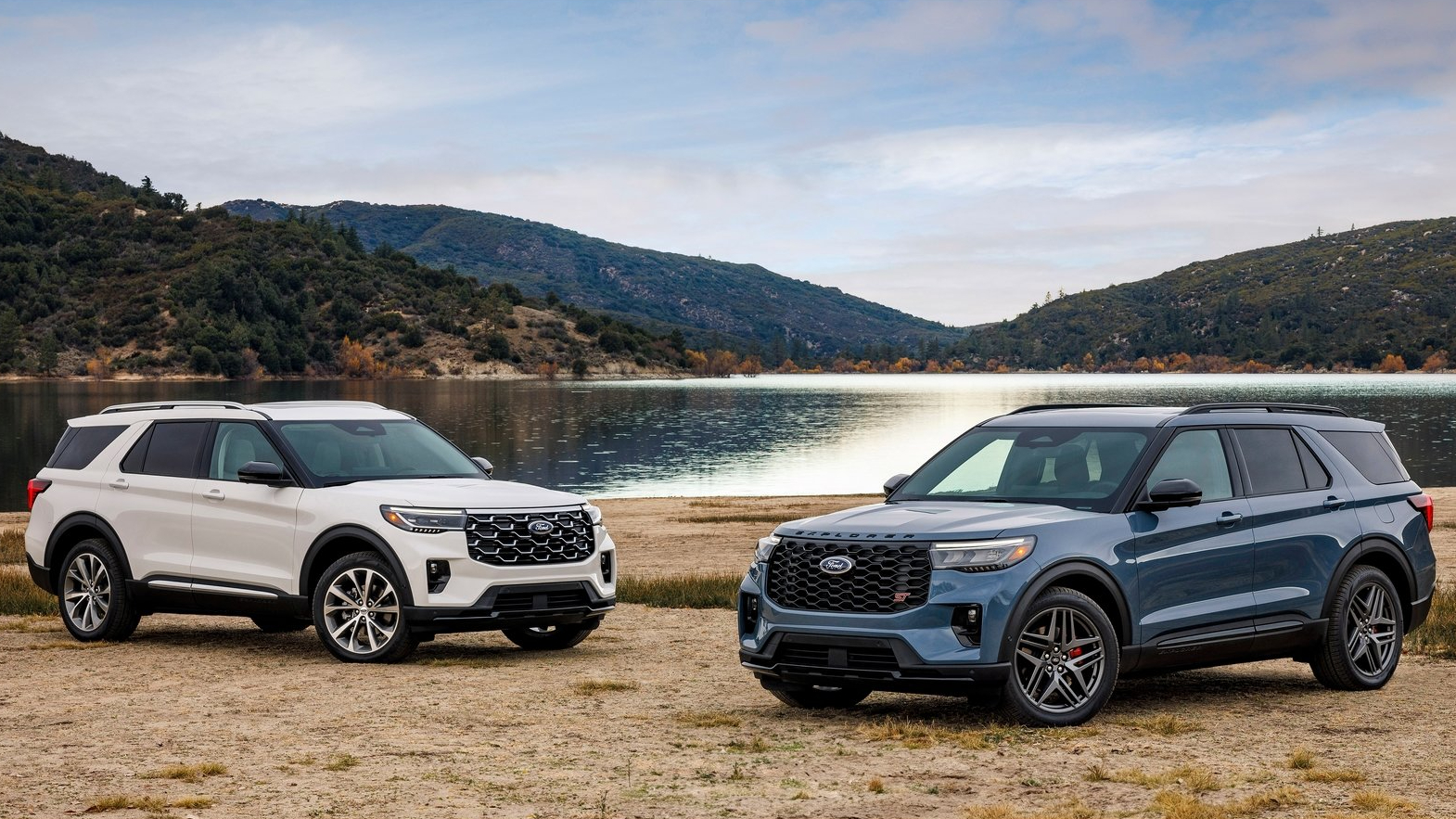
With the new model year, Ford has made the Explorer family significantly smaller in an attempt to reduce complexity and improve manufacturing quality. At launch, the 2025 Explorer pares down the outgoing model’s eight trims to just four: Active, ST-Line, Platinum, and ST. The Active aims to replace the base and XLT models, while the off-road oriented Timberline is notably absent.
Every 2025 Explorer features a larger front grille, new head- and taillights, and restyled front bumpers. Each trim level has a distinct grille design, with a mix of gloss black and satin chrome accents throughout the rest of the exterior depending on model. For the first time, a gloss black painted roof is offered on all trims except the Active. All variants also now come standard with the towing package, though the max tow rating is slightly reduced from last year.
Ford says there aren’t any notable powertrain upgrades to the Explorer this year. All models come standard with rear wheel drive, and AWD is optional. The 2.3-liter EcoBoost four cylinder is now standard on the Active, ST-Line, and Platinum, while the ST retains its 400-horsepower twin-turbo V6. The V6 is also optional on the Platinum, whereas previously it was standard. One potential perk now of going with the ST model is the inclusion of free attendance to Ford’s performance driving school.
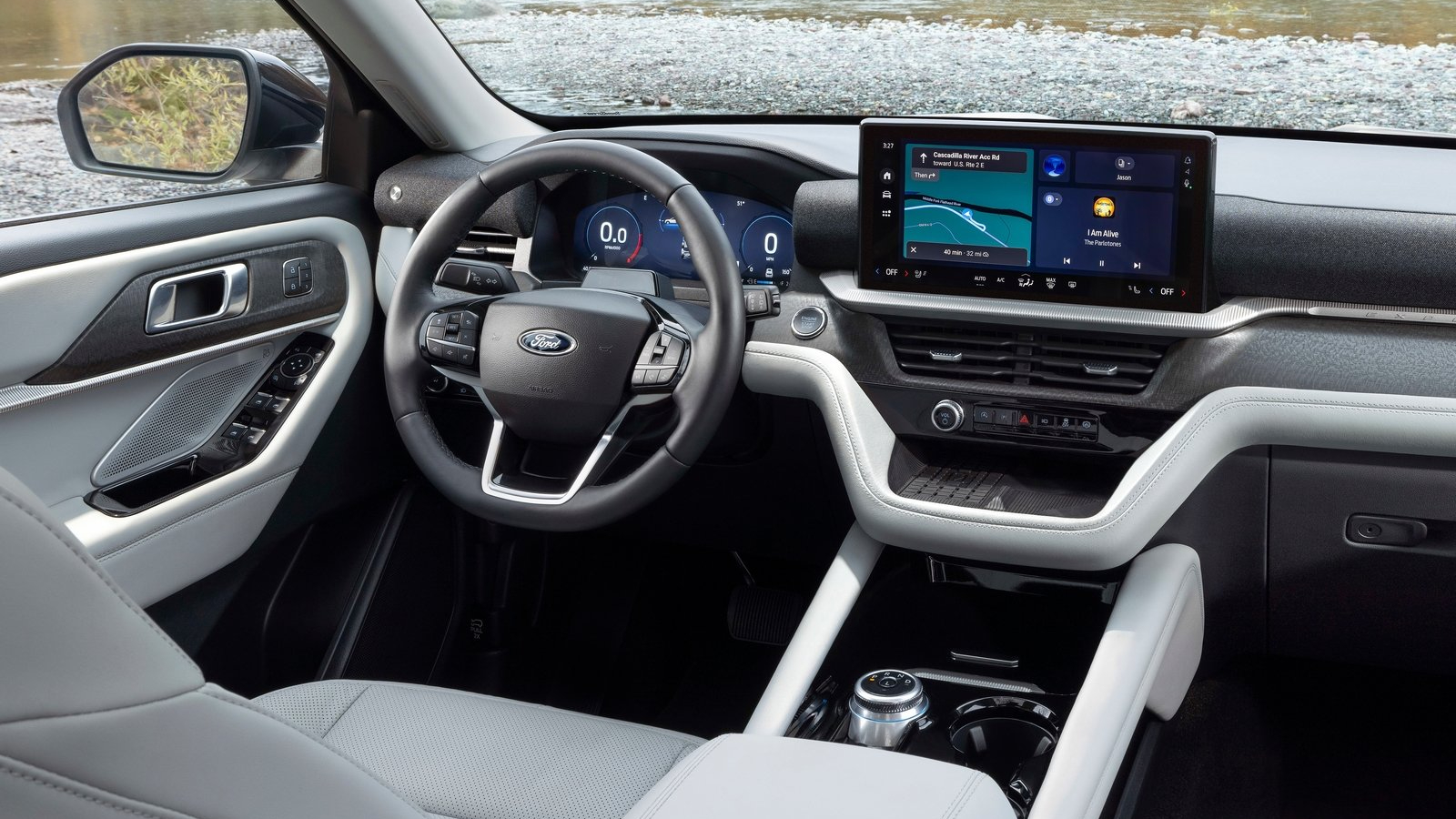
Inside, the 2025 Explorer’s cabin is almost entirely unrecognizable from the current model. That’s definitely not a bad thing — there’s more diversity in materials and textures, a larger landscape-oriented infotainment screen is now standard, and the whole dashboard has been pushed forward to make the front seat area feel more spacious. Ford says the front seats have also been redesigned to be more comfortable, and of course revised interior color schemes are available across the lineup.
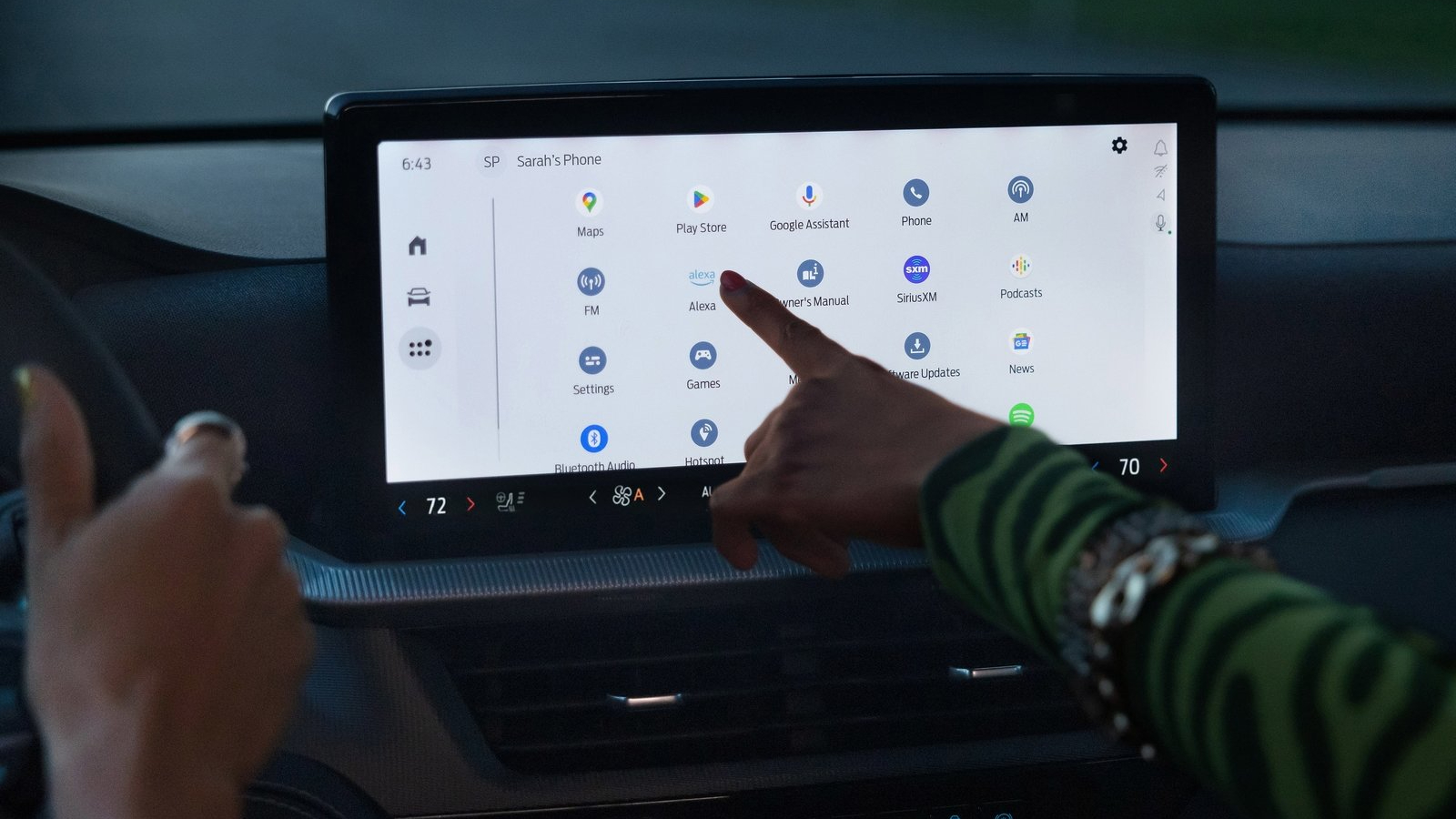
Speaking of the larger infotainment screen, it’s running an all-new Android-based software. While based on Google’s Android Automotive operating system, Ford says all the development was done in-house, and both the infotainment display and gauge cluster display run on a single module for the first time. A full map view is now available in the driver’s display, and a multitude of apps are accessible through the Google Play store. YouTube and Amazon Prime video streaming are available while parked, as is the Vivaldi web browser and the ability to play an assortment of video games with a connected Bluetooth controller (think Xbox or PlayStation).
And when you’re on the move, the BlueCruise hands-free driving system is now offered on all trims except the base. On the other hand, Ford’s Active Park Assist feature is being discontinued across the entire lineup. Despite tons of marketing, the self-parking system has apparently been much less popular than you’d think. Dropping the system is expected to save the company around $10 million annually.
The updated 2025 Explorer is now available to order, and deliveries are expected to begin this summer. The base Active model starts at $41,220, while the performance-focused ST comes in at $56,800, with the ST-Line and Platinum in between.
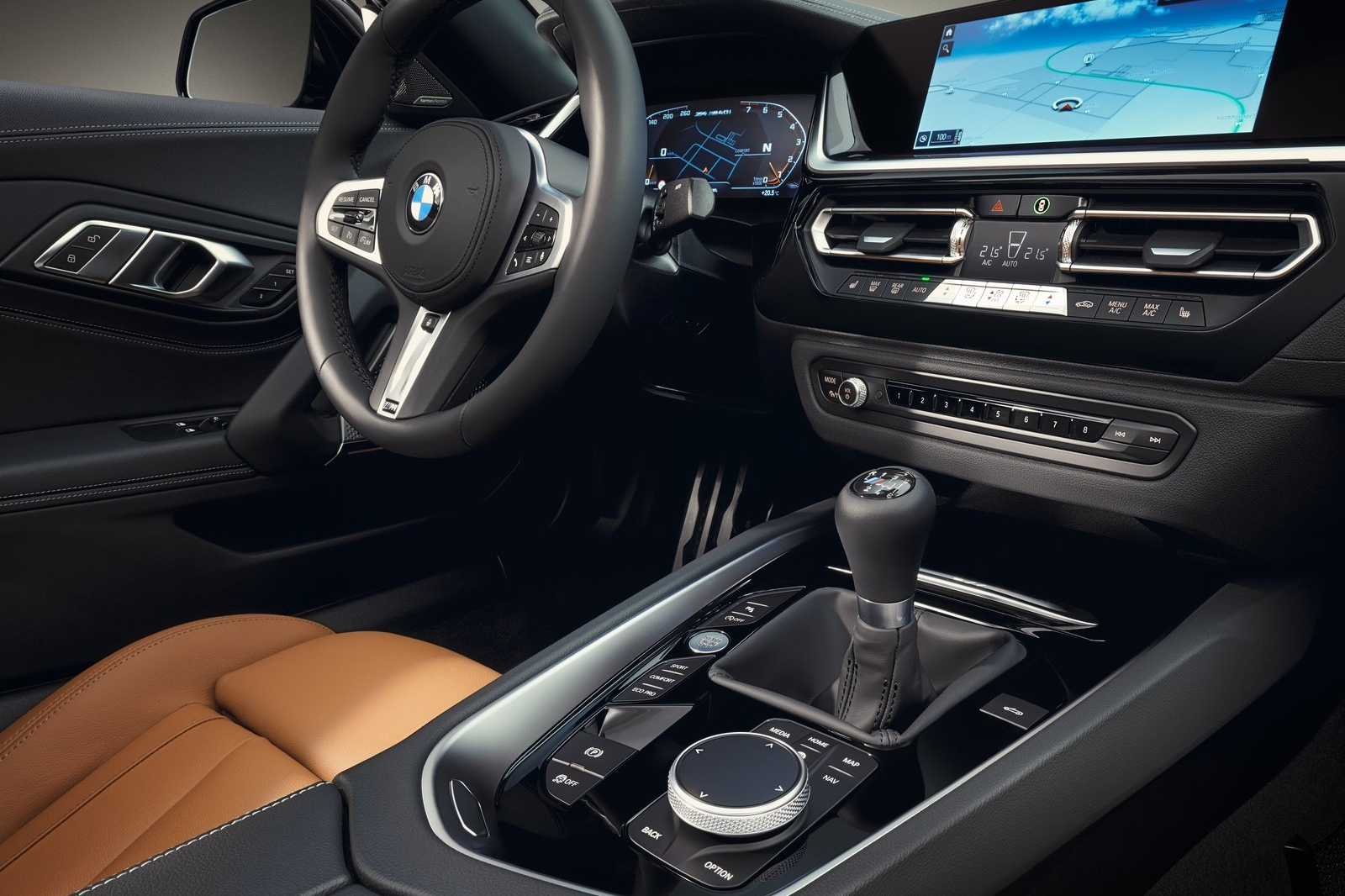
2025 BMW Z4 Gets Handsy With New Gearbox Option
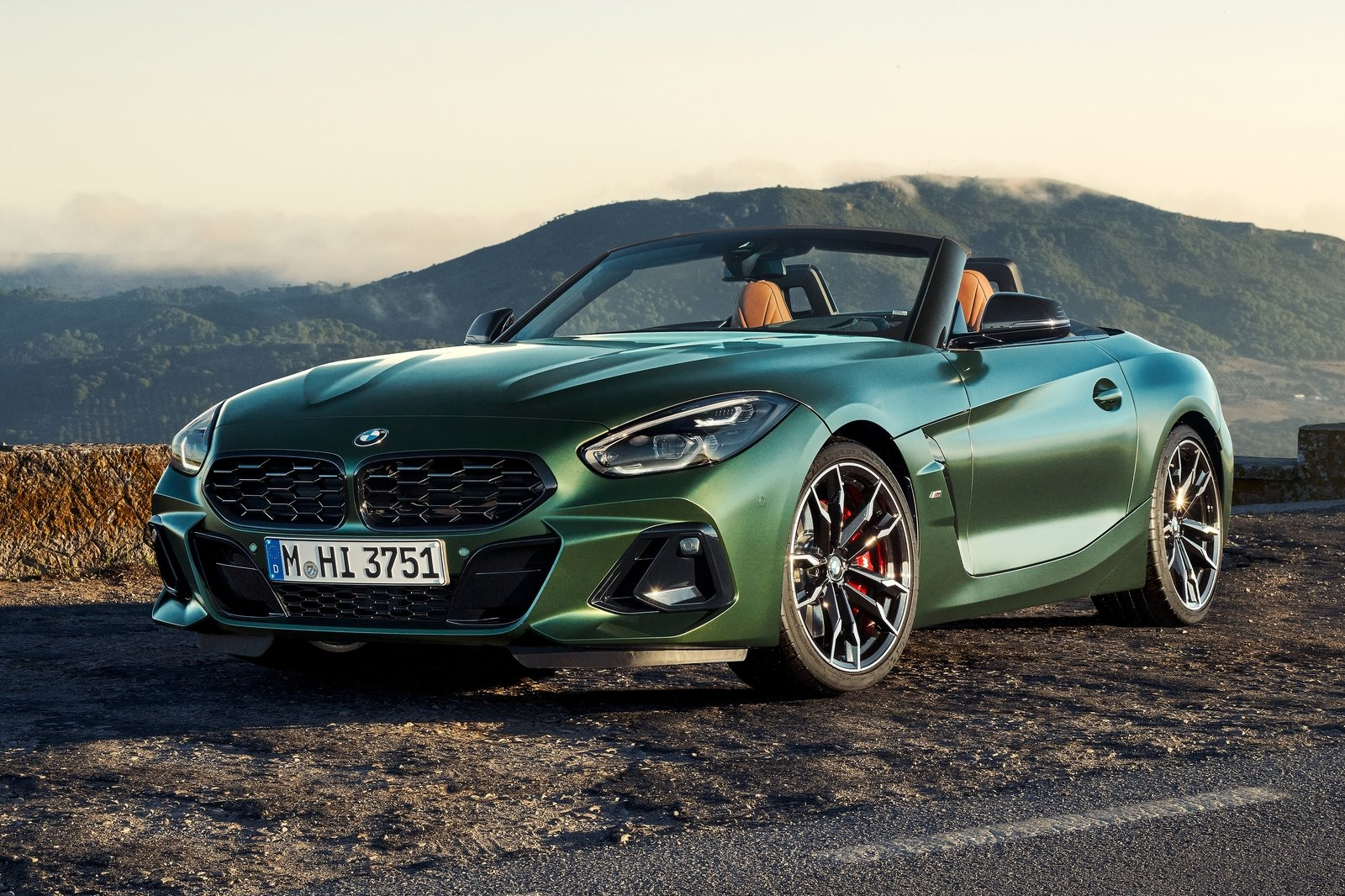
After nearly a decade without it, the 2025 BMW Z4 is bringing back the manual transmission. The addition comes a year after Toyota gave the closely-related GR Supra a six-speed option in 2023.
The new stick-shift option is available as part of a $3,500 package that BMW refers to with the code name “Handschalter,” which means “hand shift” in German. Aside from allowing access to two new color choices — San Remo Green and Individual Frozen Deep Green Metallic — the package also includes an electronically controlled M differential, more aggressive adaptive dampers, and a staggered wheel and tire setup (19-inch up front and 20-inch in the rear).
The transmission itself is largely shared with the aforementioned Supra, though BMW says each has differently tuned shift linkages and bushings. Much like the Supra, the manual will only be available with the 3.0-liter inline-six engine in the Z4 M40i trim.
Availability of the manual transmission and the associated upgrade package are set to begin in March of this year.

Formula 1 Rejects Andretti & Cadillac’s Current Bid
Two years ago, Andretti Global announced intent to join the Formula 1 series, with Cadillac joining a year later, and then General Motors announced plans to produce engines for the team if they were approved.
F1’s sanctioning body, the FIA, approved the team after an open application process, and as such the operation began hiring employees and wind-testing a car, targeting the 2025 season. However, none of that was good enough for F1, which has chosen to value the owners of its existing teams over what appears to be the most serious new entry the sport in years.
Two weeks ago, Formula 1 rejected Andretti’s bid to join the series in the 2025 or 2026 season, also rejecting General Motors. The group’s announcement states that F1 “would look differently on an application for the entry of a team into the 2028 Championship with a GM power unit,” but adds that the sport’s “research indicates that F1 would bring value to the Andretti brand rather than the other way around.”
In other words, Formula 1 has decided to favor the interests of its ten current teams over a new potential major competitor. This decision is a major split from how the sport has typically aimed for growth, but F1 has become significantly more popular in its Liberty Media-run era and the organization may feel that bringing in additional auto manufacturing partners are no longer necessary.
Michael Andretti and GM have not yet commented on the decision on future plans for the 2028 season.


2025 Aston Martin Vantage Gains Big Power, Techier Interior
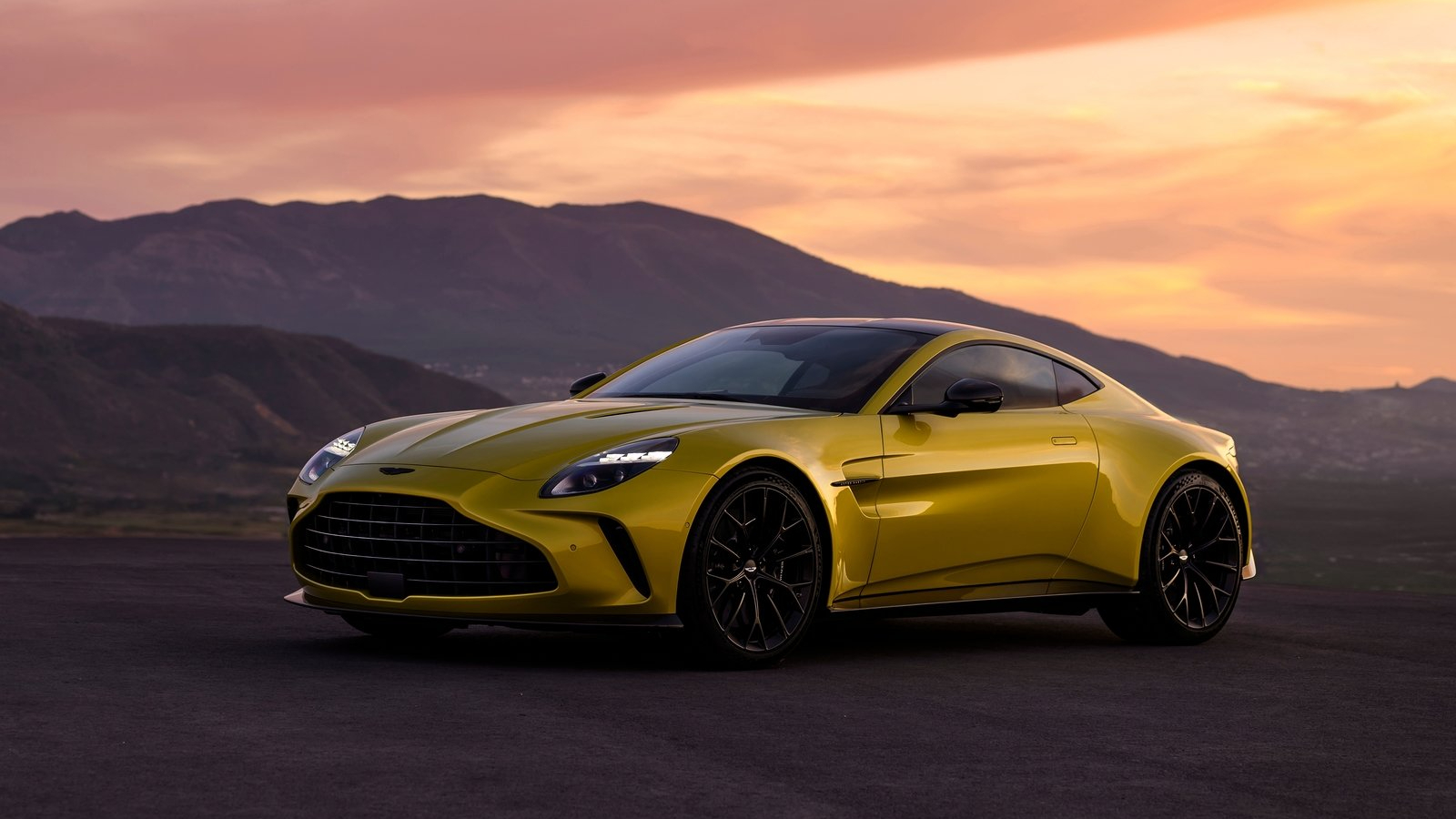
For 2025, Aston Martin’s entry-level sports car is receiving a major update, and appears to have been putting in a significant amount of work behind the scenes.
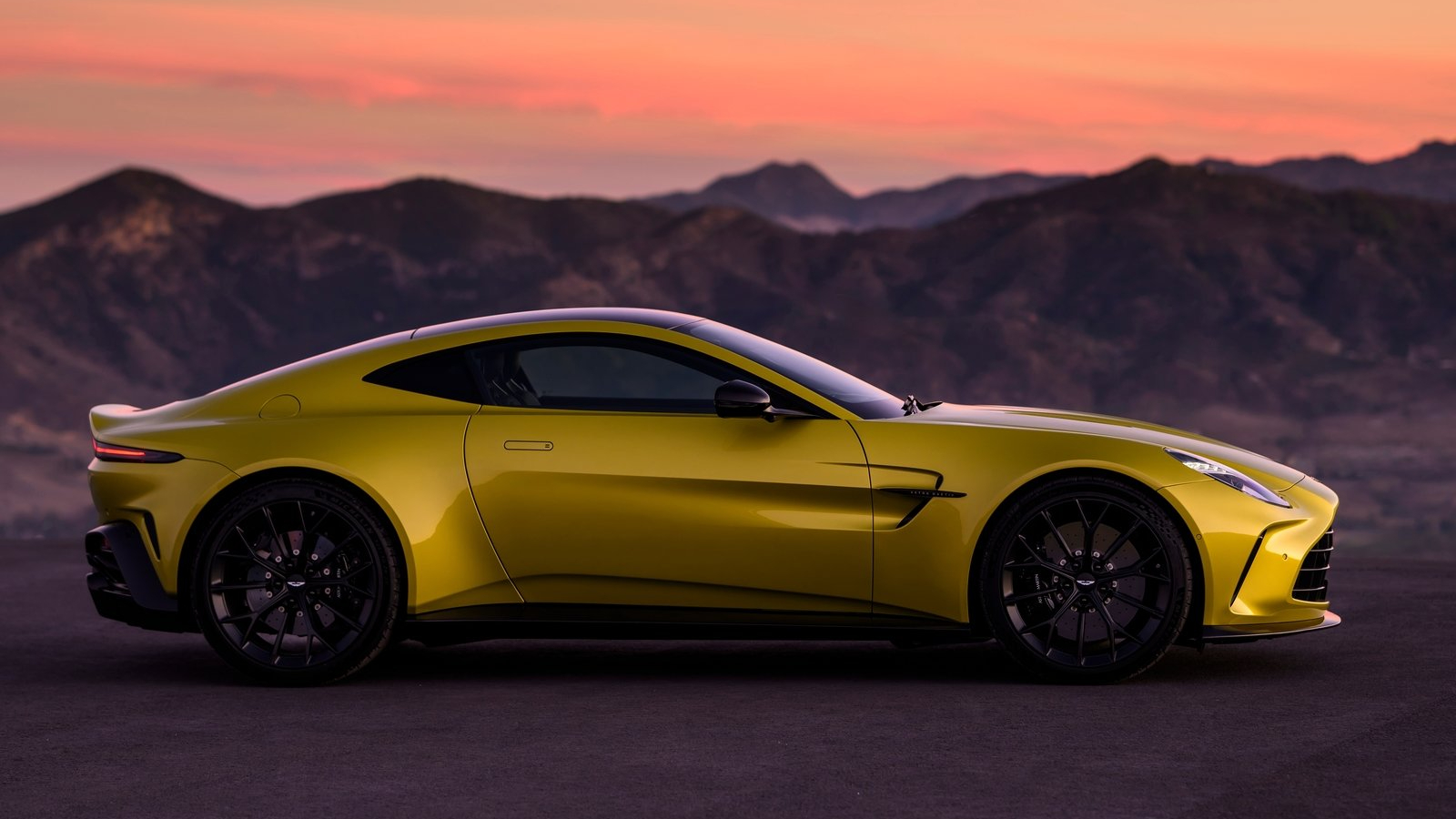
While visual changes on the outside are mainly limited to new headlights and a larger One-77 inspired grille design, there’s nothing wrong with that — the Vantage has always been a very pretty sports car. The increase in grille area is mainly driven by function, increasing the amount of air intake by about fifty percent. 21-inch forged alloy wheels are now standard along with chunkier tires, also for a performance benefit.
Under the hood, the 2025 Vantage boasts more significant changes. In V8 form, the outgoing Vantage had a maximum output of 528 horsepower from its AMG-derived 4.0-liter twin-turbo powerplant. However, the new Vantage bumps that figure to 656 horsepower, as well as 590 pound-feet of torque, an increase of 85. Aston says the ZF eight-speed auto’s final drive ratio has also been lowered, further improving acceleration. As the V12-powered Vantage of this generation was limited to just 333 units produced, it’s even more unlikely that engine will return to the Vantage with the V8’s huge step up.
Further beneath the surface, the Vantage’s body structure has been stiffened with new reinforcement pieces; the improvement across the whole car is quoted as 7 percent, though in key areas the increase is much greater. Adaptive dampers are standard, and carbon-ceramic brakes are optional.
The new Vantage features five dynamic drive modes with a single controller, versus separate switches for powertrain and chassis settings in the outgoing car. A new six-axis accelerometer and faster-acting software allow for quicker and more progressive stability control intervention, while an adjustable traction control system similar to the AMG GT R further improves drivability with the huge power increase.
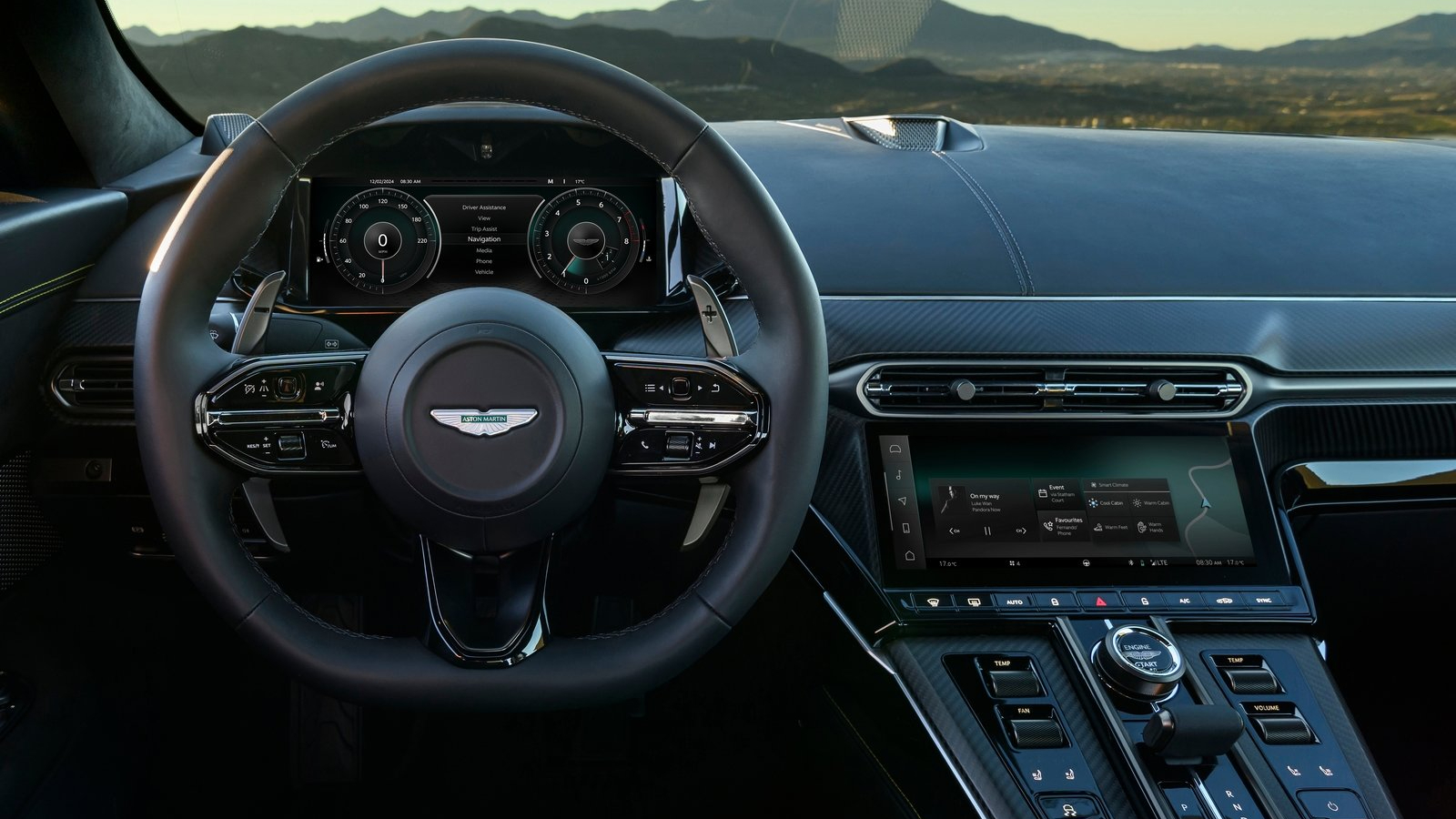
Inside, the cockpit gains similar upgrades to the DB12, with a Porsche-esque sloped center console design and new digital displays. Both the infotainment and gauge cluster screens should feature Apple’s next-generation CarPlay interface.


Facelifted Porsche Taycan Gets Way More Range, Way More Pricey
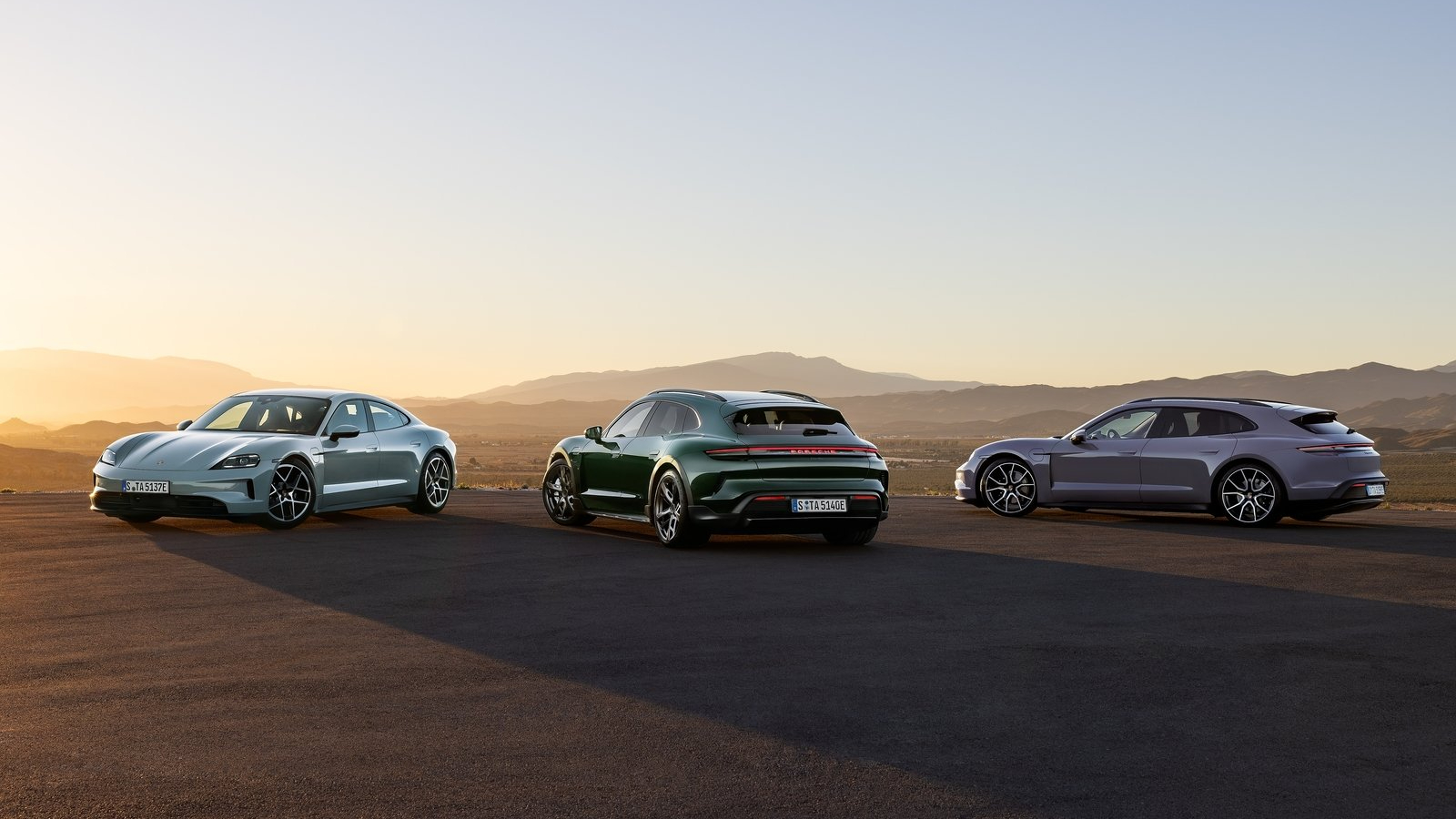
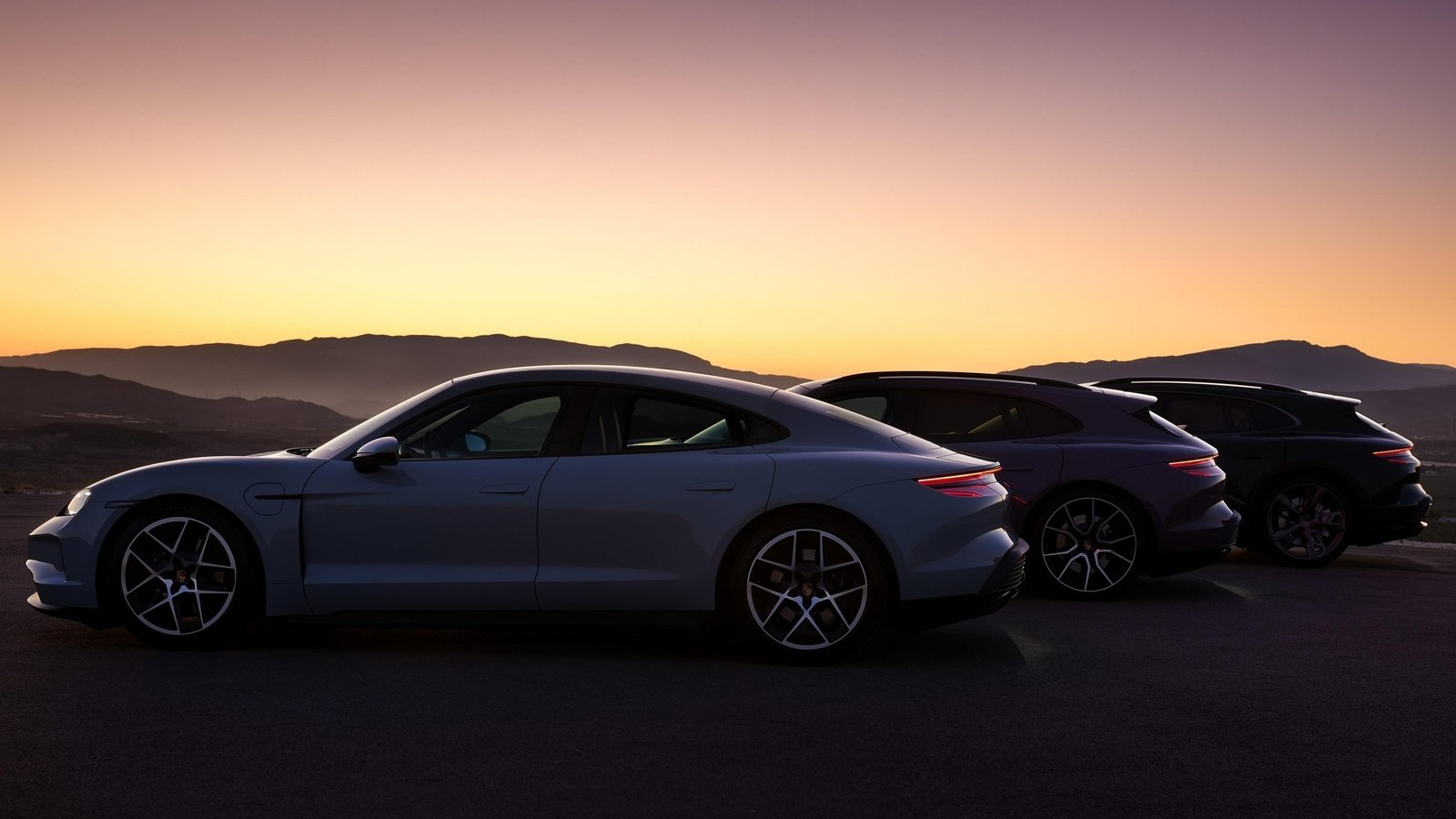
As with the updated Aston Martin Vantage featured above, the Porsche Taycan also receives a mid-cycle update this year with significant gains in multiple areas.
All versions of the Taycan get new batteries. The standard pack increases to an 83.6-kWh usable capacity, while the new Performance pack bumps usable capacity up to 97.0 kWh. The Performance battery is optional on the base and 4S trims, and standard on the Turbo and Turbo S. This new pack features a new chemistry with a higher nickel content that has kept dimensions consistent with the outgoing unit, while still significantly increasing capacity. As a result, Porsche says the new Performance battery weighs 19 pounds less than the old one.
Charging speeds have also been improved. If the Taycan is connected to a sufficient 800-volt DC charger, the peak charging speed is now 320 kW. A newly-standard 150 kW DC/DC converter will also help charging speeds on 400-volt networks. Aside from charging faster, you can also drive the Taycan further on a charge now — range estimates on the European WLTP testing cycle have shown increases of over 100 miles across the lineup. US EPA figures are not yet available, but either way a significant bump is much welcomed.
The other big hardware change is a new rear electric motor to supplement the new battery pack. It still incorporates a two-speed transmission as before, but is now lighter and more powerful. Peak horsepower is quoted at the same 402 hp for the base Taycan RWD, but activating launch control is no longer necessary to achieve full boost. The 0-60mph time is estimated at 4.5 seconds, a 0.6 s decrease.
On the other hand, the top-end Turbo S also gets more power, but it still needs to be progressively unlocked by the driver. The basic output rises to 764 horsepower, with a new push-to-pass function unlocking an extra 93 hp for up to 10 seconds using a button on the steering wheel. When using launch control from a stop, peak power is boosted all the way to 938 horsepower and 808 lb-ft of torque. No 0-60 mph time has been quoted, but the outgoing Taycan Turbo S did the sprint in just 2.4 seconds in other publications’ testing.
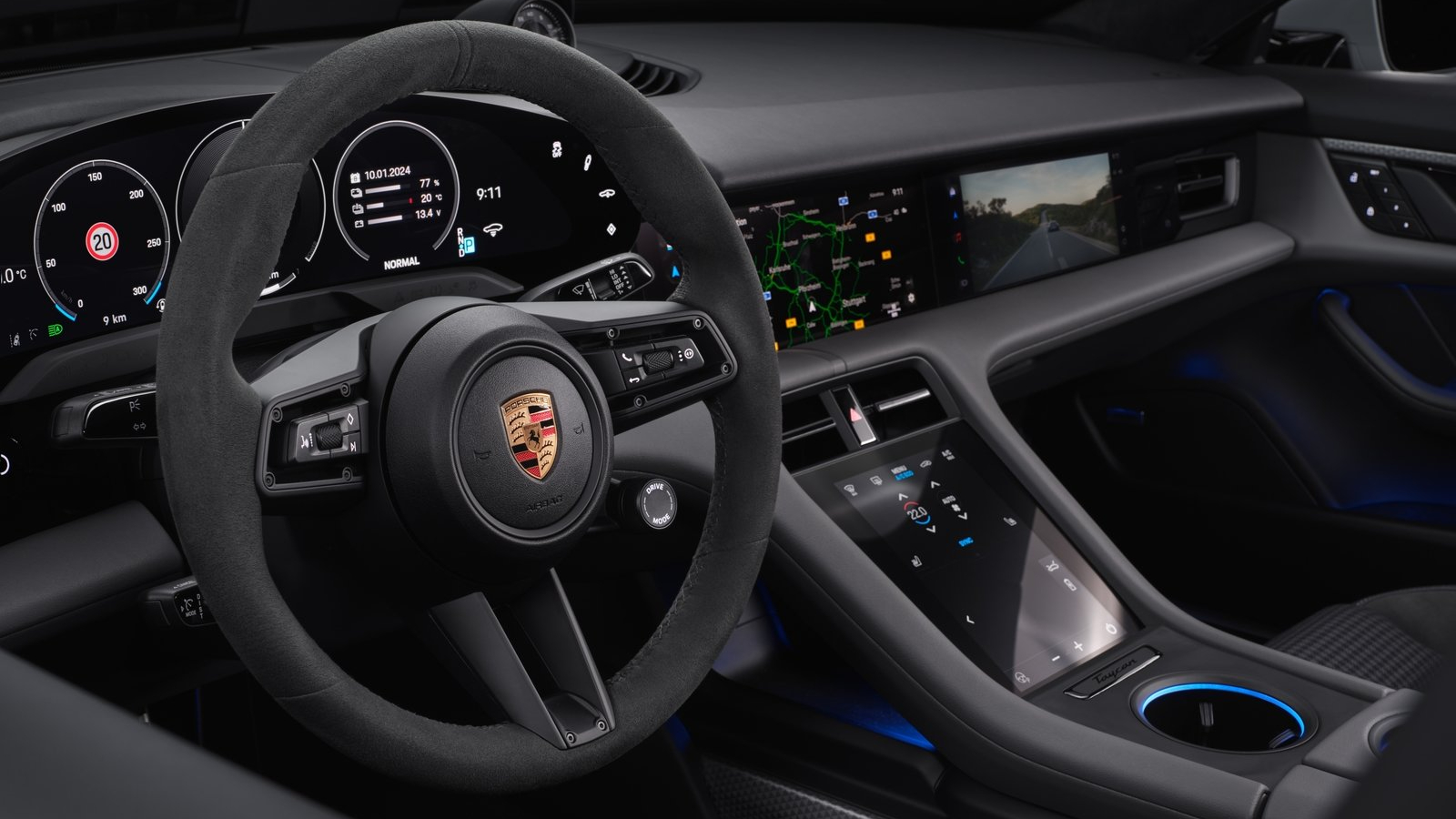
Visual changes to the Taycan lineup are limited, with all trims receiving updated front fascias and revised wheel designs. Inside, the biggest changes are the integration of Apple’s more advanced CarPlay interface and the addition of a filter on the optional passenger display that restricts viewing angles. This will allow video content to be (legally) played while the car is moving.
In addition to performance, starting prices have gone up across the board. The entry-level Taycan will now cost $101,395, nearly a $9,000 increase, while the 4S jumps to $120,495. The Turbo and Turbo S sedans begin at $175,595 and $210,995, respectively. The equivalent Sport Turismo (wagon) variant is about $2,700 more. Deliveries for all 2025 Taycan models are expected to start in the summer of this year.
GM Recalling 300,000 HD Trucks For Tailgate Latches
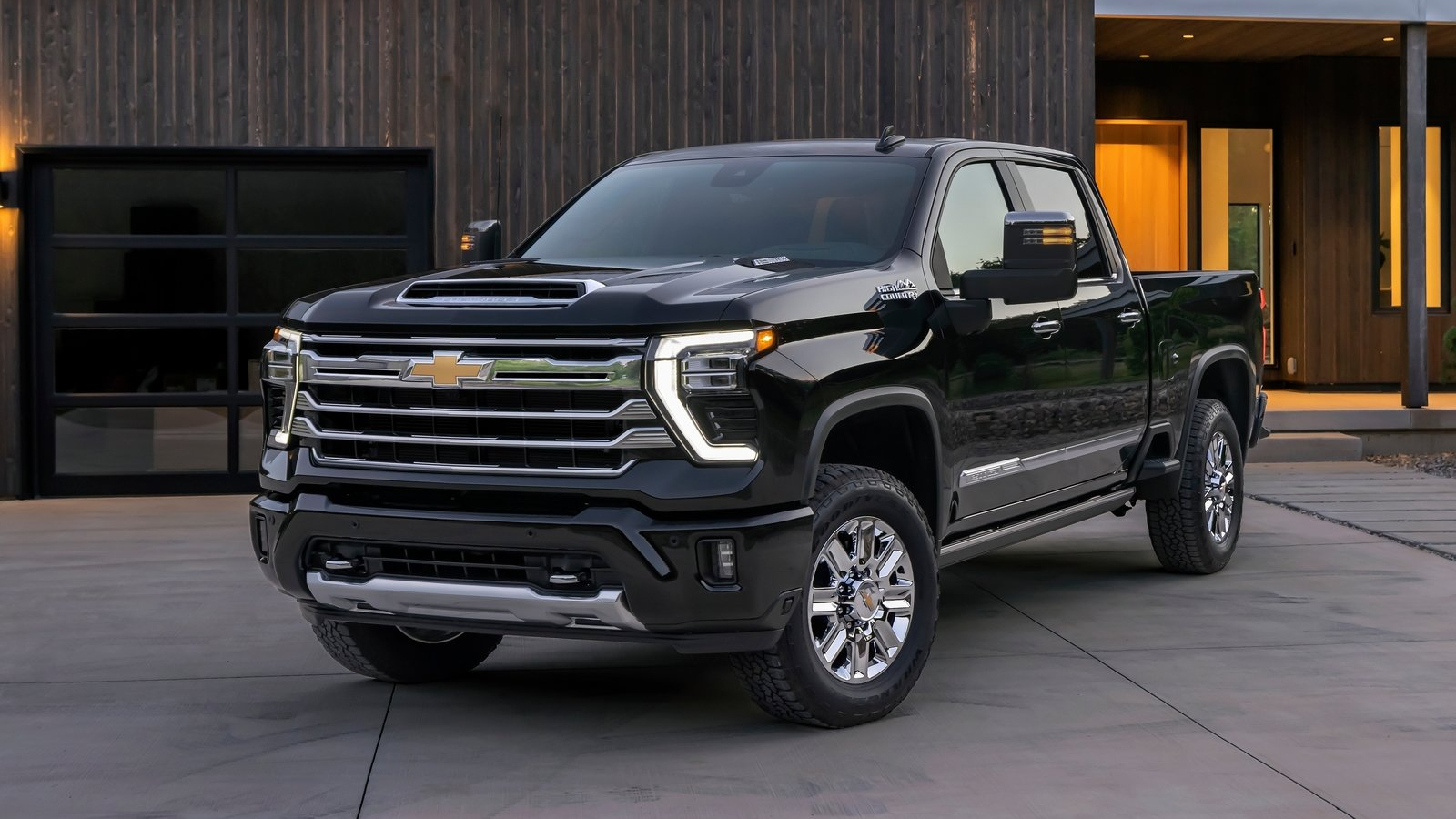
Following the recent news of around one million Ram trucks having emissions issues, General Motors this week released a recall for a significant number of its heavy-duty pickups. While the cause is nowhere near as serious, it does still involve a large number of vehicles — 323,232 to be exact.
The issue comes from the power lock and release function included in trucks with manual tailgates. According to the National Highway Traffic Safety Administration (NHTSA) recall report, the malfunction can occur when water comes into contact with the electronic gate-release switch within the tailgate. The switch may then short circuit, causing the tailgate to become unlatched while parked, and allowing contents of the bed to exit the vehicle and become a road hazard.
In other words, the truck’s tailgate may open on its own. This recall includes 2020 through 2024 model year Chevrolet Silverado and GMC Sierra 2500 and 3500 HD models. The notice also makes clear that trucks with other tailgates are not affected.
A remedy for the issue is already available, and was implemented in production of new trucks as far back as August 2023. Affected owners will receive official notification of the recall beginning March 18th, 2024, with the fix reportedly available immediately. Until then, owners are simply advised to double-check the security of the tailgate before driving their trucks, and a temporary stop-sale order has been issued to dealers.
 Also Andrew
Leave a comment