
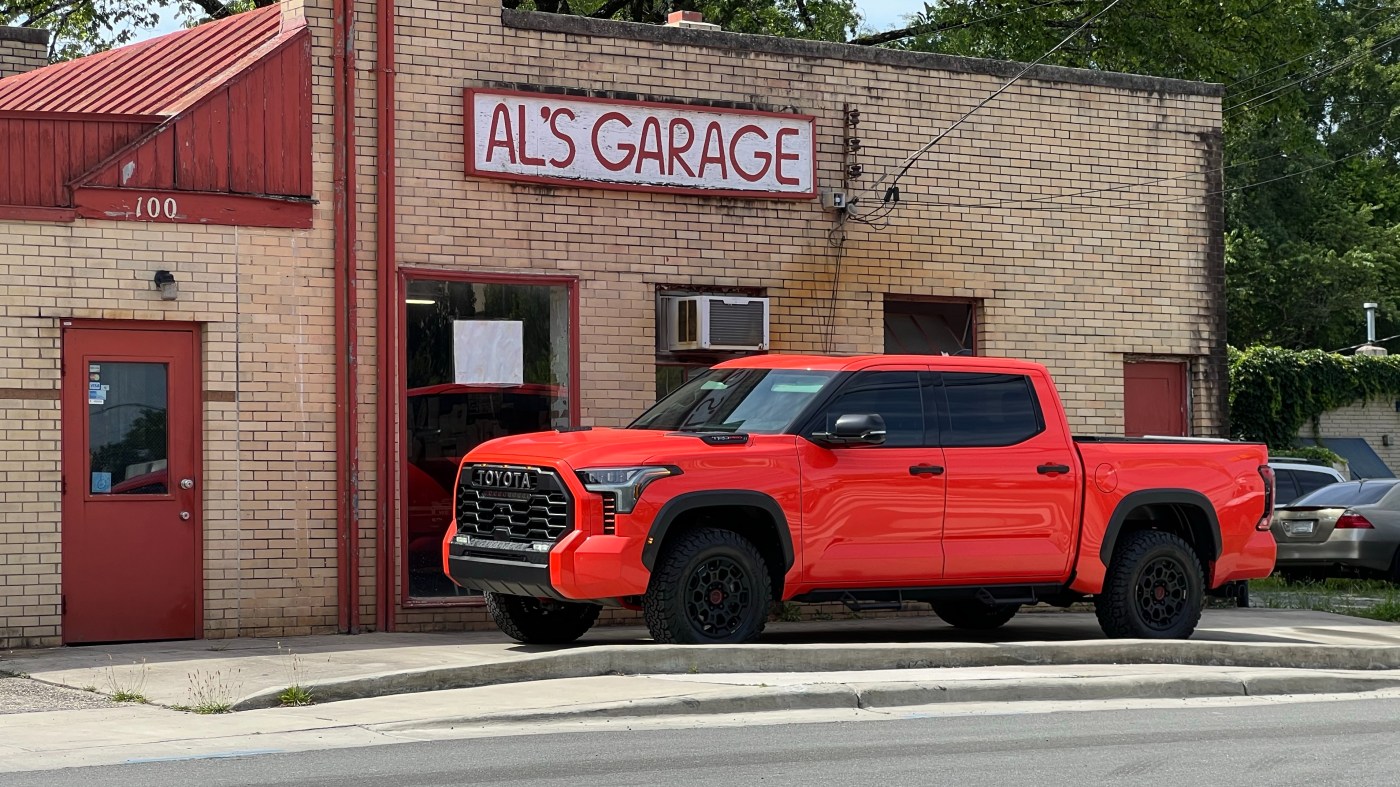
A lot happens in the world around you in fifteen years, especially if you’re the Toyota Tundra. Since the previous generation went on sale in 2007, every one of the other core full-size pickup offerings has seen at least two redesigns. Thanks to the Ford Raptor, the off-road performance oriented truck category has become insanely popular.
But while we’ve had three iterations of F-150 Raptor in the last decade, and the smash hit Ram 1500 TRX, the Tundra has largely been left on the sidelines. The Tundra did receive Toyota’s “TRD Pro” treatment in 2015 along with the 4Runner, but the older basic underpinnings of the Tundra let it down from the factory, despite Bilstein suspension upgrades.
With the debut of the Tundra’s third generation in 2021, the truck got an updated fully-boxed frame and a five-link coil-spring rear suspension, rather than leaf springs; the latter being a change notable for improving ride quality in other full-size pickups. According to the chief engineer, “every nut and bolt is new,” so surely that gives Toyota the perfect opportunity to create a true Raptor fighter, right? In theory, yes; but for whatever reason, they still haven’t. But, spoiler alert, it’s still really damn good.
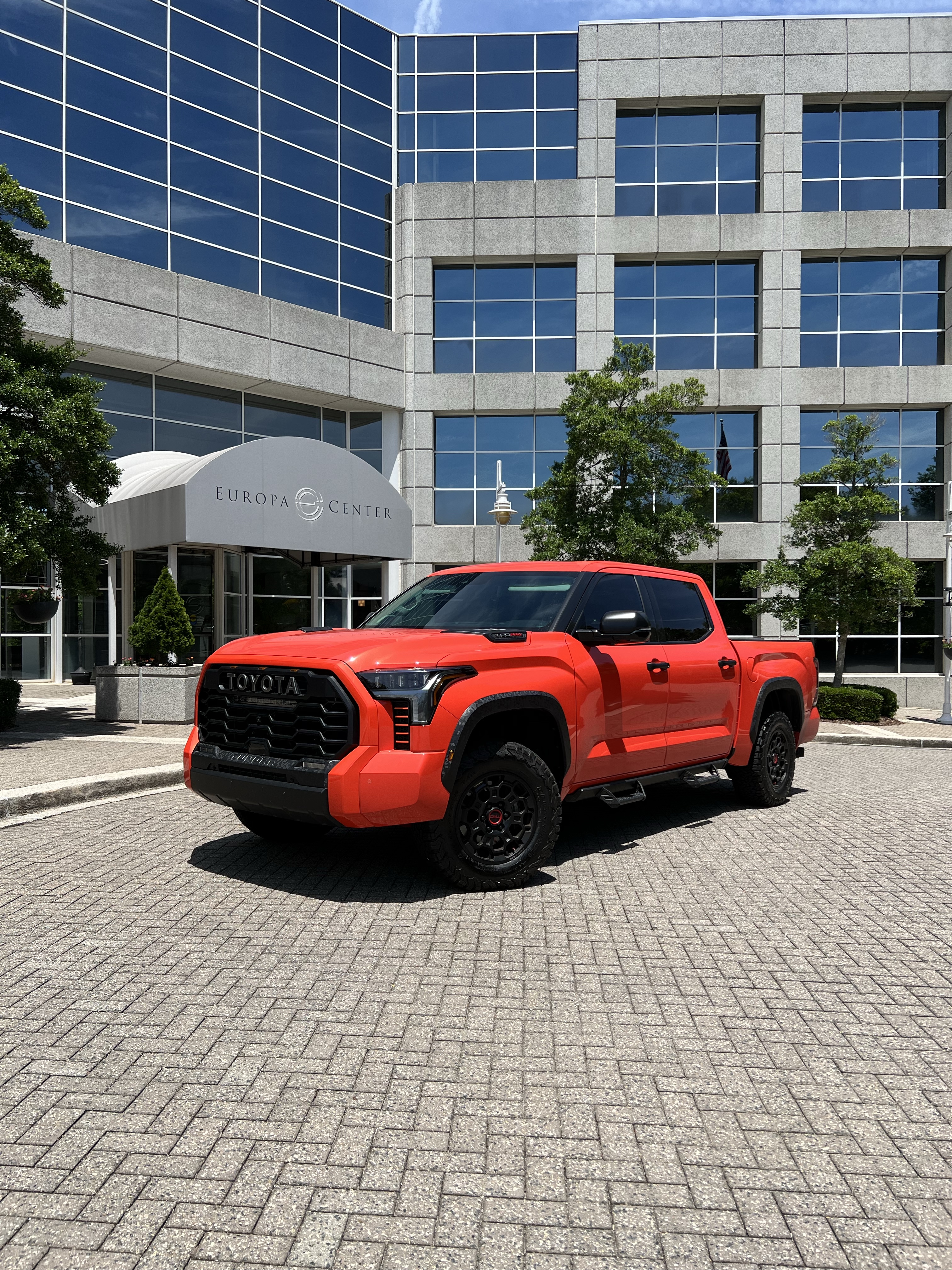
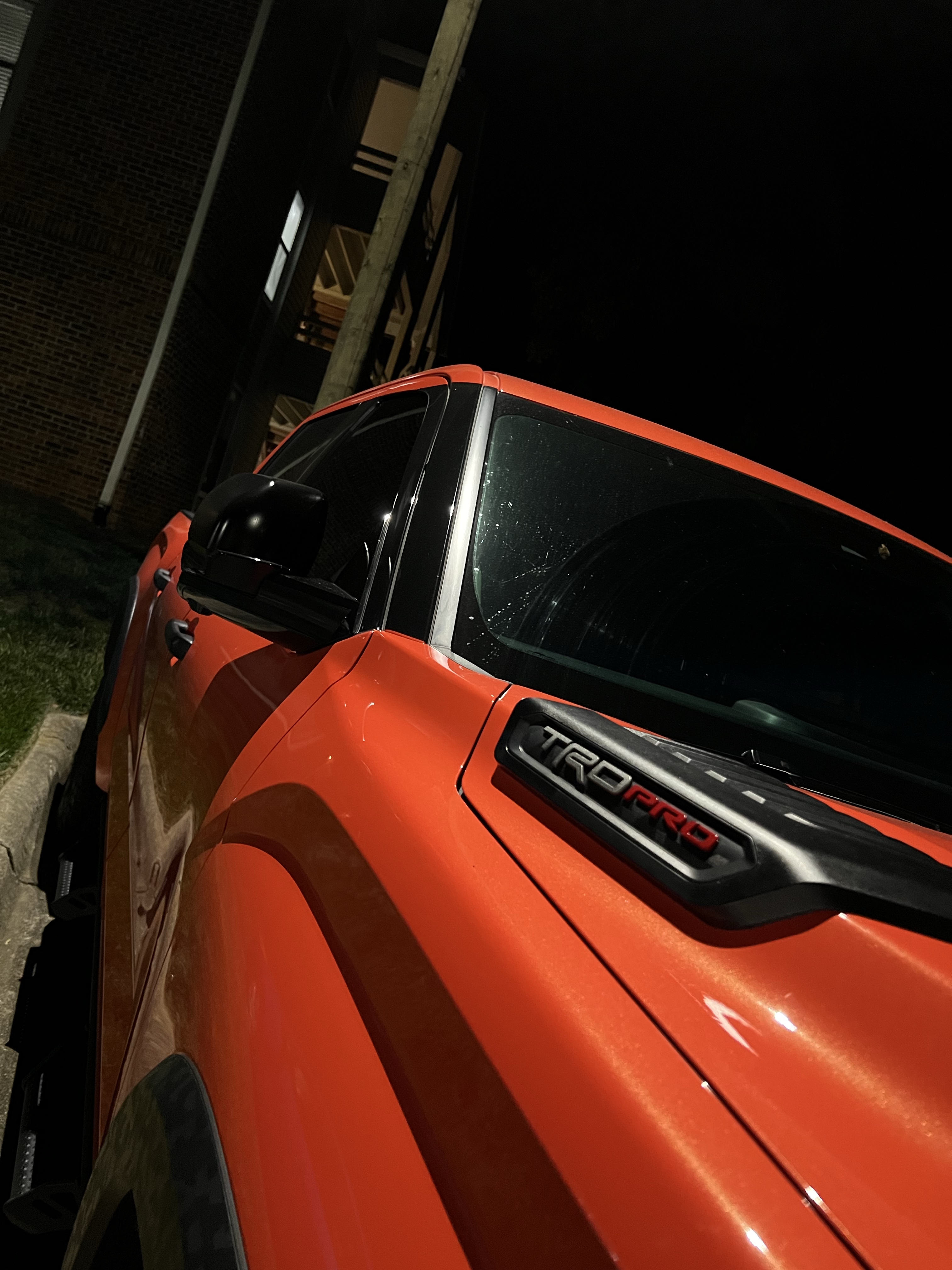
One special thing about the TRD Pro is Toyota’s continually rotating color options. Almost every model year since 2015, one of the models in the TRD Pro family has debuted a special new hue that typically trickles down to other vehicles in the Toyota lineup over time. Personally, some of my favorites have been Voodoo Blue and Lunar Rock, which graced the 4Runner in 2019 and 2021 respectively.
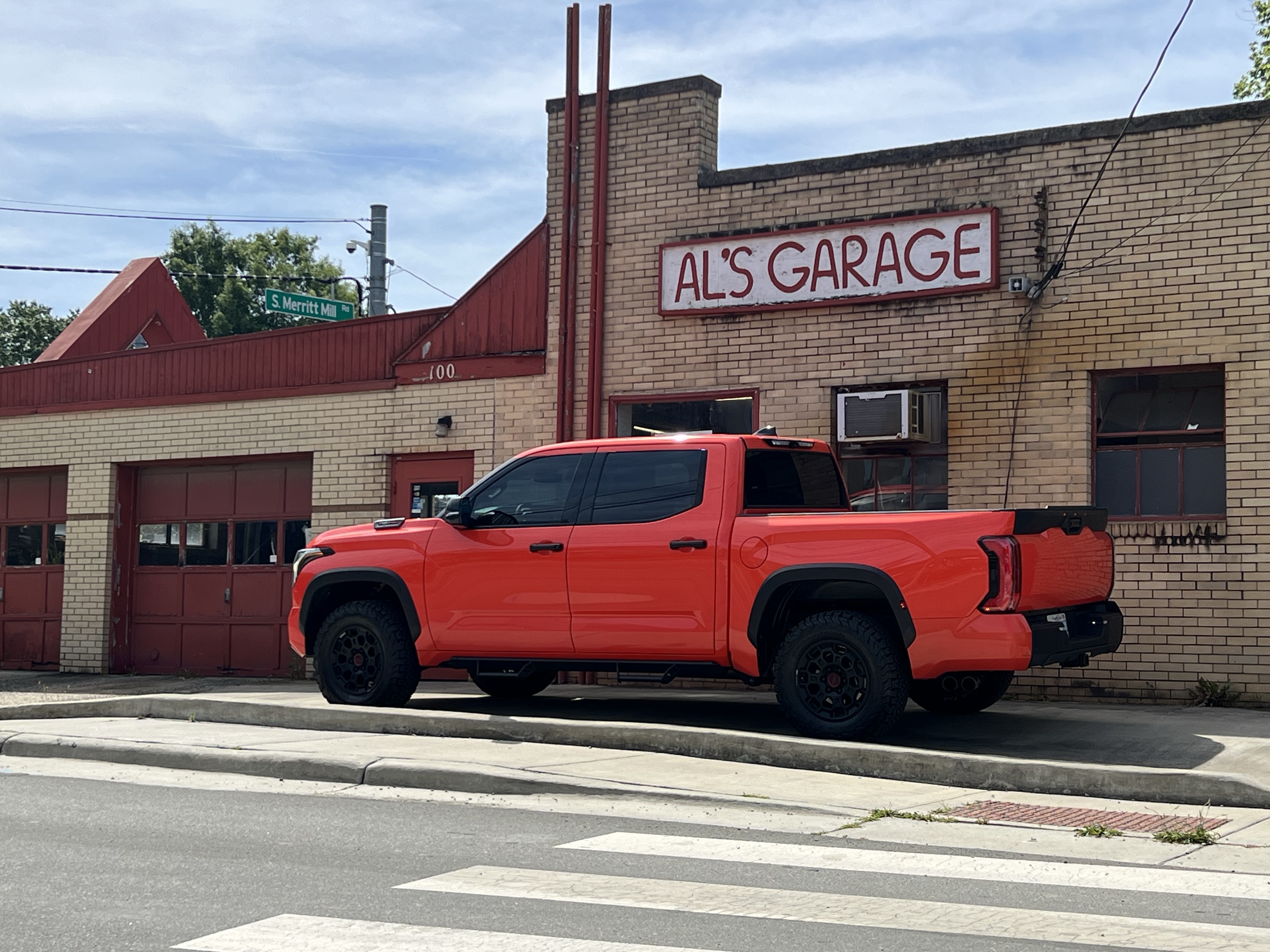
For 2022 and 2023, the Tundra was offered in the new shade of Solar Octane, also known as possibly the brightest orange you’ve ever seen on a car. It actually makes my Hawaiian shirt look tame, although to be fair I intentionally picked one that wouldn’t clash horribly with the paint, and it happens to be a fairly quiet one.
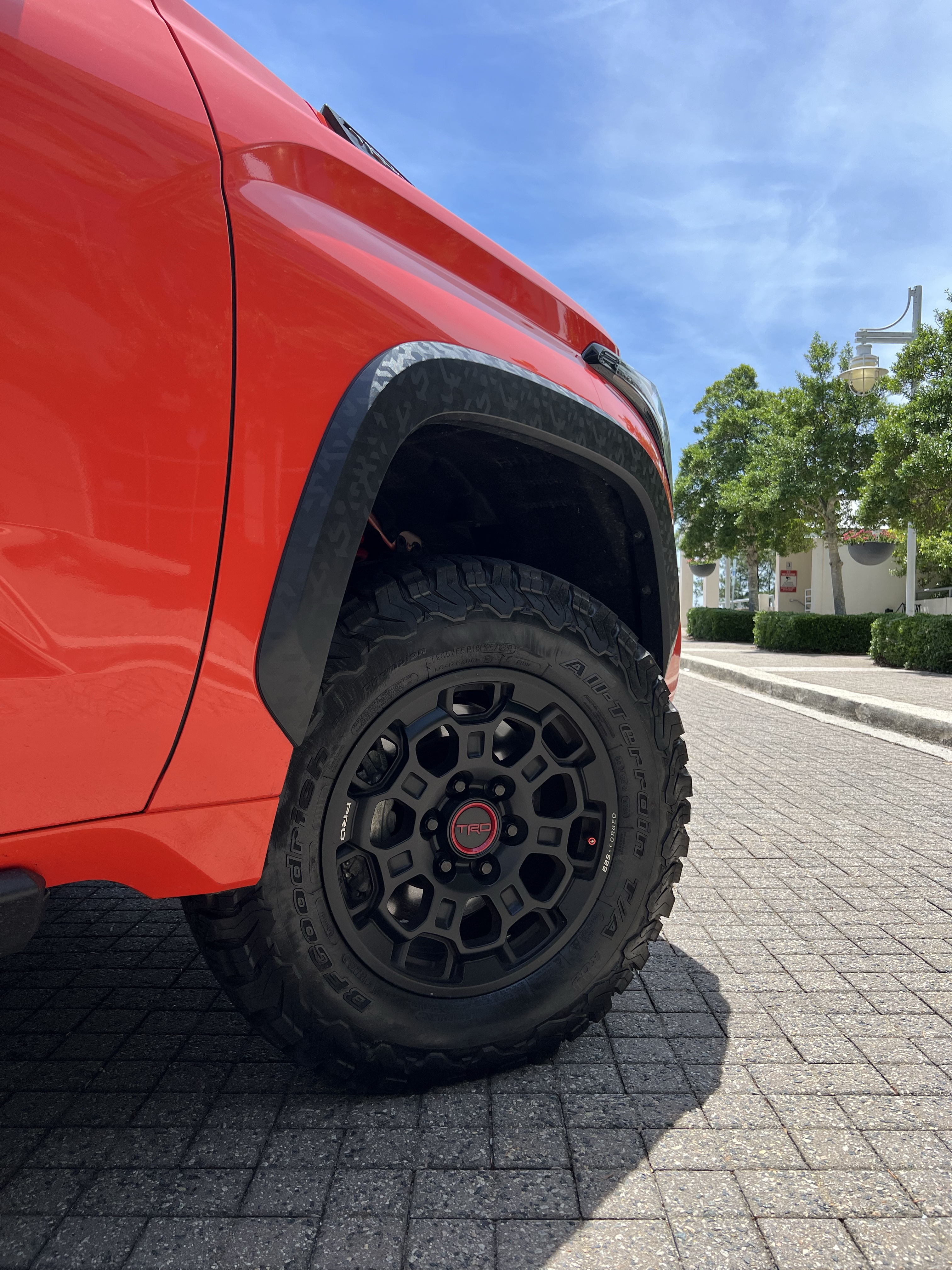
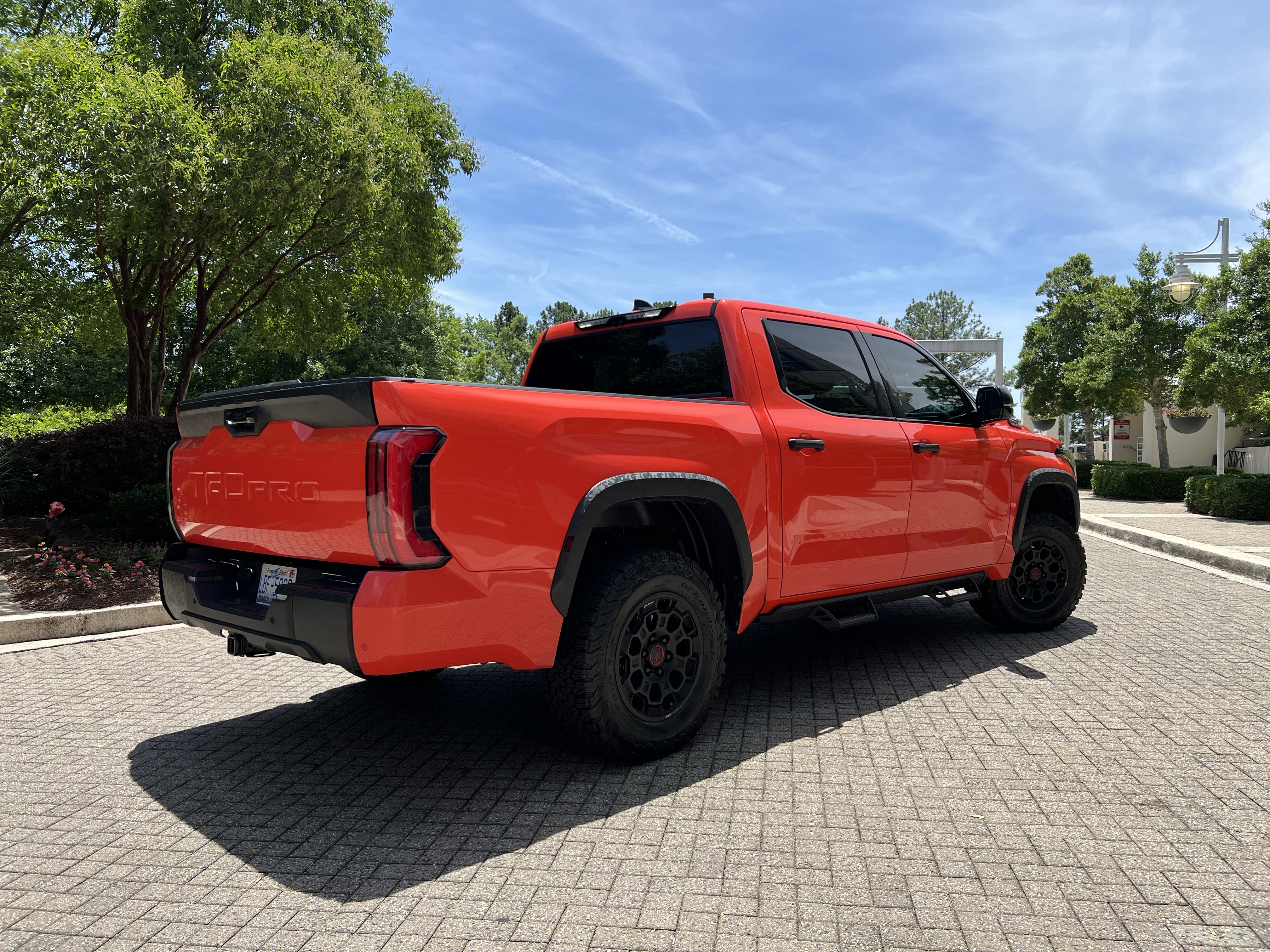
Other TRD Pro-specific styling changes include blacked out trim, equally garish camo-patterned fender flares, and a light bar built into the grille — so you can sear retinas any time of day. Much like the Tundra 1794 Edition I reviewed a while back, as well as the Platinum and Capstone trims, the TRD Pro features adaptive LED headlights with reverse-sequential turn signals. And at 81.6 inches, the new Tundra (just in TRD Pro form) is now just barely wide enough to require amber clearance lights, or “Raptor lights” as they’re commonly referred to in the aftermarket community.
The TRD Pro also sits higher than every other stock Tundra, thanks to red-painted, dual-rate coil springs that raise the front of the truck by over an inch, and match the beefier anti-sway bars. Those springs are wrapped around FOX internal-bypass remote-reservoir shocks that feature eleven bypass zones.
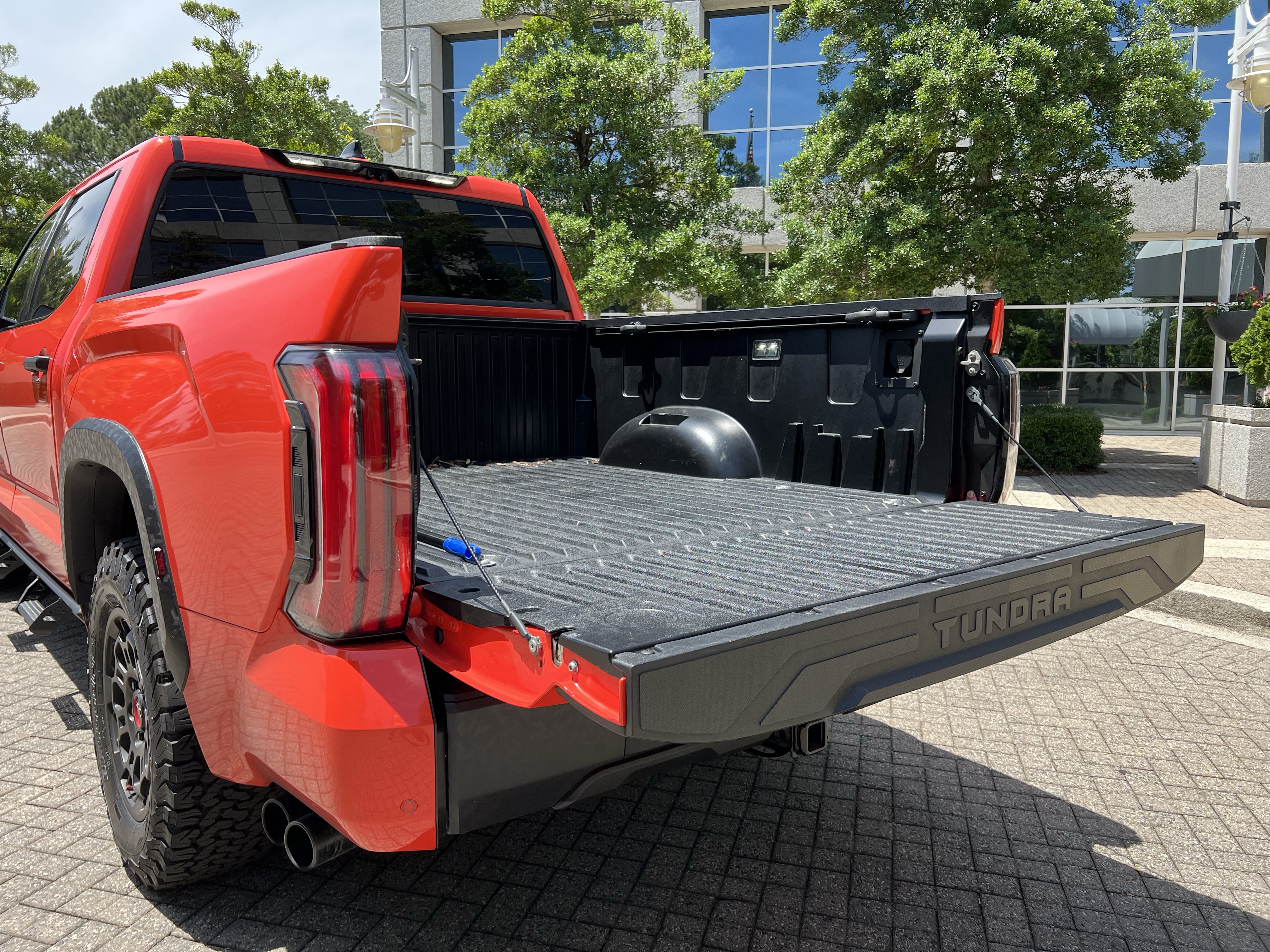
Out back, the reverse-sequential turn signals are once again present, as are the major convenience upgrades I loved about the 1794 Edition. The side of the taillight features a button to release the tailgate, which opens to reveal a composite bed — something that’s now standard on all Tundras, meaning you don’t have to add a bed liner to protect the paint. There’s also a household style power outlet in the bed, which doesn’t come close to Ford’s Pro Power Onboard system, but is still a nice thing to have.
The TRD Pro also sounds as good as it looks. Yes, there’s some fake rumble piped into the cabin, as is the trend nowadays, but with the windows down you can hear the surprisingly-good-for-a-V6 exhaust note. It’s decently loud under load, but not too obnoxious. Unfortunately due to the constant shifting of the ten speed transmission, it almost sounds like it has a CVT, which detracts from the experience in my opinion.
As I noted in my 1794 review, the 10-speed is impressively smooth, and will hopefully be far more reliable than the deca-geared F-150s. Compared to the 1794, however, I vastly prefer the driving experience of the TRD Pro. This is my first seat time in an iForce-MAX hybrid powered Tundra of any variety, and the extra torque over the regular twin-turbo V6 (583 lb-ft; up from 479) is immediately noticeable. Ford’s Powerboost hybrid F-150 is a few tenths quicker from 0-60, as is the V6-powered Raptor, but a mid-5 second sprint in a half-ton pickup is still nothing to sneeze at. The hybrid drivetrain should also help fuel economy marginally, but the Tundra still struggles to get close to 20 MPG.
The third generation Tundra’s ride remains on the better side of the class, although the TRD Pro’s suspension setup and all-terrain tires do result in a slightly firmer and noisier experience. The camo patterned seats are also quite firm, but not necessarily in a bad way; I find the Tundra’s driving position quite comfortable overall. I wasn’t able to discern a significant difference between drive modes or variable suspension adjustments in day-to-day driving. However, I did notice the functionality of the rear differential lock is limited to 4Lo, which prevents it from being useful on muddy backroads, sand dunes, or any other situation where the Raptor typically excels.
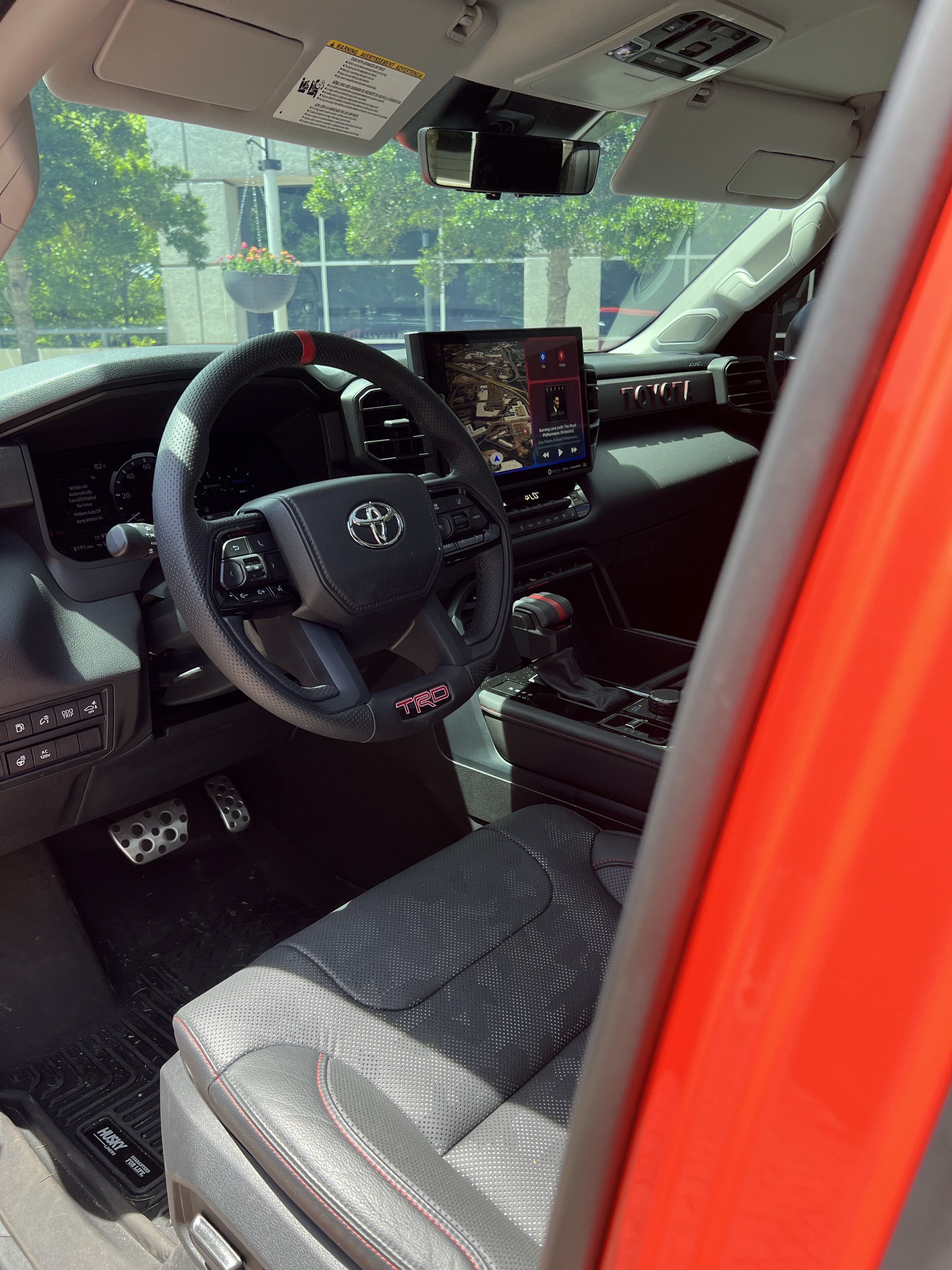
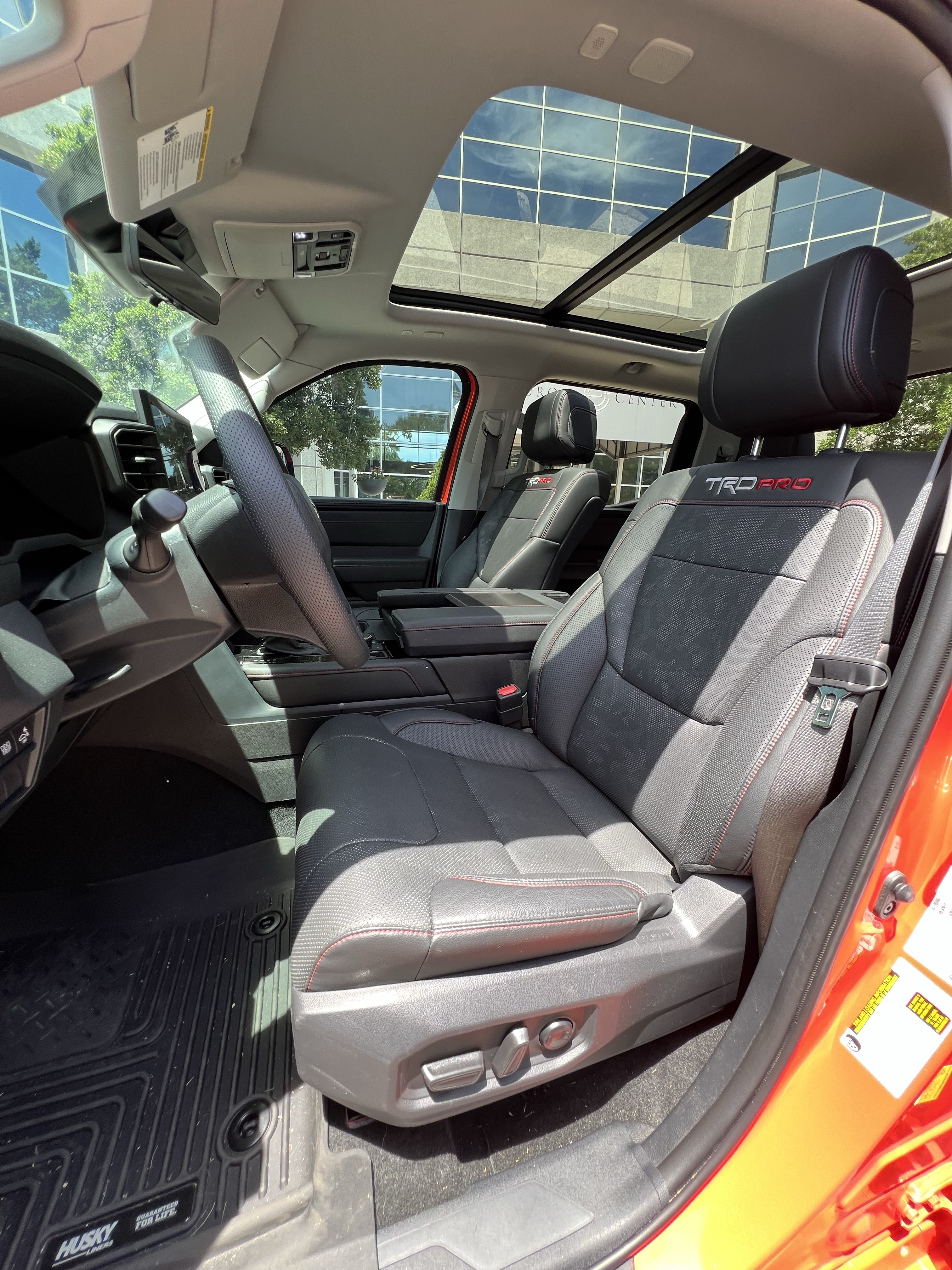
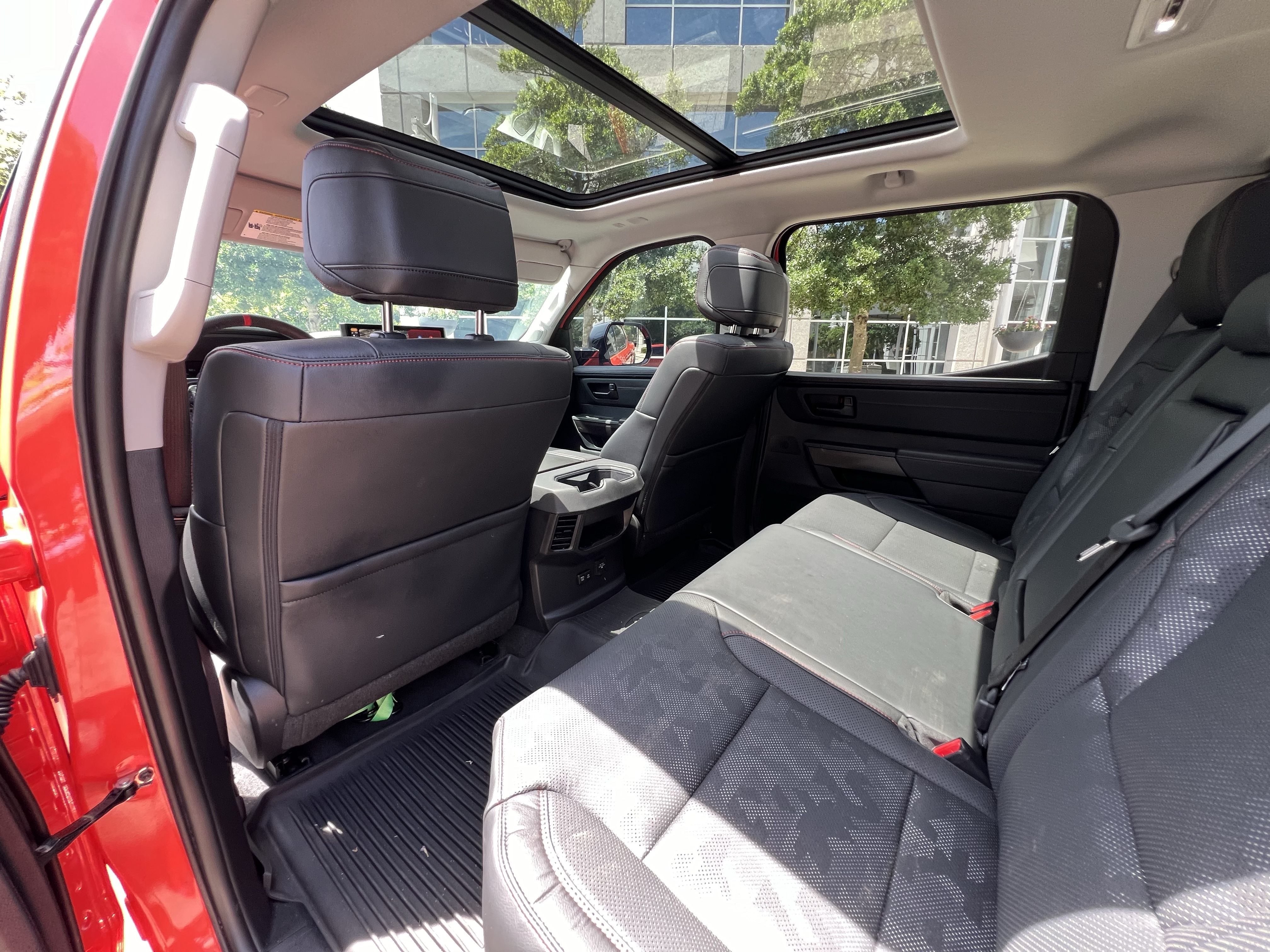
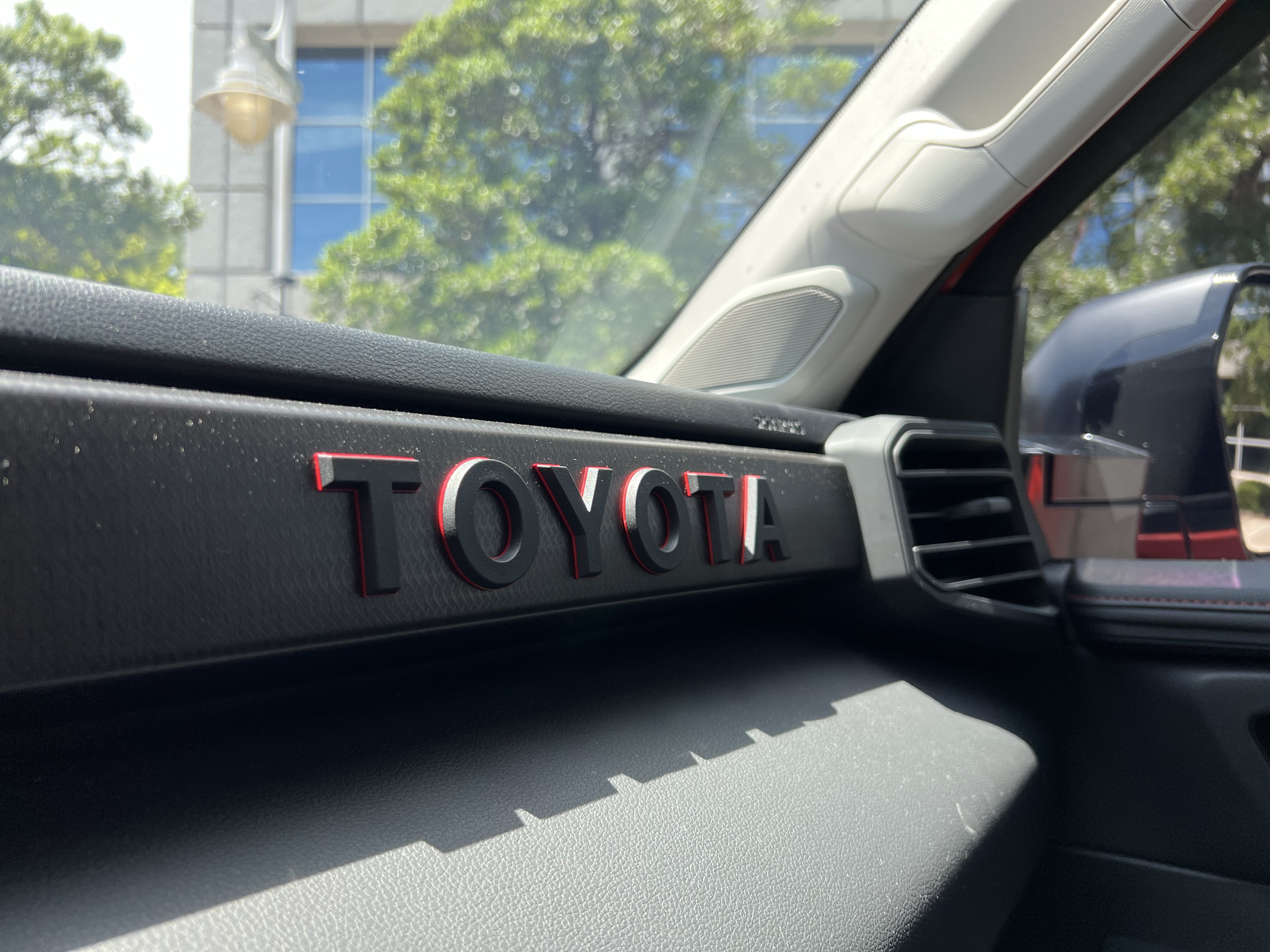
Personally, I prefer the color scheme and trimmings of the Tundra 1794 Edition’s cabin, but the TRD Pro certainly still has a nice interior. The giant 12-inch infotainment display remains visually impressive but simultaneously falls down in the same ways as the 1794. Luckily, wireless Apple CarPlay works well, but the built-in infotainment system forces you to pay a subscription for navigation services after an initial one-year trial and lacks a true “home” screen. The ability to display multiple assets at once is the main reason I use CarPlay over Bluetooth anyway.
The center screen is also home to the impressive 360-degree camera system. It offers tons of different angles and decent resolution (as far as car camera systems go), making parking a giant truck so much easier. On the downside, though, there’s no way to fully view the camera system on demand without being in reverse. It automatically activates in any low-speed situation if it thinks you’re too close to something, but disappears again as soon as the perceived threat is gone. The camera view button in the center panel of the dashboard only brings up the spinning, augmented 360 view, which is a cool idea but lacks any control other than pausing the rotation. Inexplicably, you can change the color of the Tundra graphic displayed in this view, but actually moving the camera around by yourself — not allowed!
Around the rest of the TRD Pro’s passenger space you’ll find tons of chunky, rugged touch points (except the dinky four-wheel-drive switch for some reason) and red accents throughout. My favorite is the twelve-o’clock marker on the steering wheel which isn’t perfectly centered on this particular truck. The TRD Pro’s rear seat is largely the same as every other Tundra, except it lacks under seat storage space due to the addition of the hybrid system’s batteries. And as always, Toyota’s exclusive roll-down rear window continues to be an excellent feature.
Overall, the new TRD Pro is still not quite up to Ford Raptor or Ram TRX level, but is a phenomenal half-ton truck and I’m sure still a plenty capable one in most off-road scenarios. It’s more akin to a Chevy Silverado ZR2, but with the Toyota build quality and durability that you’d expect. If I could get the TRD Pro’s suspension upgrades and exterior styling with the 1794’s interior, that would be ideal — but truly, you can’t to go wrong either way. Just make sure you keep your sunglasses on.
| Vehicle Tested | 2023 Toyota Tundra TRD Pro |
|---|---|
| Color | Solar Octane / Black SofTex |
| Drivetrain | 3.4L twin-turbo V6, 10-spd auto, Four wheel drive |
| HP / Torque | 437 horsepower / 583 lb-ft |
| Curb Weight | 6,015 lbs (est.) |
| 0-60 mph | 5.7 seconds (est.) |
| EPA Fuel Econ | 18 city / 19 hwy / 20 combined |
| MSRP | $73,980 |
 Also Andrew