
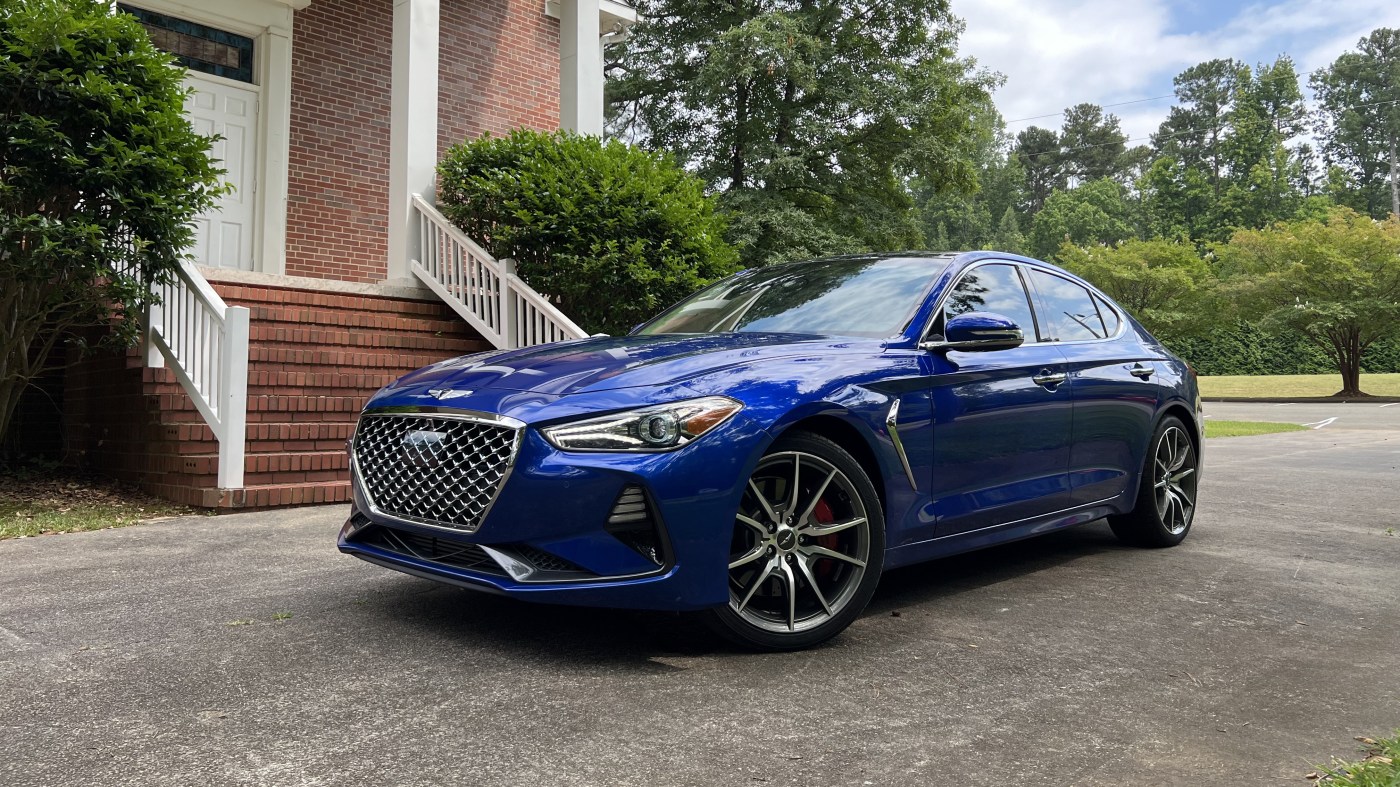
Since their first foray into the American market in the late 1980s, Hyundai has always done one thing better than just about anyone else: value.
In 2007, the Korean brand launched the Genesis, a “progressive, modern, rear-wheel-drive sports sedan.” Squarely aimed at the competitive German offerings, Hyundai marketed the Genesis as having “the performance of a BMW 5-Series and the interior packaging of a 7-Series at the price of a 3-Series.” Depending on your market, engine choices ranged from a 3.3-liter V6 up to a 5.0-liter V8 over the first generation’s eight year lifespan.
A couple years after the launch of the sedan, Hyundai introduced a two-door version, aptly named the Genesis Coupe. Pre-debut leaked photos pictured the Genesis Coupe with a Ford Mustang, presumably one of the biggest targets; while Hyundai’s CEO at the time described it as being designed “to deliver a driving experience that challenges cars like the Infiniti G37.” The New York Auto Show launch featured a demonstration of the coupe’s abilities with powerslides and burnouts.
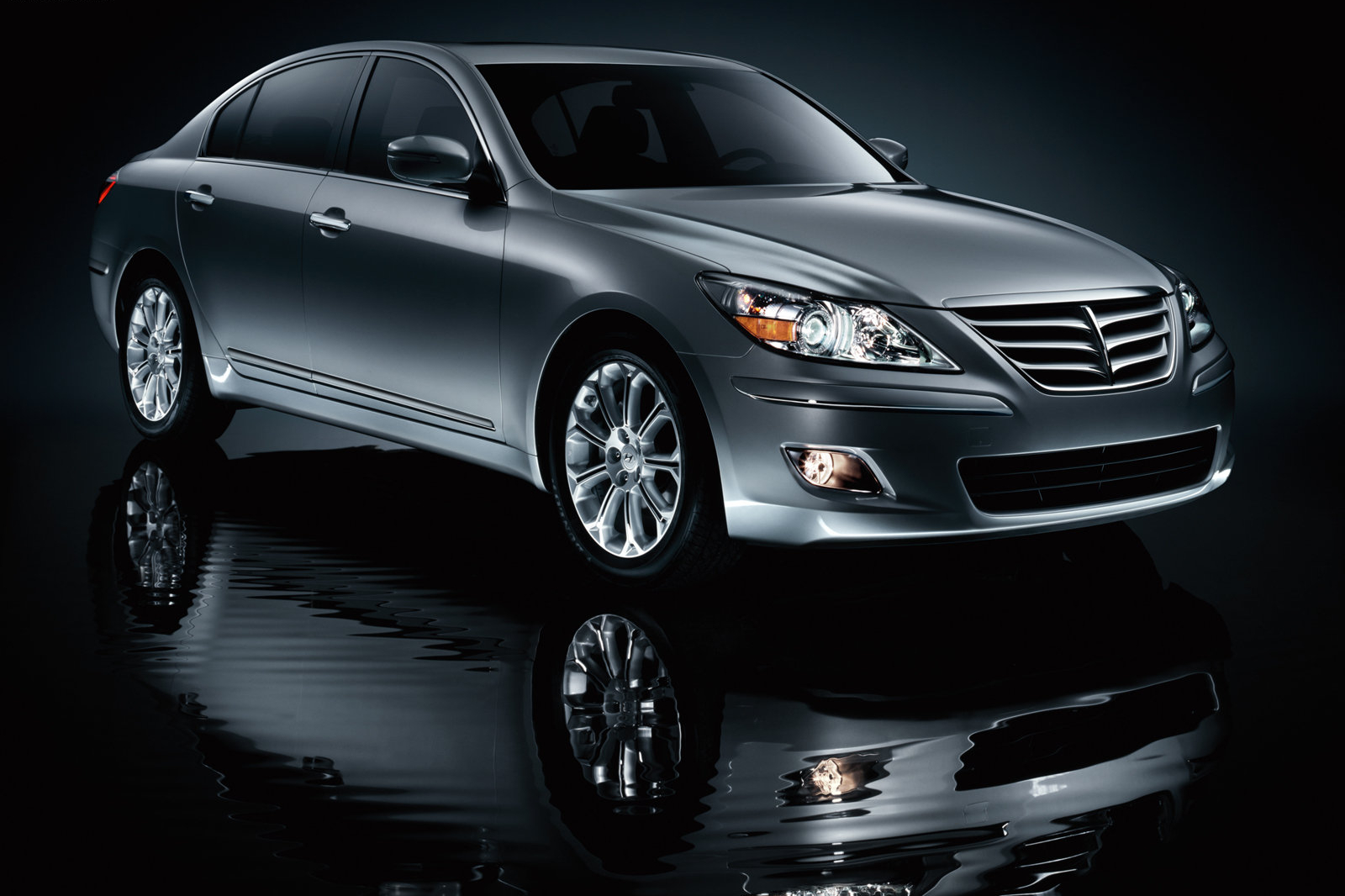
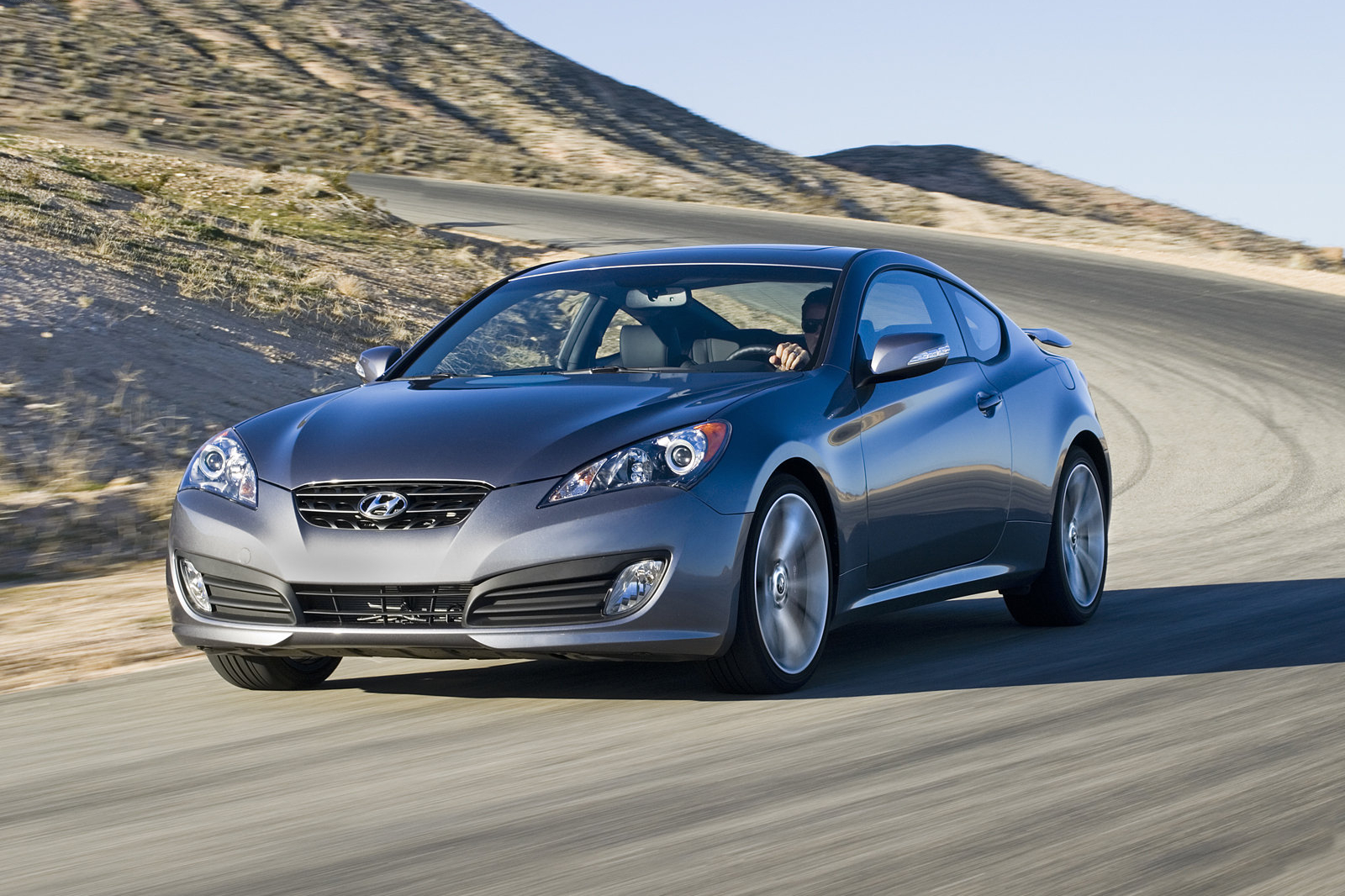
2009 Hyundai Genesis and 2010 Hyundai Genesis Coupe
Fast-forward a decade and Genesis is now a standalone brand, but still functioning as Hyundai’s sporty premium division. While it’s still a four-door sedan, the G70 definitely follows the ethos of the old Coupe. It’s the Koreans’ answer to the BMW 3 Series; a small, premium sedan with a focus on driving dynamics.
The BMW 3 Series has always been the benchmark for entry-level sport sedans, and the current G20 M340i, which I reviewed last year, is no exception. It’s incredibly competent at everything it does, and incredibly well-rounded at that. But it’s expensive — even on the used market, well-kept examples are hard to find under $40,000.
So, what if it was possible to get a sedan that was almost all the way to an M340i, for ten thousand dollars less? That’s the Genesis G70 3.3T.
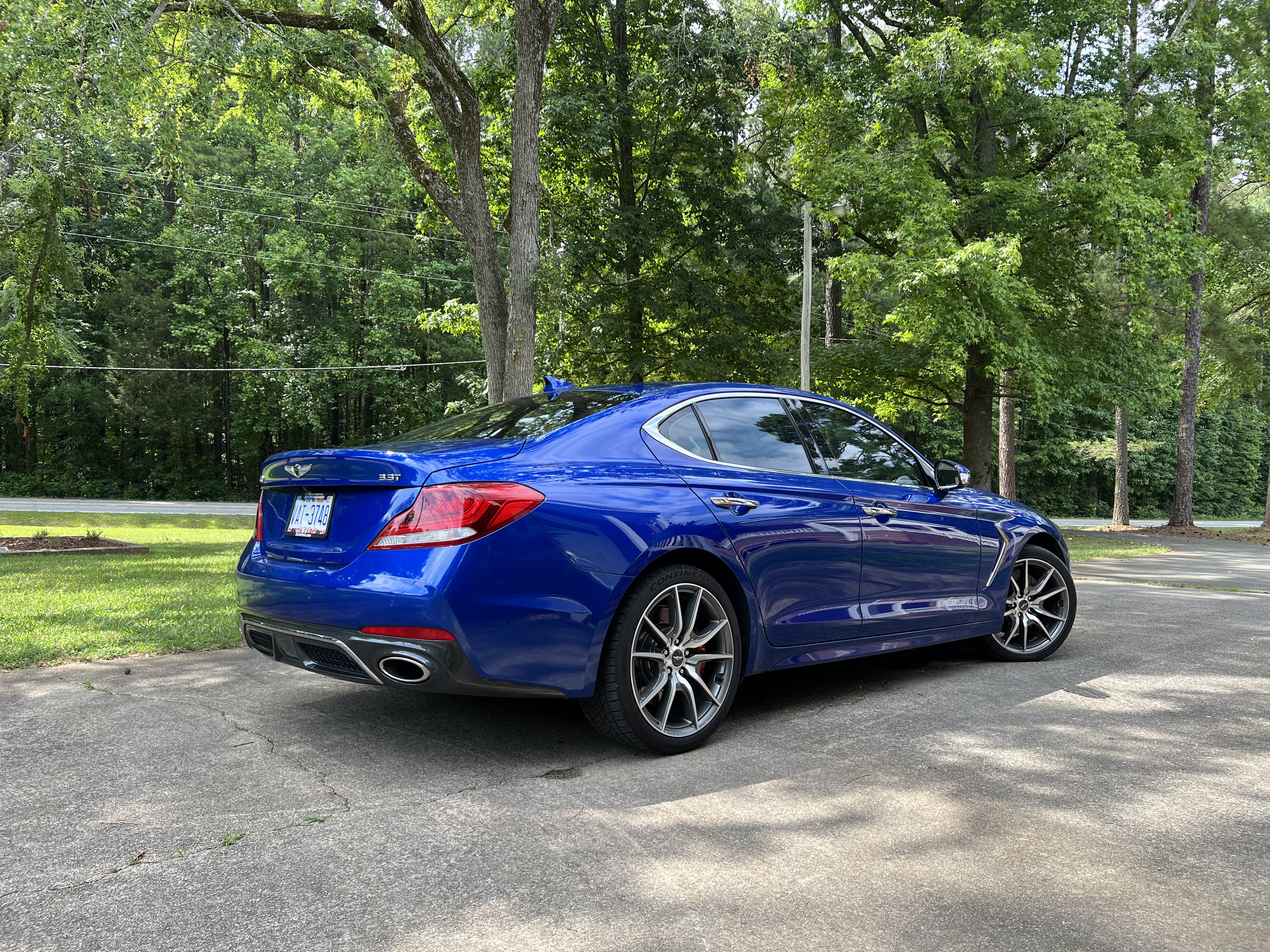
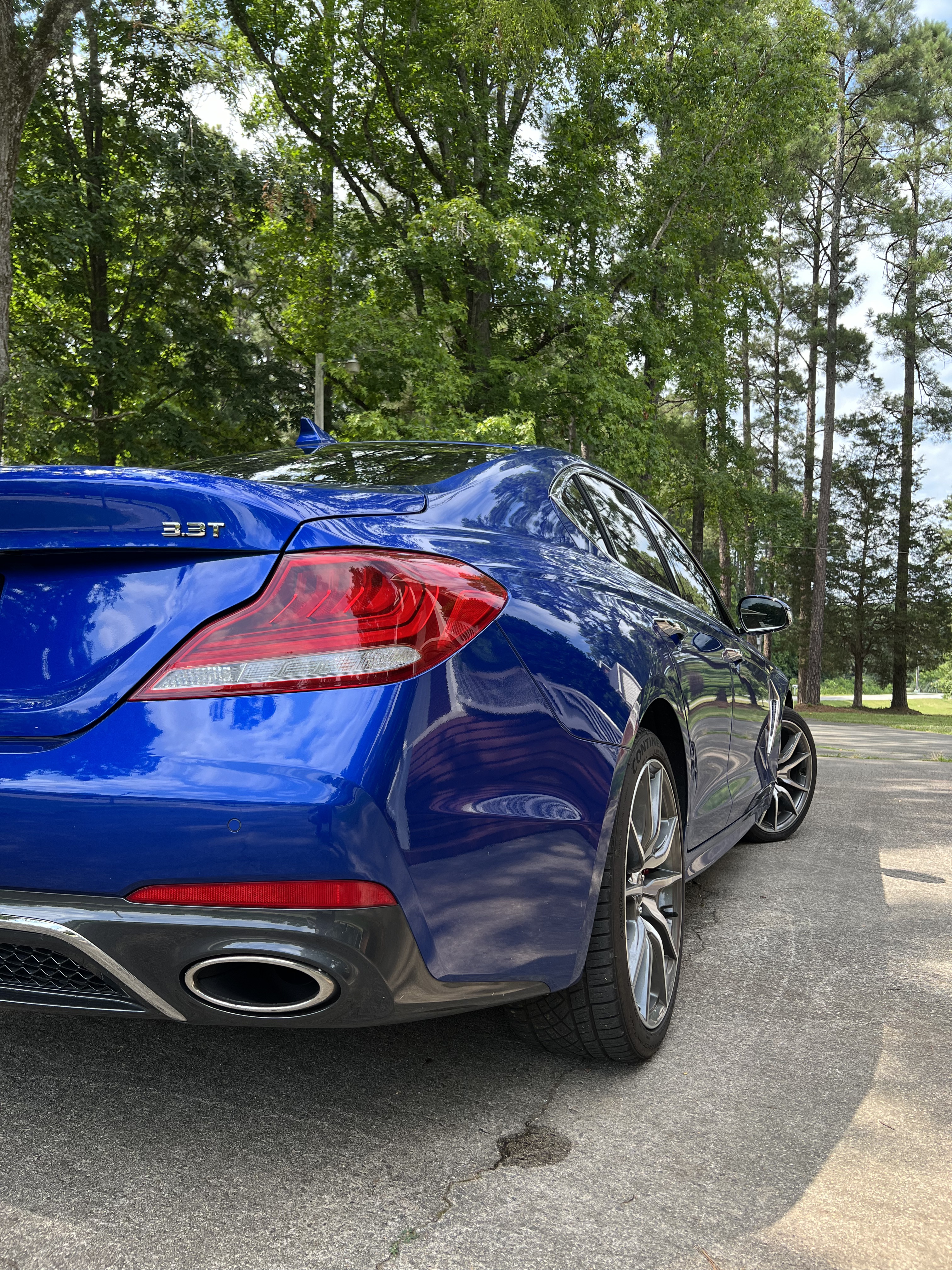
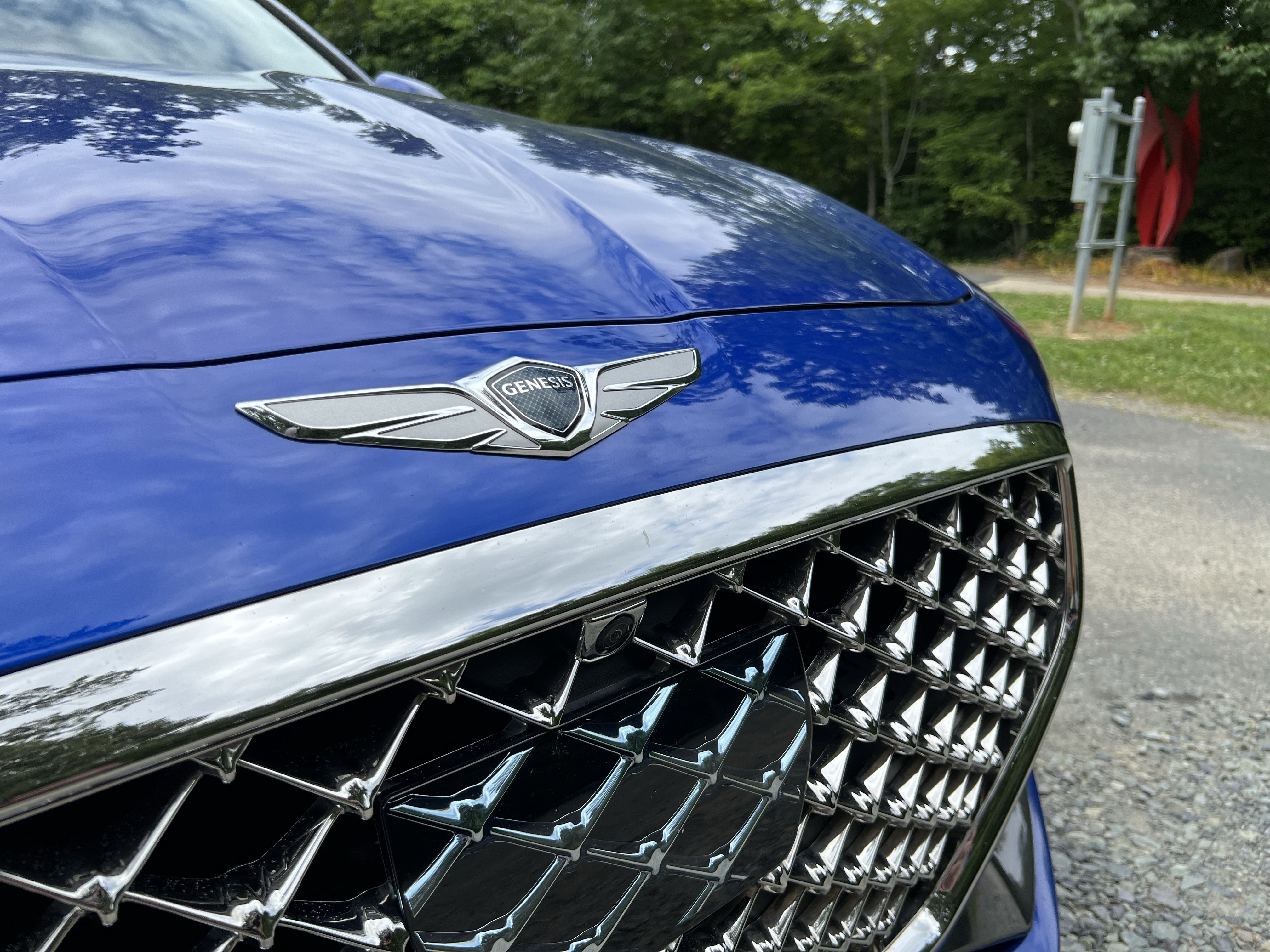
For one, the G70 is gorgeous to look at. Finished in Mallorca Blue, it’s a stunning sedan from almost any angle. The proportions are good, and the whole exterior is a nice blend of elegance and sharper lines. Up front, you’ll find a decidedly Audi-shaped grille and full LED headlights. The radar sensor isn’t particularly well integrated, but at least they tried. The rear end is probably the only weak point of the entire design — it’s just a bit bland, and doesn’t look as special as the front or side profiles would have you expect. The fake exhaust tips are disappointing (though not uncommon nowadays) and the G70 doesn’t sound particularly special either.
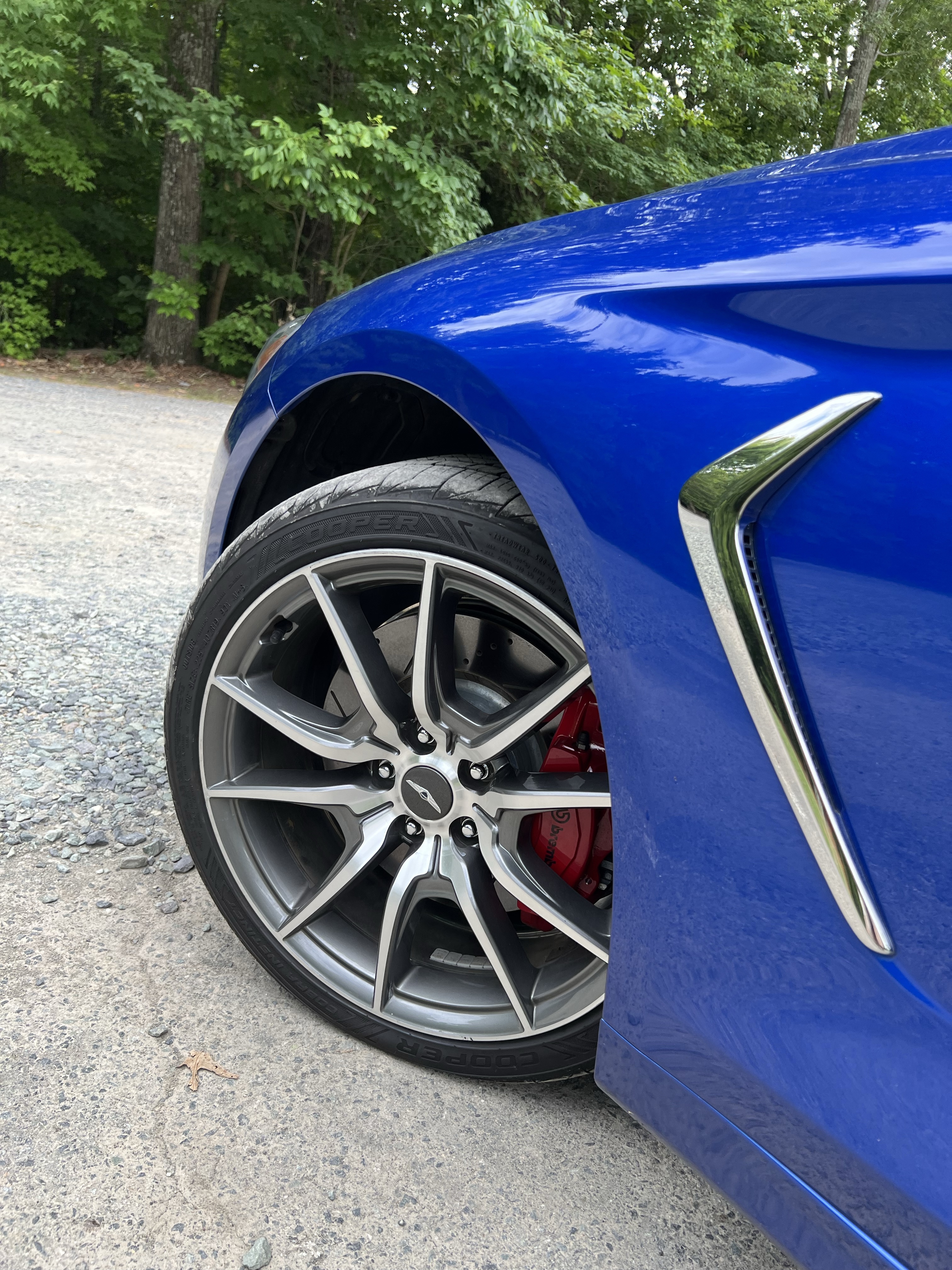
In between the two fascias, however, the pre-facelift G70 3.3T sits on either diamond-cut or dark grey 19-inch wheels, depending on trim. Either wheel design comes on a staggered tire setup from factory, with 225s in the front and 255s in the rear. Interestingly, this setup remains the same regardless of whether you opt for all-wheel-drive or the standard rear-wheel-drive as in this particular car. (The entry-level G70 2.0T does have smaller 18-inch wheels on 225s as standard.)
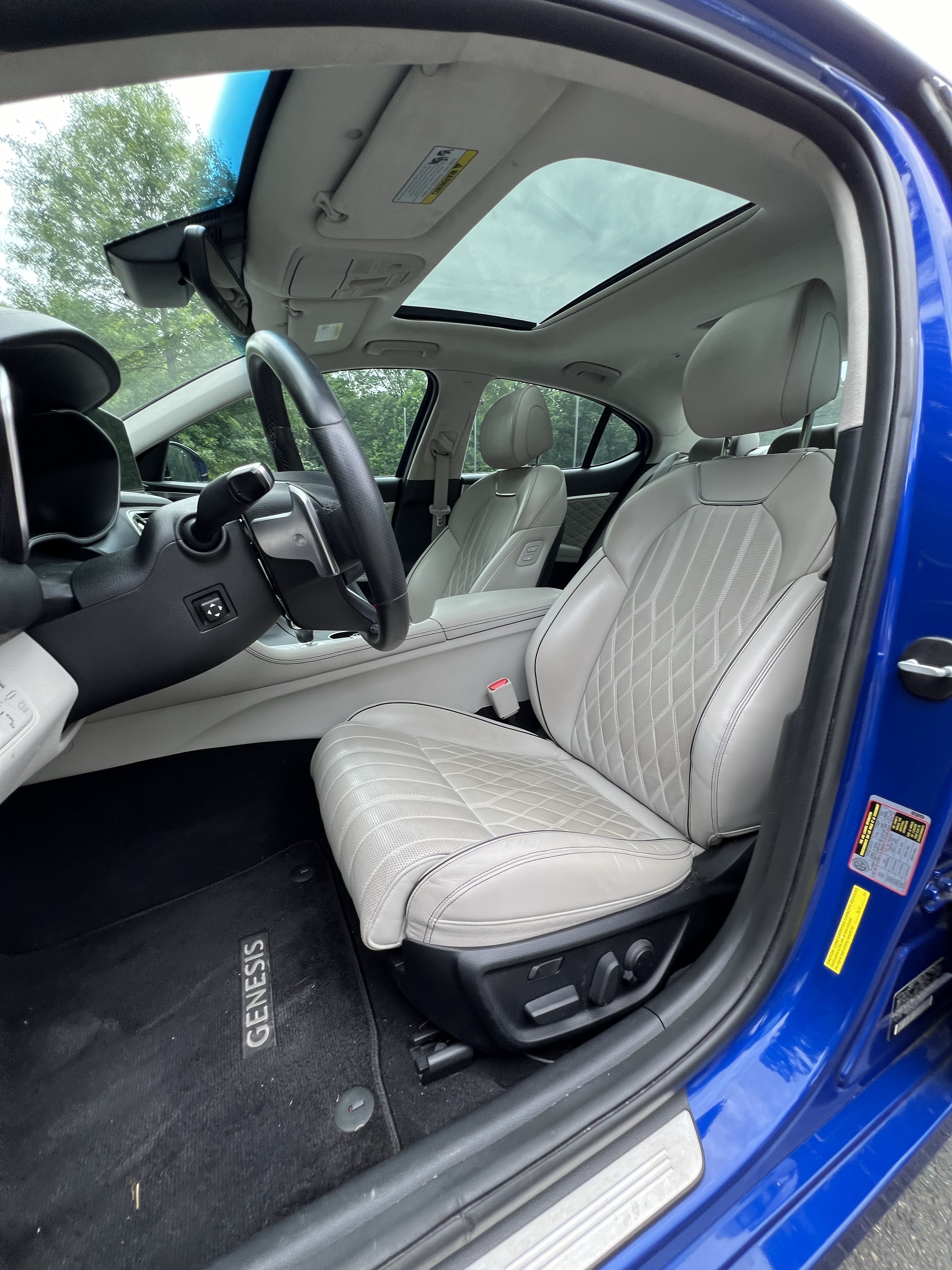
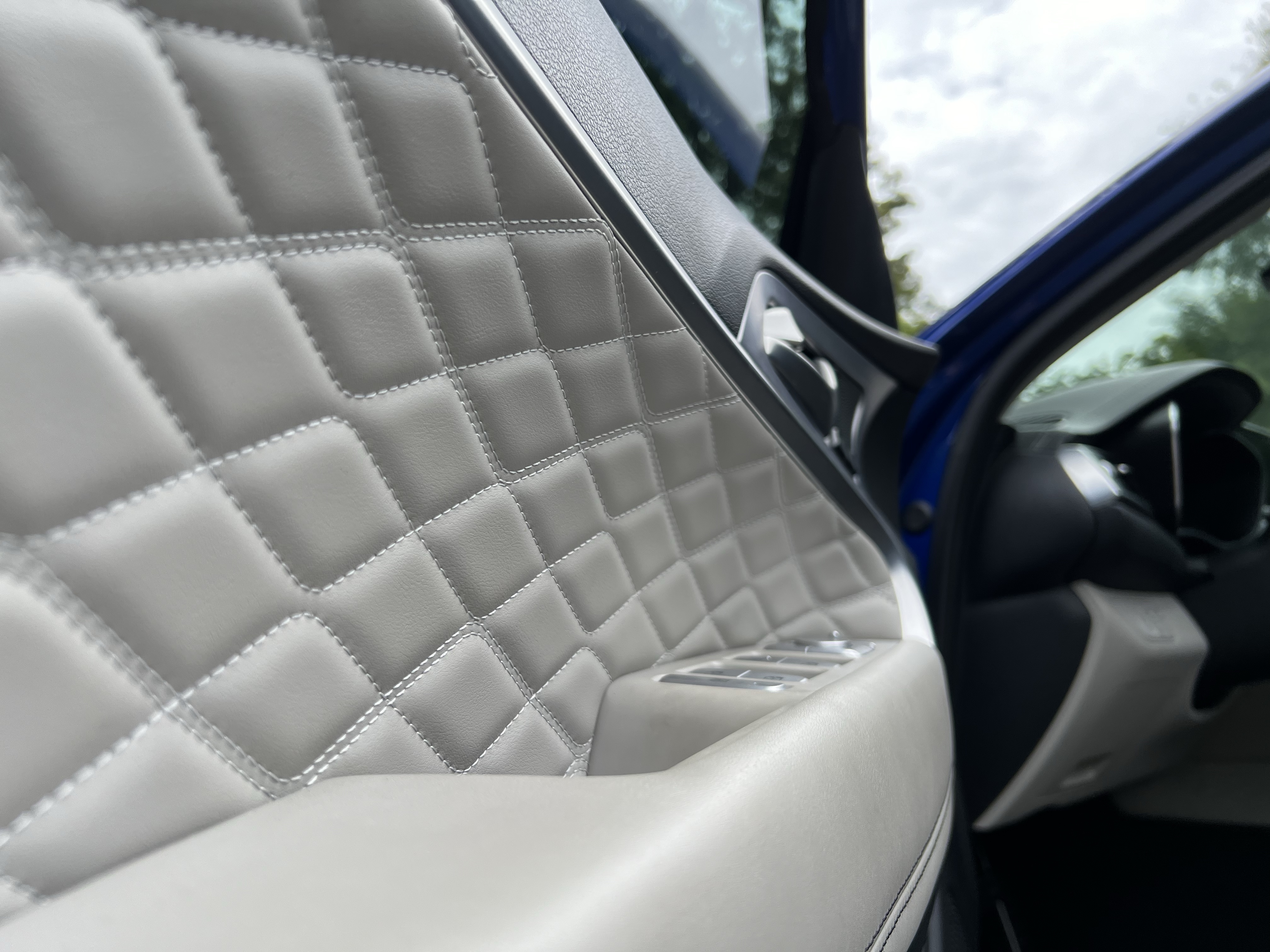
Inside, the G70’s cabin is a study in simple luxury: very little glitz or flair, but excellent fitment, materials, and ergonomics. On one hand, the driver-focused dashboard layout is great, but there’s pretty much nothing happening on the passenger side. The infotainment screen is on the smaller side, and not particularly well integrated into the design. The software, however, is exactly what you want: simple and functional.
Most of the controls are on the cheaper side as they’re Hyundai parts bin components, like the steering wheel buttons and stalks, but overall interior quality is great. A comfortable driving position is super easy to find, although I would prefer a bit more tilt adjustment from the driver’s seat. There’s also a ton of features for the money. Ventilated front seats and memory settings are always welcome touches, the sunroof is huge for a single-panel design, and of course you have Apple CarPlay and all the active safety features you’d expect.
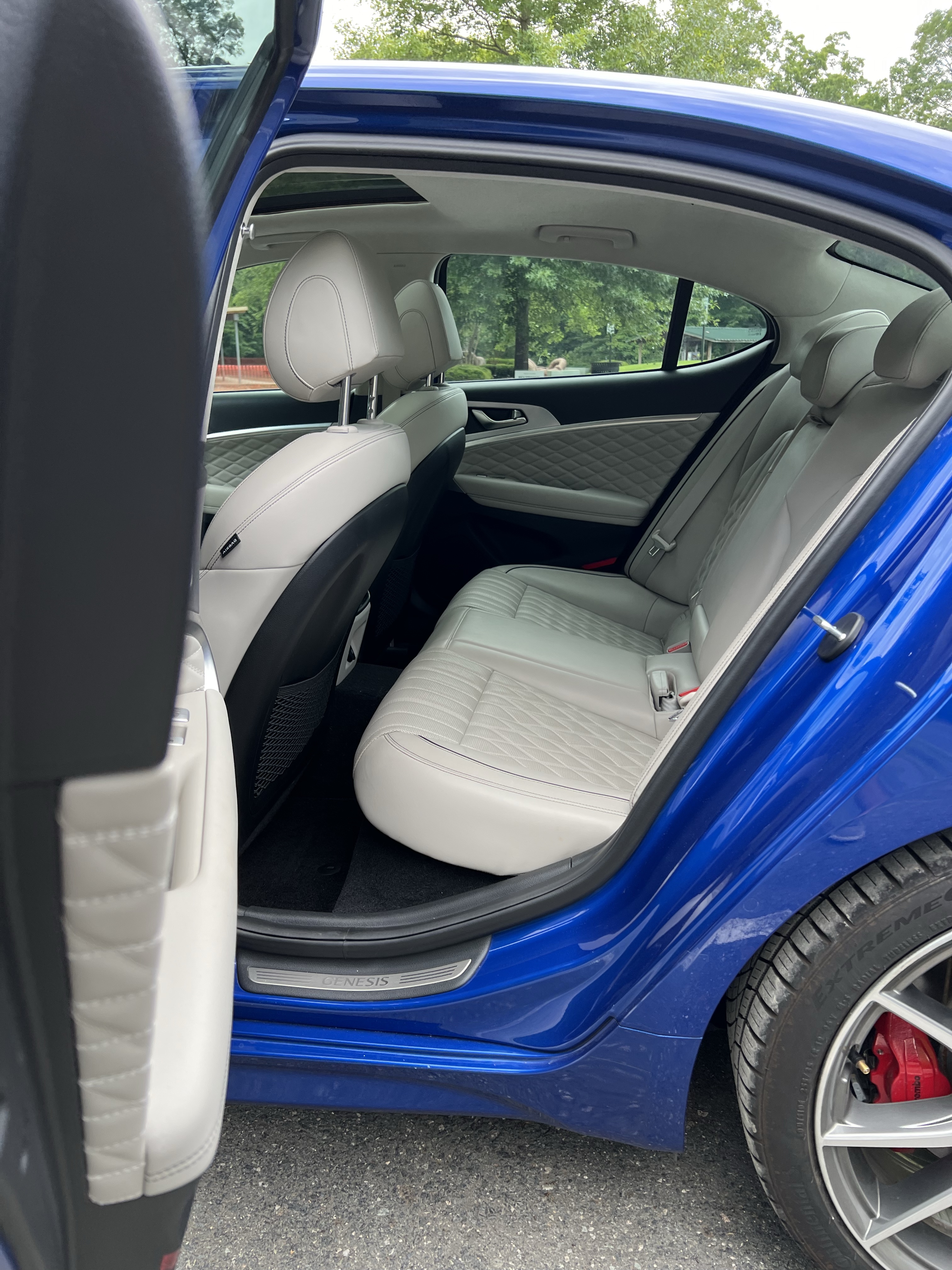
The rear seat of the G70 is a weird mix of cost cutting. There’s not a ton of legroom, and only one USB plug for passengers to share. For some reason, though, the seat cushions are heated and Genesis has included buttons on the side of the front passenger seat to allow adjustment from behind — the latter being something I’ve only ever seen in Mercedes-Maybachs and other large executive vehicles. At 10.5 cubic feet, the trunk is also one of the smallest in the segment, but also has a powered lid.
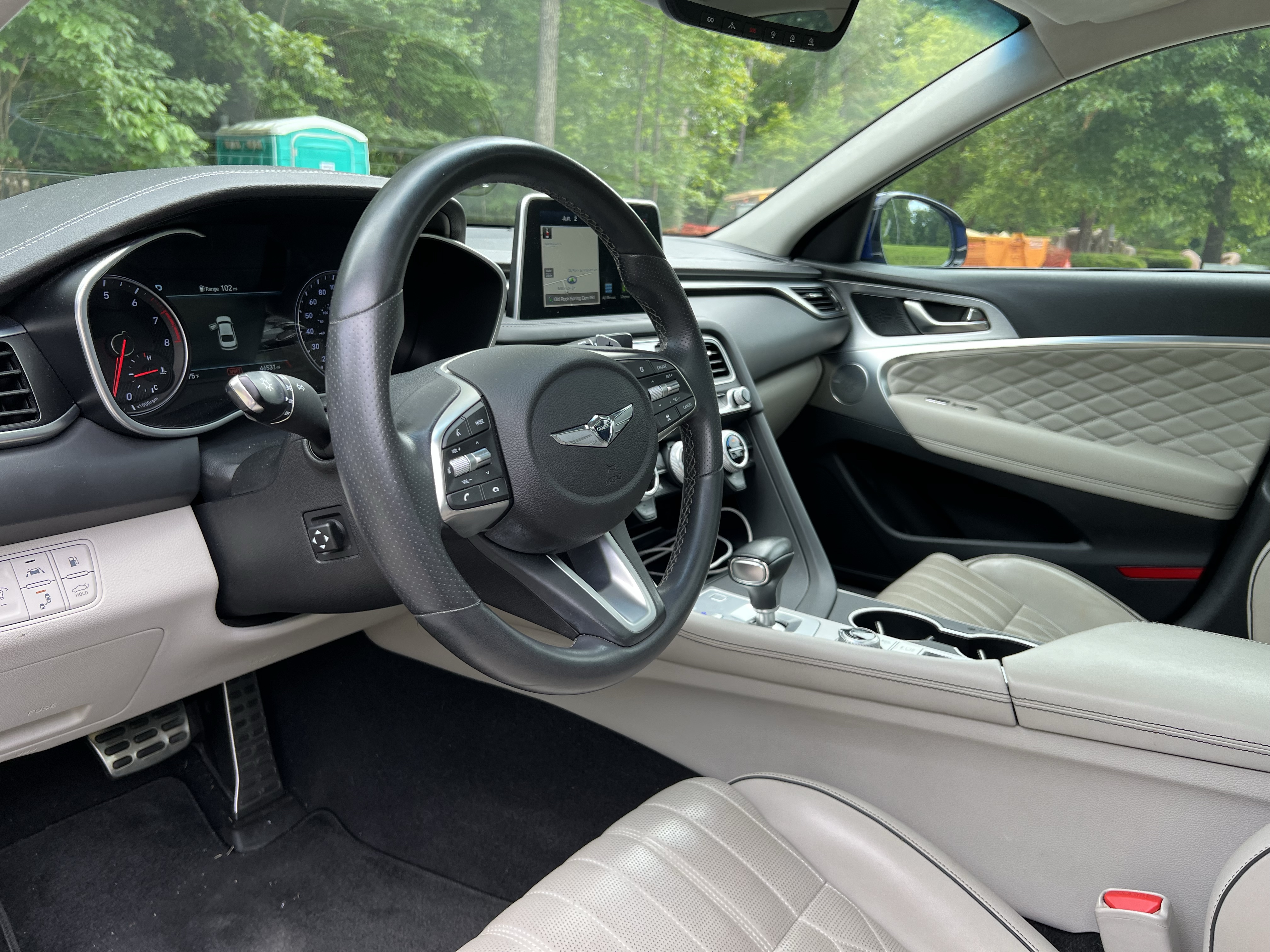

Once you get the G70 out on the road, you notice two things right off the bat: the turn-in is incredibly engaging, and the eight-speed transmission is both super smooth and super annoying. In fact, my only real complaint about the driving experience is that it desperately just wants to be an automatic. It automatically upshifts no matter what, and there’s no way to lock it into manual mode with the paddles or the shifter itself. For better or worse, the ZF8 is tuned significantly softer than the M340i’s, which was already smoother than the one in my old B9 Audi S4.
Outside of the additional artificially generated sound, the G70’s engine and exhaust notes are on the quiet side. The tone from inside the car isn’t bad, but nowhere near as inspiring as rivals. The BMW pops and burbles constantly, and even the typically vacuum-like Audi’s exhaust is more exciting. In the Genesis, you’re lucky to get a farty upshift occasionally.
The G70 also lacks adaptive dampers unless you spring for the top-end Sport package; in fairness the Germans don’t include them as standard equipment either. With the base suspension setup at least, the G70 is definitely further towards the comfort end of the spectrum than the 3 Series. The excellent turn-in and playfulness of the rear-wheel-drive model make up for it, though.
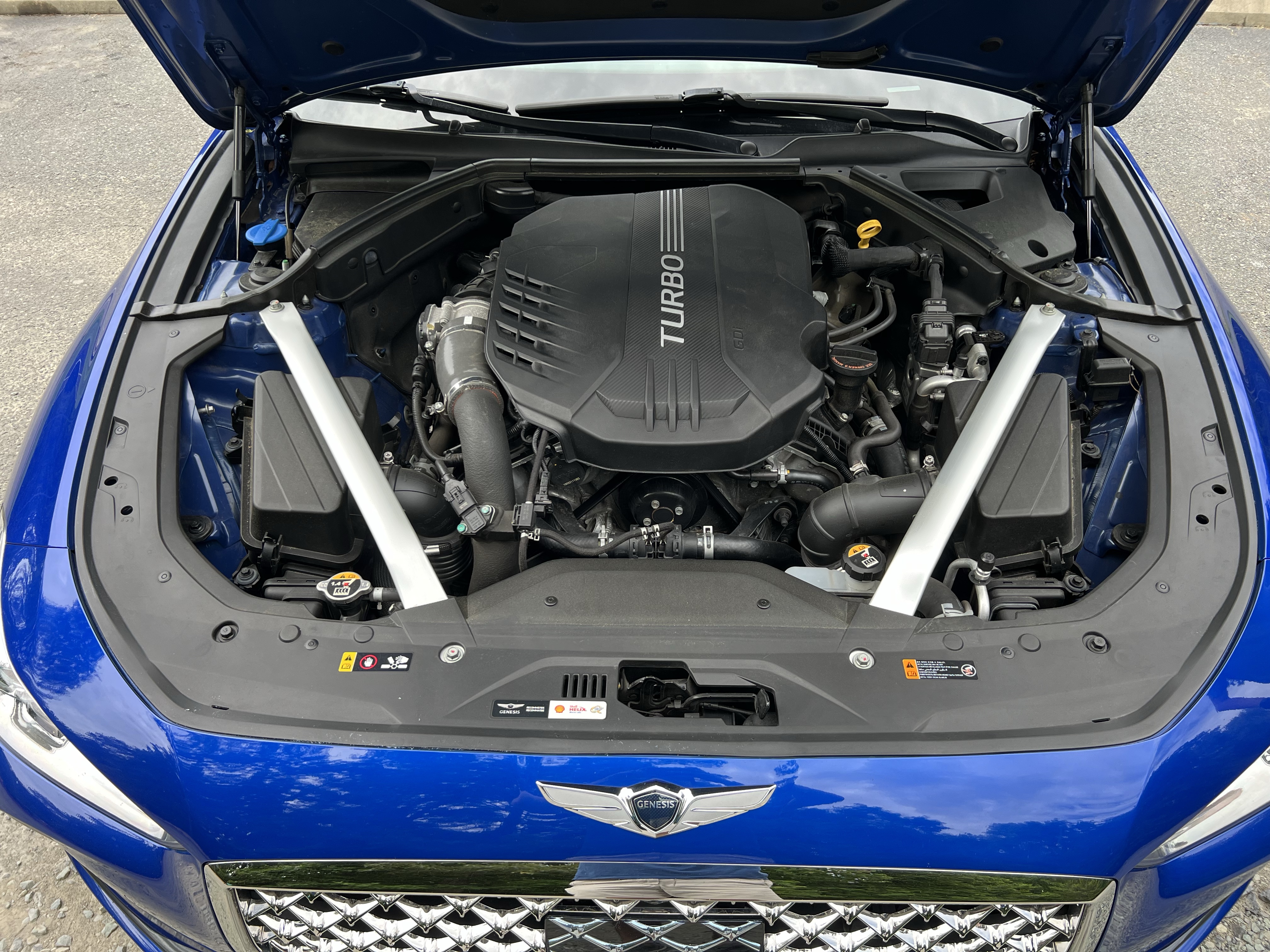
On paper, the rear-drive G70 and M340i boast similar 0-60 times of 4.5 and 4.4 seconds respectively. In actual testing, however, the BMW is easily a half second quicker, if not more. We all know how the German automakers tend to underrate their power figures, especially the ones from Bavaria.
On a similar note, I wish Genesis had underrated their fuel economy figures for the G70. 20 MPG combined is roughly the same as the new Toyota Tundra, which for comparison is also a twin-turbo V6 and is a massive pickup truck. Hopefully you’ll be spending less on maintenance and repairs than the Deutsch sedans, though, thanks to Genesis’ 10-year, 100,000 mile powertrain warranty and the fact Hyundai parts are generally cheaper as well.
For this, plus the damn good driving experience, the G70 is a true Genesis: it truly excels when it comes to value. In almost every way, it really is nine-tenths of an M340i for 75% of the price. The only thing missing? The brand recognition. But frankly, if the car is this good, who cares what badge it wears?
| Vehicle Tested | 2020 Genesis G70 3.3T Elite |
|---|---|
| Color | Mallorca Blue / Beige |
| Drivetrain | 3.3L twin-turbo V6, 8-spd auto, Rear wheel drive |
| HP / Torque | 365 horsepower / 376 lb-ft |
| Curb Weight | 3,800 lbs (est.) |
| 0-60 mph | 4.5 seconds (est.) |
| EPA Fuel Econ | 17 city / 26 hwy / 20 combined |
| MSRP | $45,500 (est.) |
 Also Andrew