

Chevy’s New Twin-Turbo Corvette ZR1 Is Set To Slay Supercars


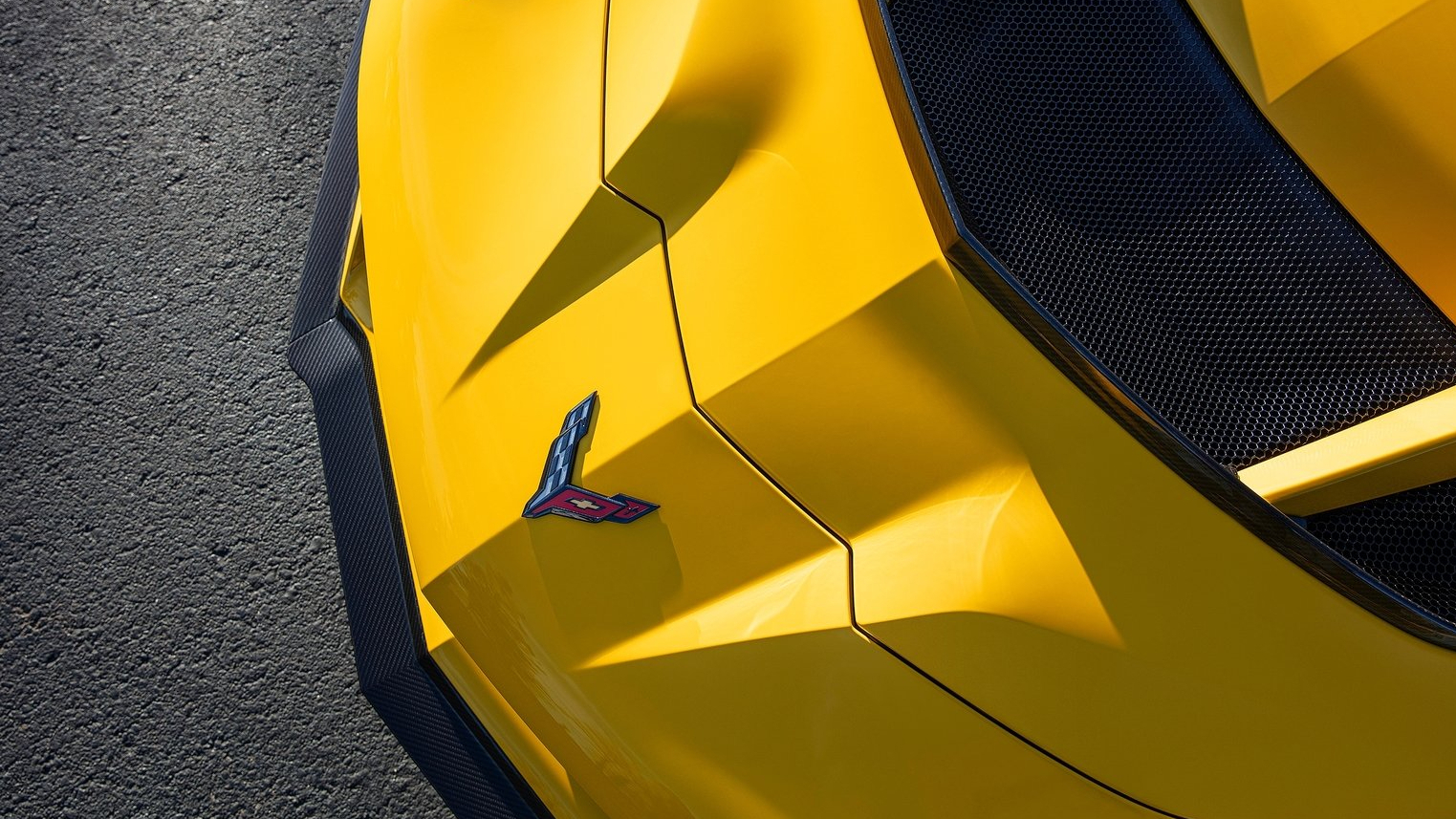


There were already quite a few firsts for the current-generation C8 Corvette: the complete lack of manual transmissions, the E-Ray offering a hybrid system, and of course every version having the V8 engine behind the driver rather than in front. Logically, the C8 ZR1 was going to expand upon that list of firsts, but did anybody have a twin-turbocharged 5.5-liter V8 making over 1,000 horsepower on their bingo card?
The GM engineers who developed the new C8 ZR1 said it was obvious early on that they were dealing with something special. During its first drag-strip launch, the rear-drive dual-clutch monster ripped through the quarter mile in under 10 seconds. At the Nürburgring racetrack, all four Corvette test drivers eclipsed 200 mph on their very first laps. And yes, it produces no less than 1,064 horsepower and 828 lb-ft of torque.
The new LT7 engine is a sibling of the LT6 in the Z06, but there are enough changes to earn a different engine code; Chevy didn’t just slap a couple turbos on the Z06’s engine and call it good. The two dual-cam small-blocks do have a lot in common, such as their block design, displacement, and flat-plane crankshaft. However, along with the pair of turbochargers, the LT7 has a host of other unique parts, including a new intake system that’s painted Edge Blue (an homage to the ZR1 “Blue Devil”), both port and direct fuel injection, and stronger connecting rods. The LT7 also introduces an anti-lag system to help maintain responsiveness.
Every ZR1 also comes standard with Magnetic Ride 4.0 dampers and a staggered wheel setup with Michelin Pilot Sport 4S tires; stiffer springs and stickier Michelin Pilot Sport Cup 2 tires are included with the track-focused ZTK package. The latter further adds front dive planes, underbody strakes for added front downforce, a tall Gurney flap that attaches to a lip on the hood, and a larger rear wing. Those aero add-ons are available separately from the ZTK setup as part of the Carbon Aero package. Chevy says that all of these aero bits provide up to 1200 pounds of downforce at the ZR1’s estimated top speed of over 200 mph.
At the other end of the top-speed run, the ZR1 features a specially designed set of carbon-ceramic rotors measuring 15.7 inches up front and 15.4 inches out back — the biggest ever fitted from the factory. Unlike the Z06’s optional carbon-fiber brakes, the ZR1’s are made of a material that’s designed to last longer and mitigate heat better. Optionally, those brakes can be protected by a set of matching carbon-fiber wheels that are about 40 pounds lighter than the standard aluminum ones.
Unlike every other C8, the ZR1 removes the front trunk in favor of a flow-through hood that not only provides extra downforce but also directs air through a heat exchanger. The ZR1’s other cooling tricks include a new duct built into the side air intakes that cools the rear brakes, and there are more cooling ducts for the engine that are found on the coupe’s rear hatch. While a convertible bodystyle is also on offer, it’s the coupe that has a cool calling card: a reference to the 1967 Corvette in the form of a split rear window. And in true Corvette fashion, the rear cargo area just behind the engine bay still fits a full set of golf clubs.
The 2025 Corvette ZR1 will go into production next year, and it’ll be built alongside the other C8 variants at GM’s factory in Bowling Green, Kentucky. Pricing has not yet been released, but our guess is a starting MSRP of at least $175,000.
2025 Audi A5 & S5 Both Simplify And Confuse

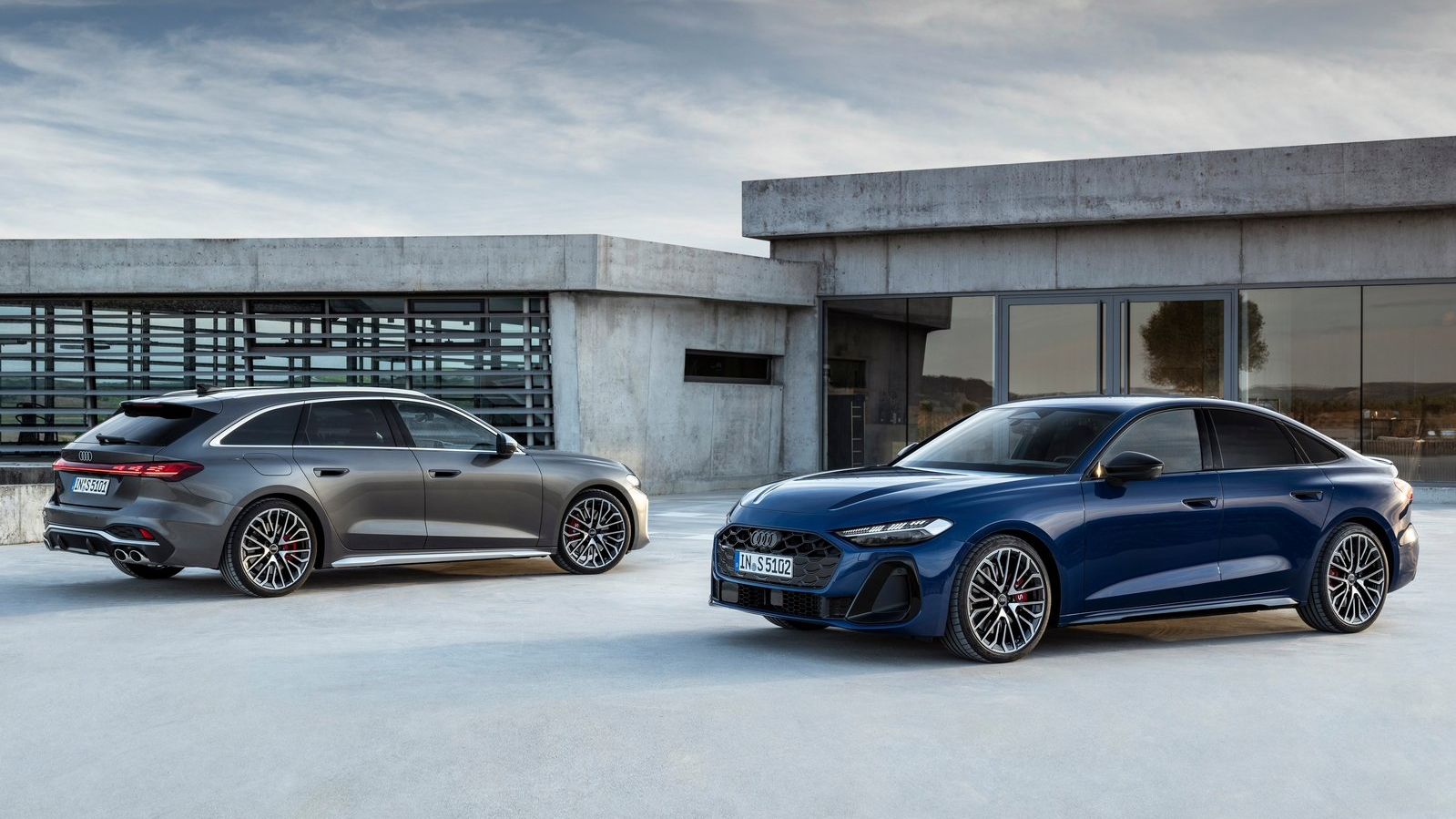

For the upcoming 2025 model year, it was just announced that Audi’s lineup will be lacking the A4/S4 sedan, A5/S5/RS5 coupe, and A5/S5 convertible. Instead, we’ll be getting an A5 and S5 sedan here in the United States, and Europeans will also add an A5 and S5 Avant.
Effectively, Audi is consolidating the existing 4s and 5s into one model line, in line with its new naming scheme that will have electric models be even numbers and internal combustion versions as odd numbers. Blame weakening sedan sales, but the old ICE A4 is out and replaced by the A5 going forward. And the new A5 is a hatchback, or what Audi previously called a Sportback, but is now called a sedan. So… yes, if it takes a minute to understand all of it, you’re not alone.
It’s built on what Audi says will be its last new internal-combustion platform, the Premium Platform Combustion architecture, or PPC for short. Both the sedan and wagon are larger in every dimension than the outgoing models; an extra 2.6 inches in length, 0.5 inch in width, and 0.6 inch in height. The wheelbase is stretched by 3.1 inches, primarily for increased interior space, but also for better exterior proportions. The old A5 Sportback was quite a stylish car in our opinion, and this new one looks even more excellent.
U.S. engine choices are similar to before, but also different in their new companions. The A5 gets a 268-horsepower 2.0-liter turbo-four, while the S5 features a twin-turbocharged 3.0-liter V6 with 362 horsepower. Both are mated to dual-clutch transmissions and a hybrid system that consists of a 24-hp electric motor with 170 pound-feet of torque connected to the transmission output shaft. The electric motor can move the car briefly on battery power and provides regenerative braking.
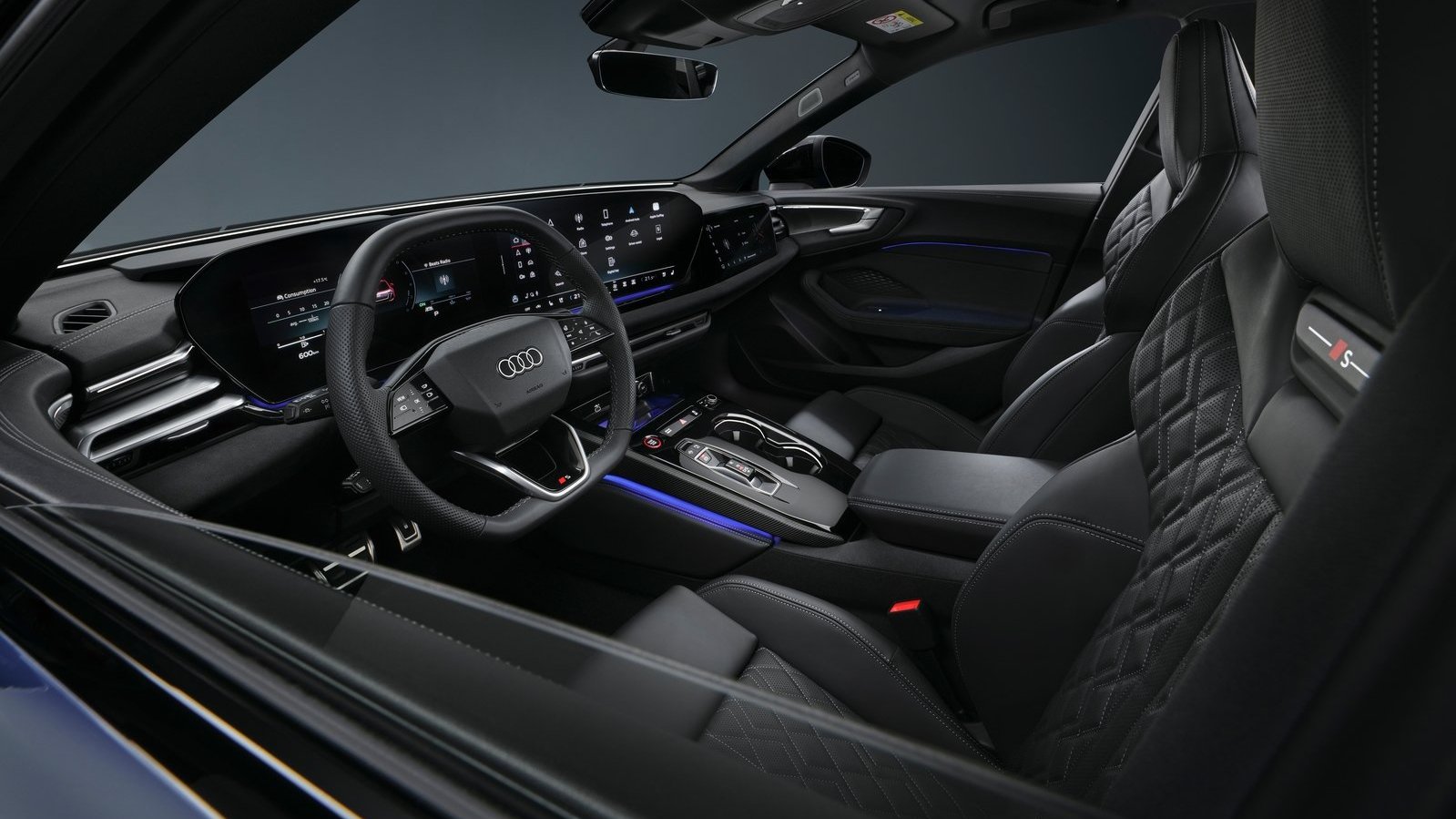
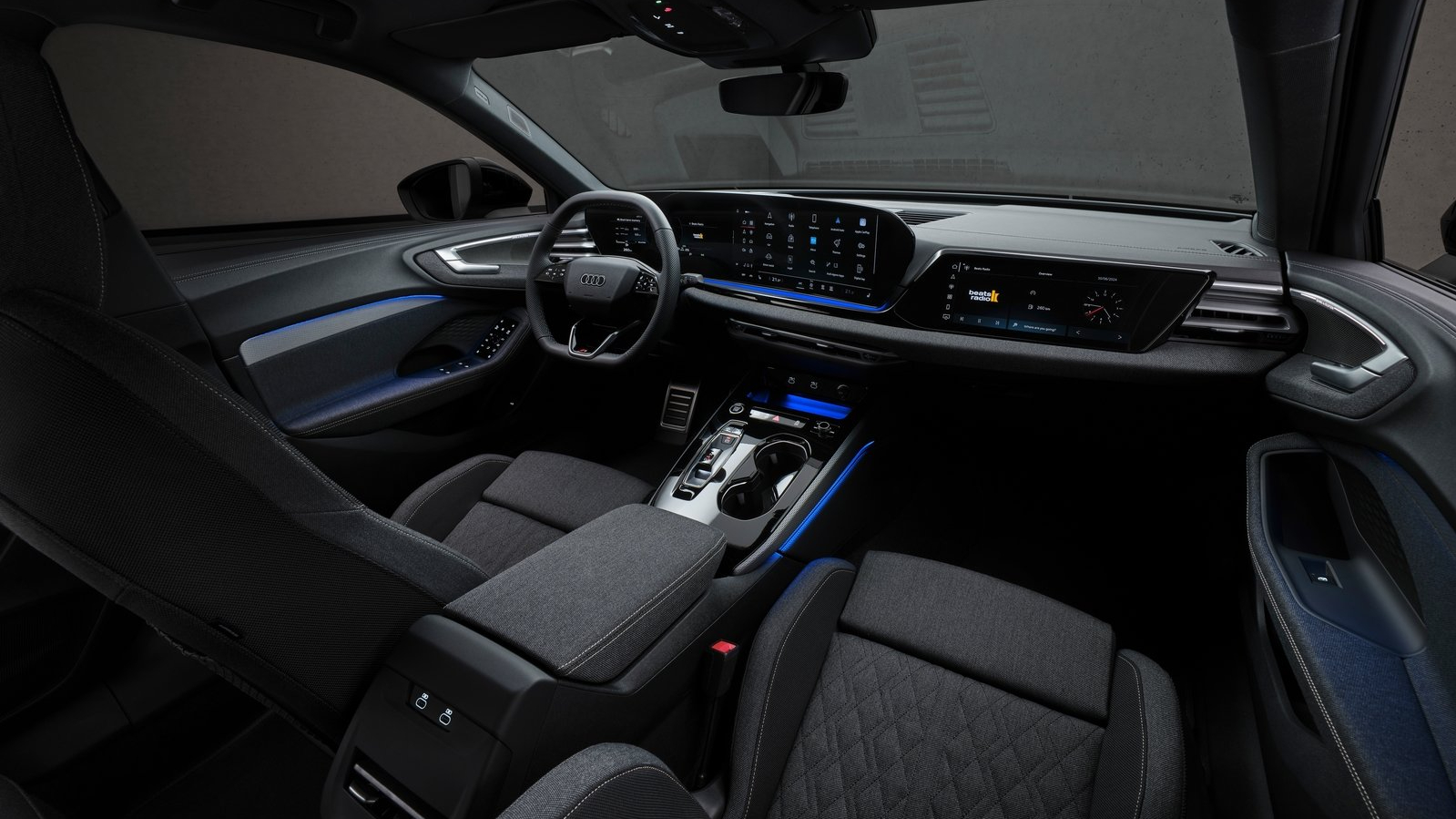
From the driver’s seat, the interior is dominated by a massive glass panel that Audi calls the Digital Stage. The panel houses two large screens and curves to give a cockpit-like feel. Directly in front of the driver is an 11.9-inch gauge and information cluster; the center infotainment screen measures 14.5 inches diagonal and on the right side sits a 10.9-inch display for the passenger that provides mostly redundant controls. A large heads-up display for the driver is also standard. Overall there’s nothing revolutionary about any of the functionality of the screens, there’s just more of them, but unfortunately that’s the trend nowadays.
The B10 Audi A5 will be built in Neckarsulm, Germany, and is expected to arrive Stateside in mid-2025. While it’s bittersweet that Audi is discontinuing the A4 sedan during its 30th anniversary, if its demise means that Audi is able to dedicate more resources to improve a single car’s lineup, it’s admittedly not the worst move for the brand to make.
Pagani’s Latest Creation Is Perfectly Old Fashioned


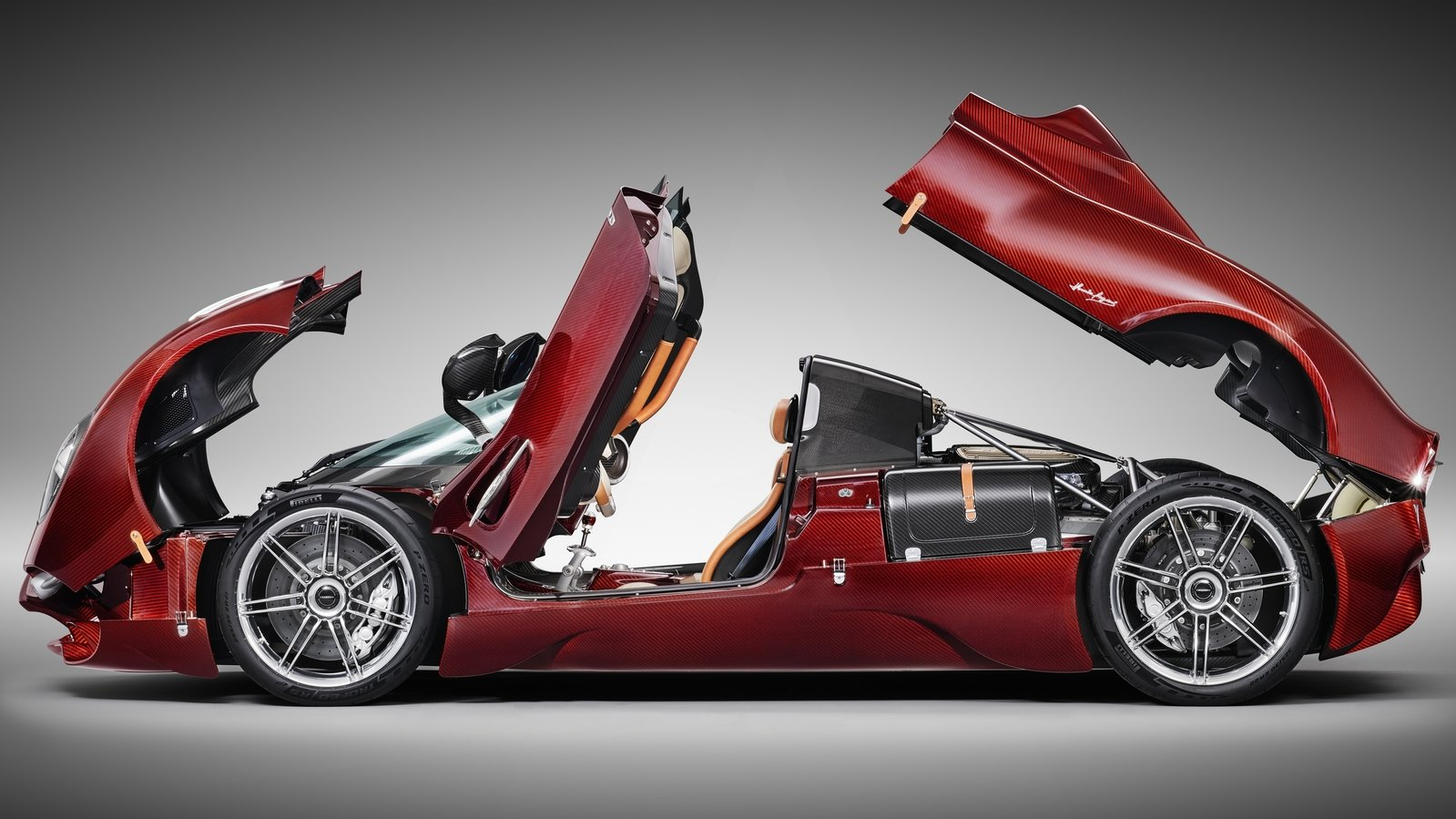
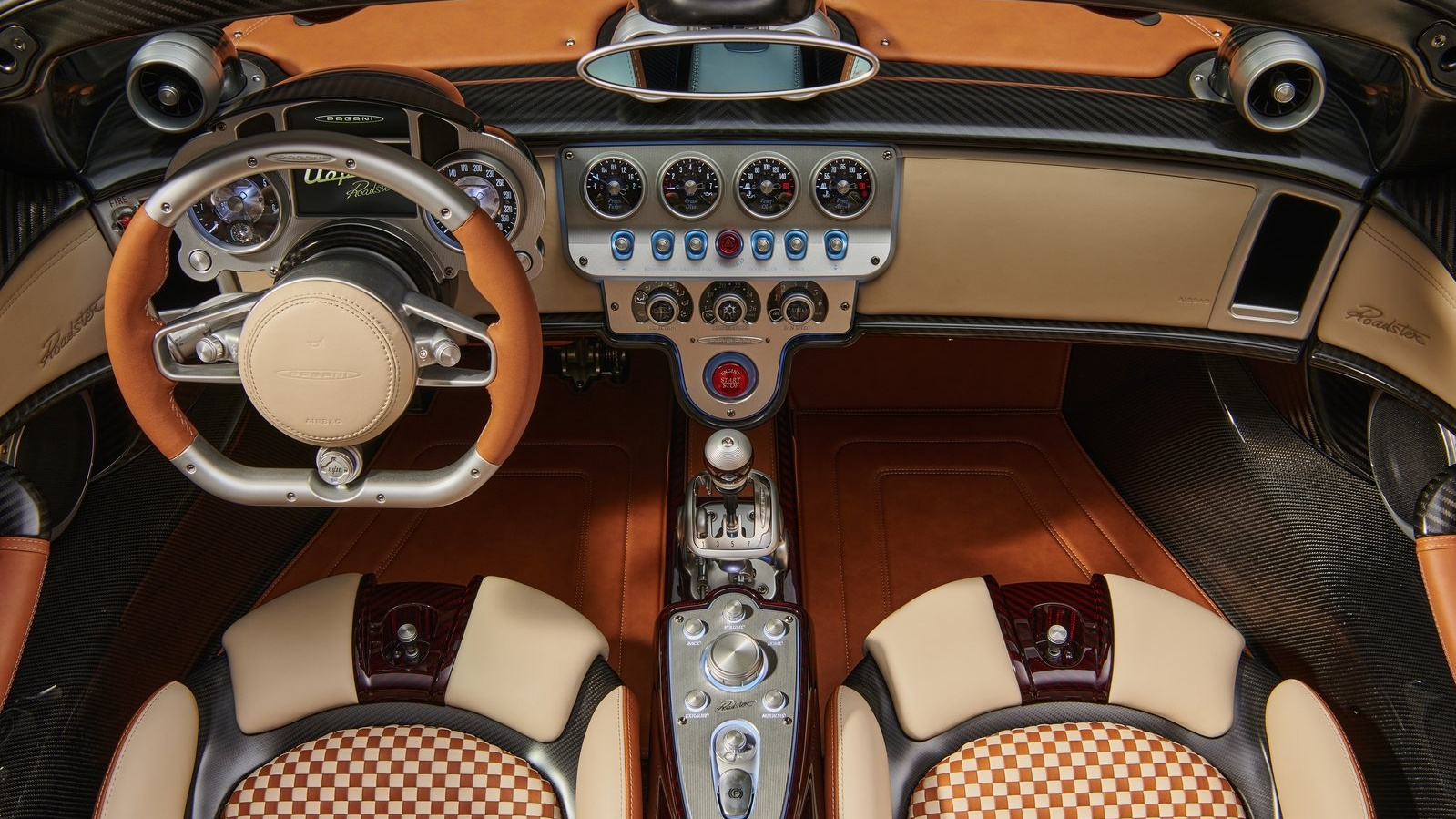
What would your ideal driving experience look like in a perfect world? For Horacio Pagani, it appears to be a combination of a non-hybrid V12 engine, manual transmission, retro interior, and the ability to remove the roof. At least, that’s what the new Pagani Utopia Roadster offers all in one $3.4 million package.
It’s the topless follow-up to the Utopia coupe that was revealed in 2022, but Pagani didn’t just cut off the roof and reinforce the body. Instead, the Italian hypercar maker meticulously redesigned the Carbo-Titanium monocoque for maximum rigidity without adding weight. They say the Utopia Roadster isn’t any heavier than its coupe counterpart, which for reference weighs just 2,822 pounds without fluids.
Like its fixed-roof sibling, the Utopia Roadster is among the few new hypercars that doesn’t have any kind of hybrid-assisted powertrain. Developed by Mercedes-AMG, the hand-built 6.0-liter V12 produces 852 horsepower and 811 lb-ft of torque, and is mated to another anomaly: a seven-speed gated manual transmission.
Inside, the Utopia Roadster harks back to a simpler time when the gauges and switchgear were much more analog. Besides the single digital display facing the driver (which allows access to the infotainment system and backup camera), everything else in the cabin is appropriately ornate and appears to be wonderfully tactile, from the shifter’s exposed linkage to the toggle switches on the dash to the steering wheel. Pagani says the latter actually started life as a single piece of aluminum before it was milled for 28 hours.
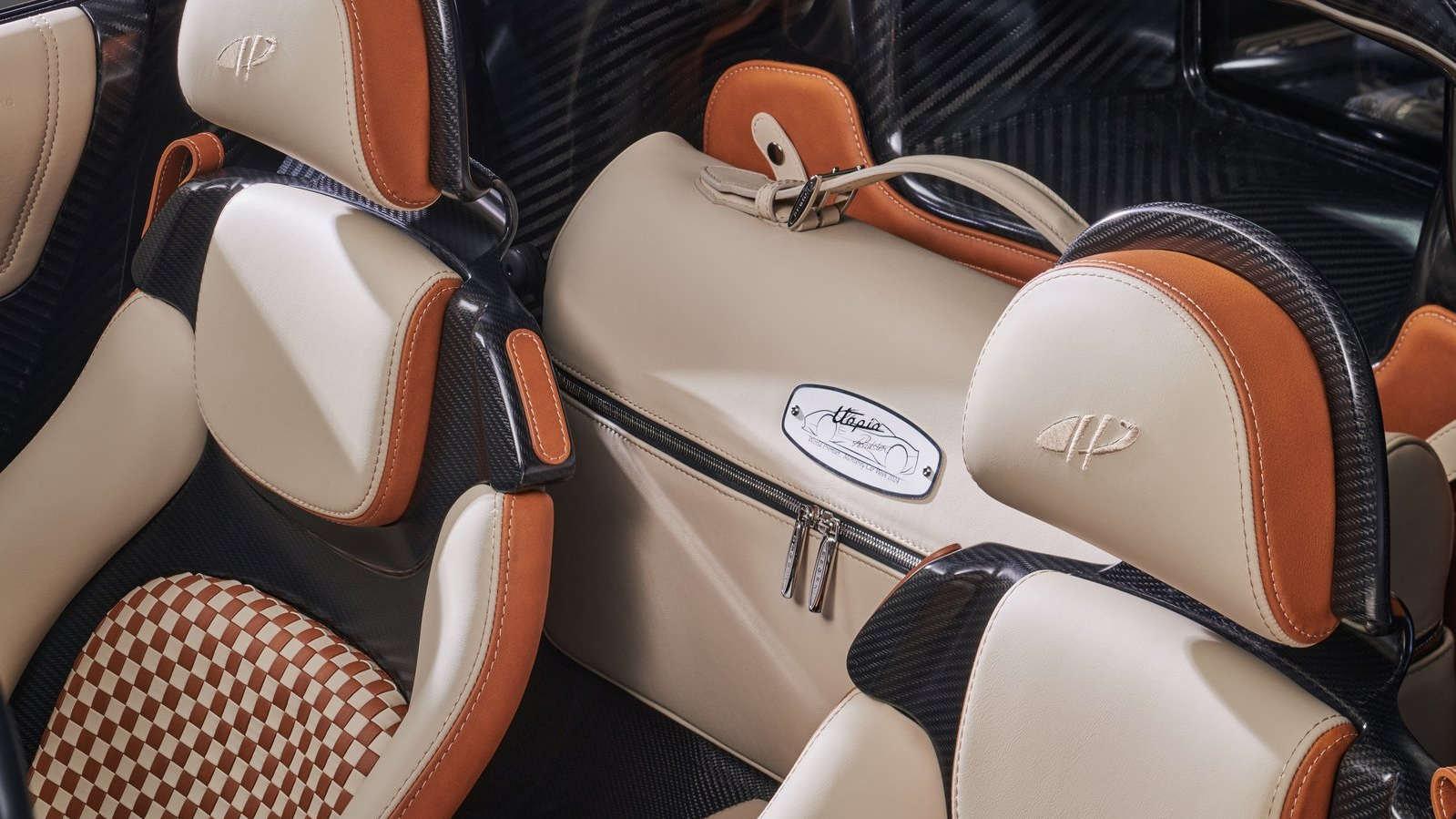
As you’d expect from a $3.4 million hypercar, personalization options are virtually limitless. The example pictured above, which is set to debut at Monterey Car Week, is painted in Habanero Red and allows the car’s carbon-fiber bodywork to show through. It’s paired with a multi-tone tan interior with swanky checkerboard seat centers and more exposed carbon fiber. The Utopia Roadster also includes a matching bag behind the seats for storing the temporary softtop roof, as well as custom suitcases that fit perfectly in the storage compartments on either side of the engine bay.
Just 130 examples of the Utopia Roadster will be produced, an unknown number of which will be making their way to the U.S.
2025 Ford Maverick Brings An AWD Hybrid, New Tech
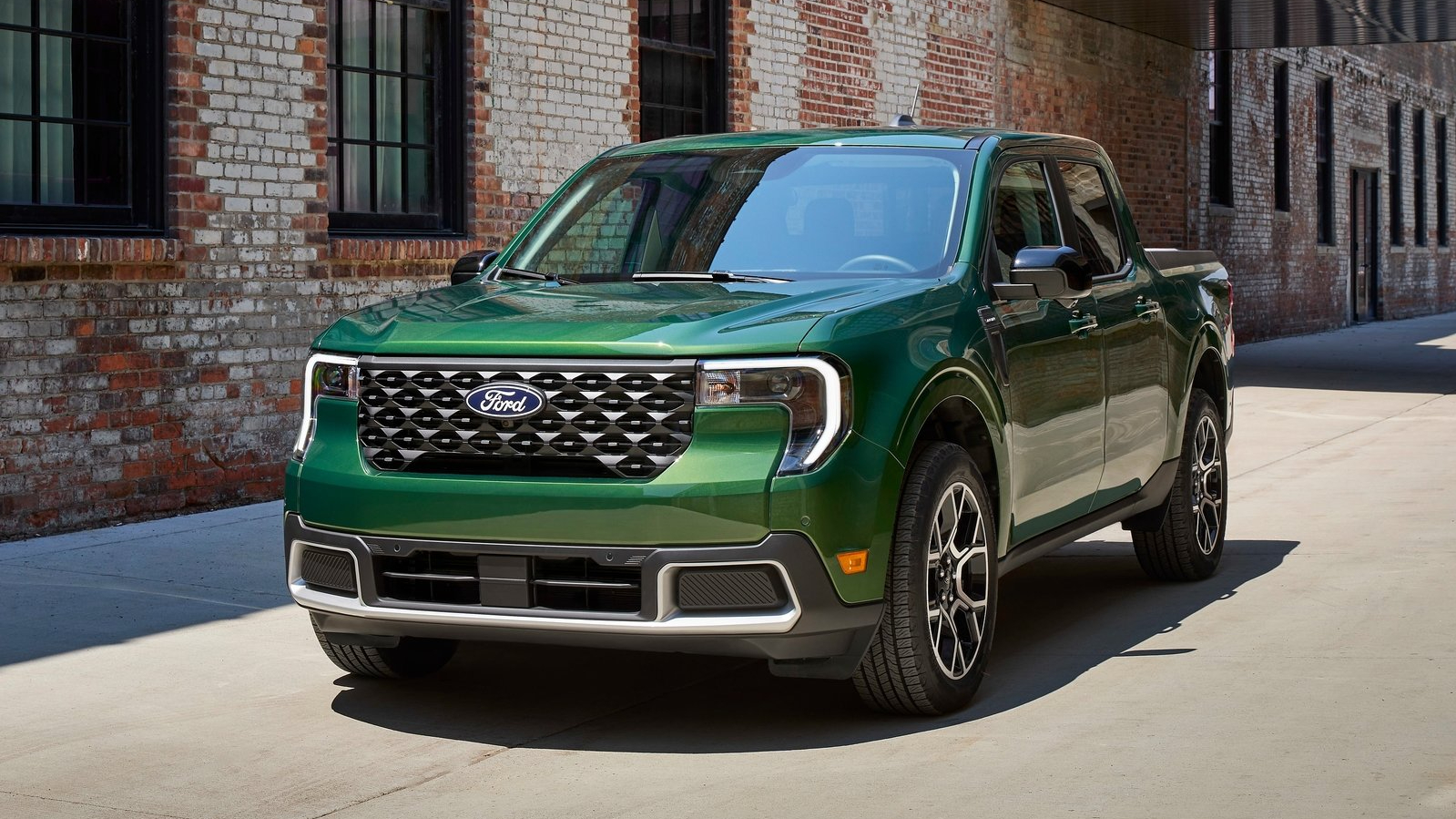
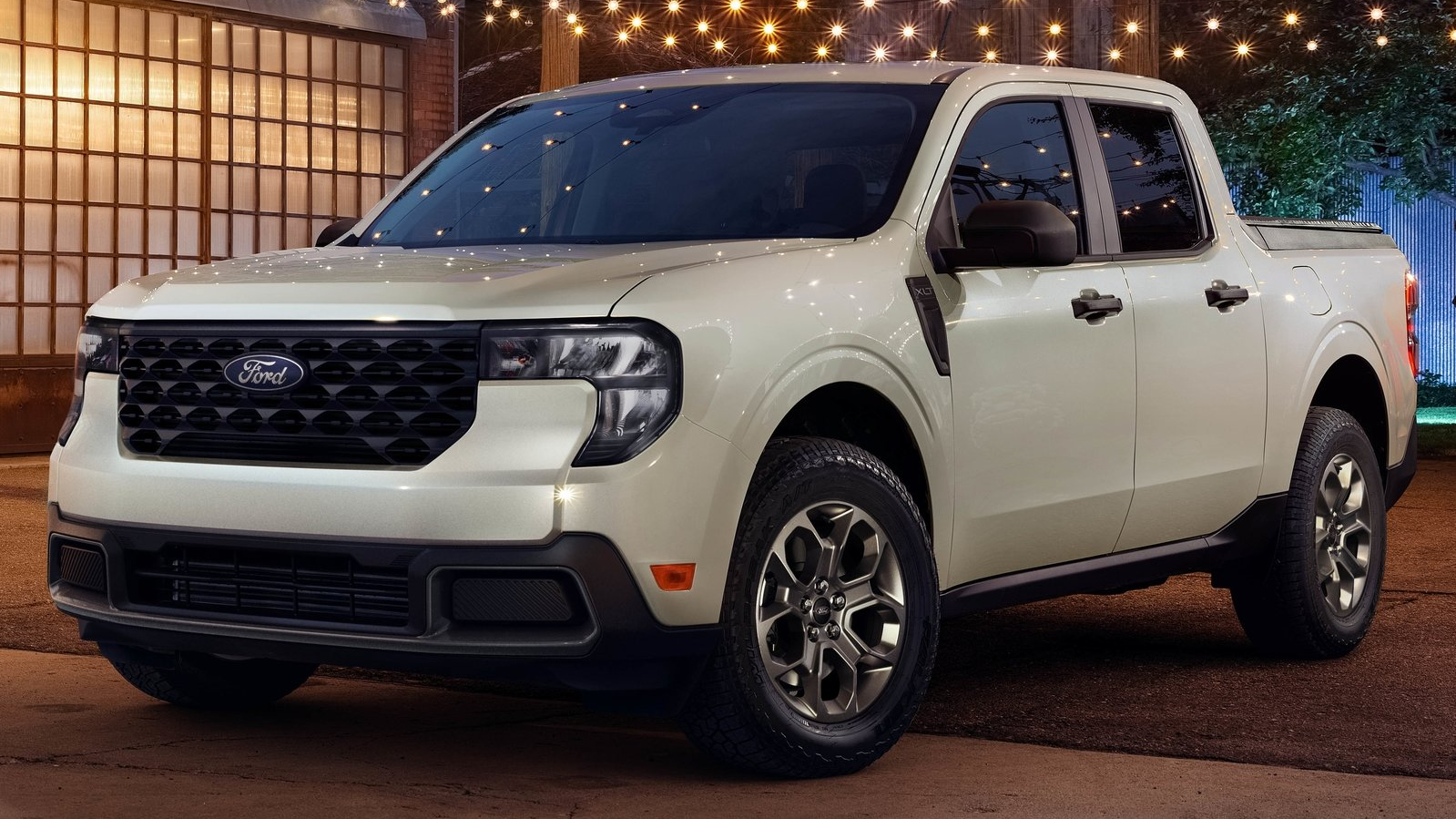
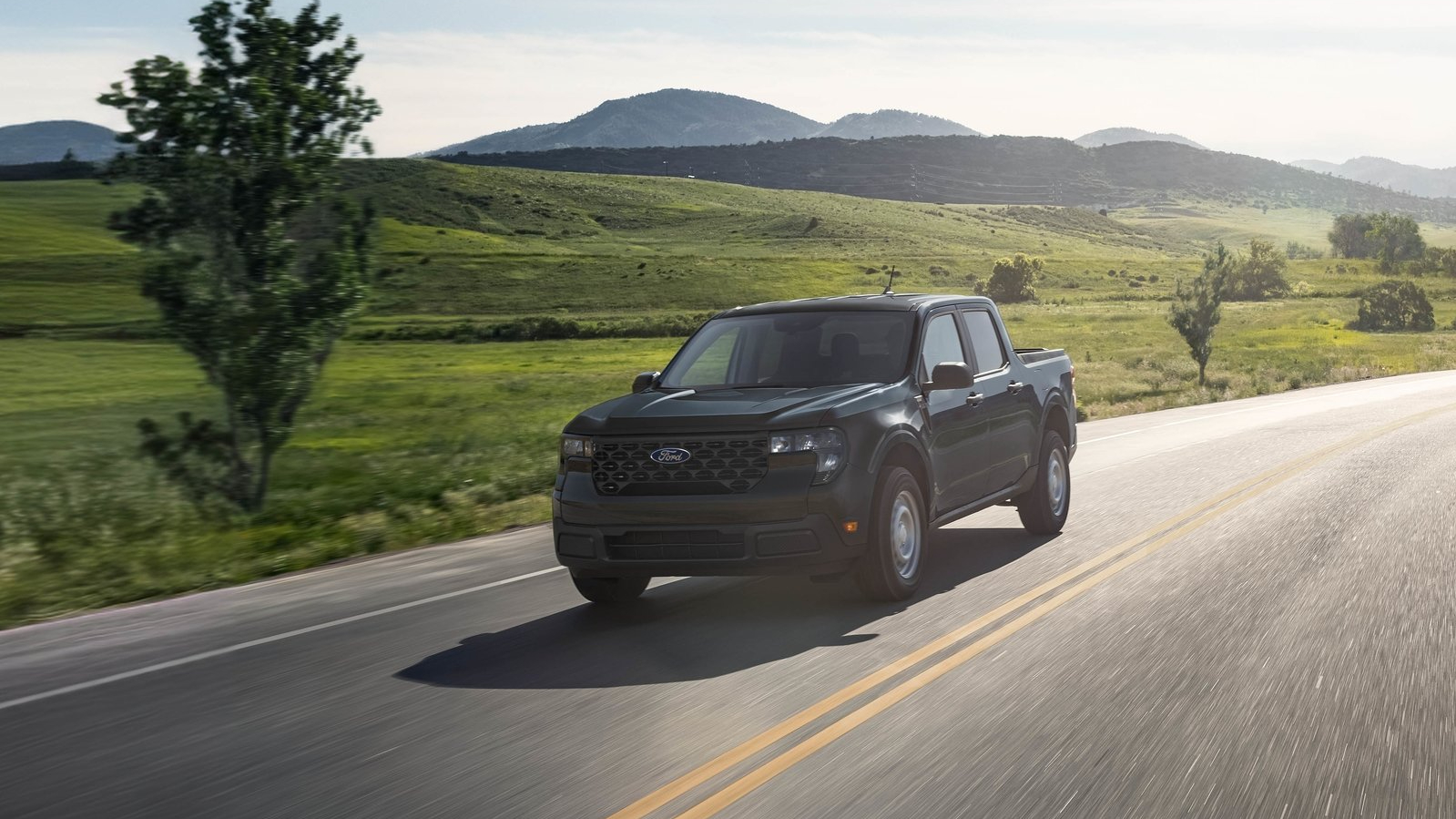
Now entering its fourth model year, the Ford Maverick continues to be one of the most in-demand new pickups in North America. And with a mild facelift for 2025, it appears to just keep getting even better.
For one, the standard hybrid powertrain can now be optioned with all-wheel-drive on every trim. Ford says this was the number one request from owners, along with increased towing capacity. Hybrid AWD Mavericks can now add the optional 4K Tow package, matching the upper-end EcoBoost’s 4,000 pound rating as the name suggests. Speaking of the 2.0-liter turbo-four, it interestingly makes less power for 2025. Output drops from 250 horsepower to 238, but the 2.5-liter hybrid still remains at 191 horsepower.
Outside, a new front end design aims to add more visual differentiation to the Maverick’s trim levels. There are now two different headlight designs, both of which have black accents. The Lariat and Tremor (which is now a standalone version) feature projector LEDs with LED running lights versus the lesser XL and XLT’s reflector-type LEDs. The Tremor receives a unique grille with orange accents, while all versions have slightly different lower bumper designs.
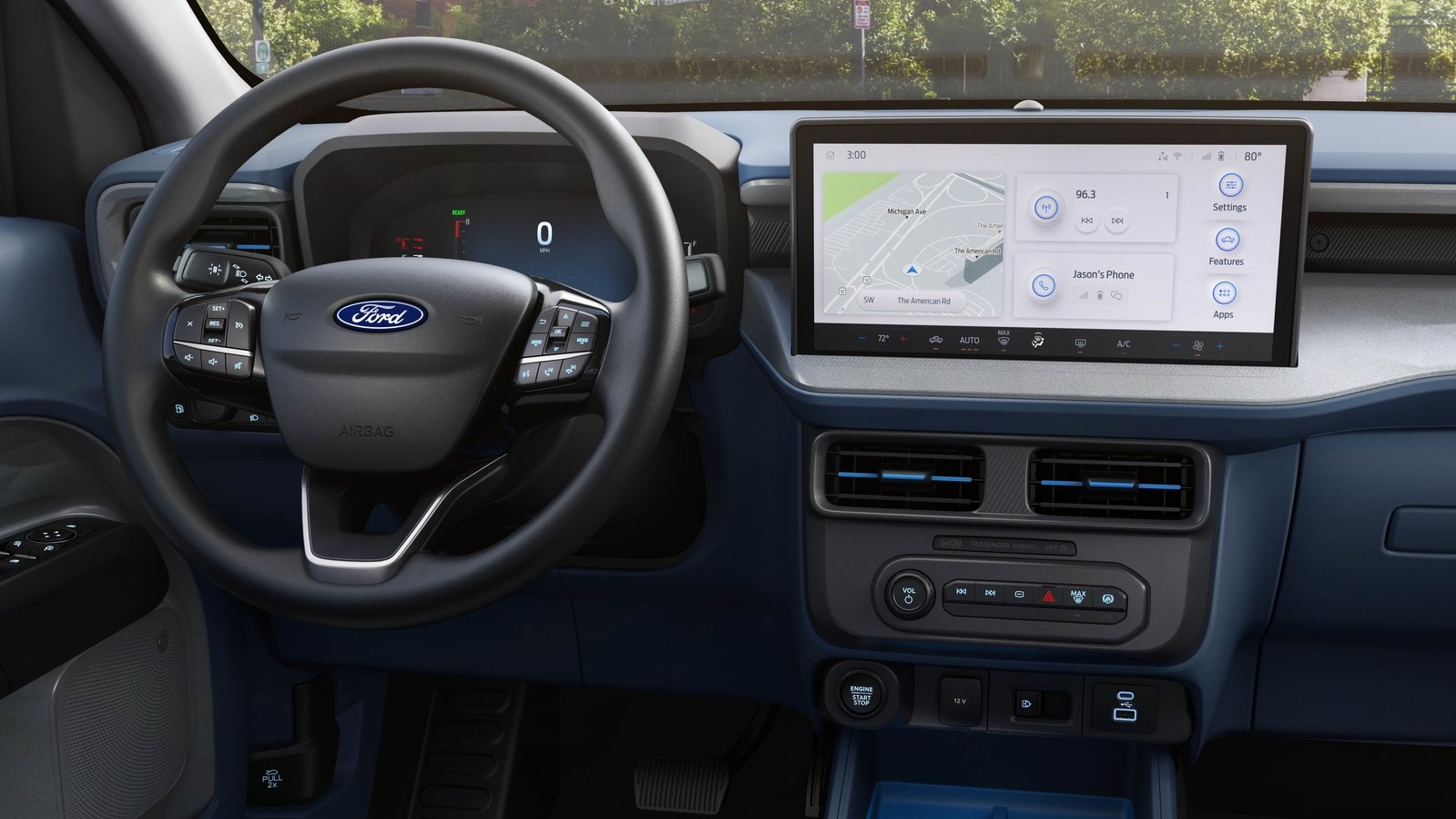
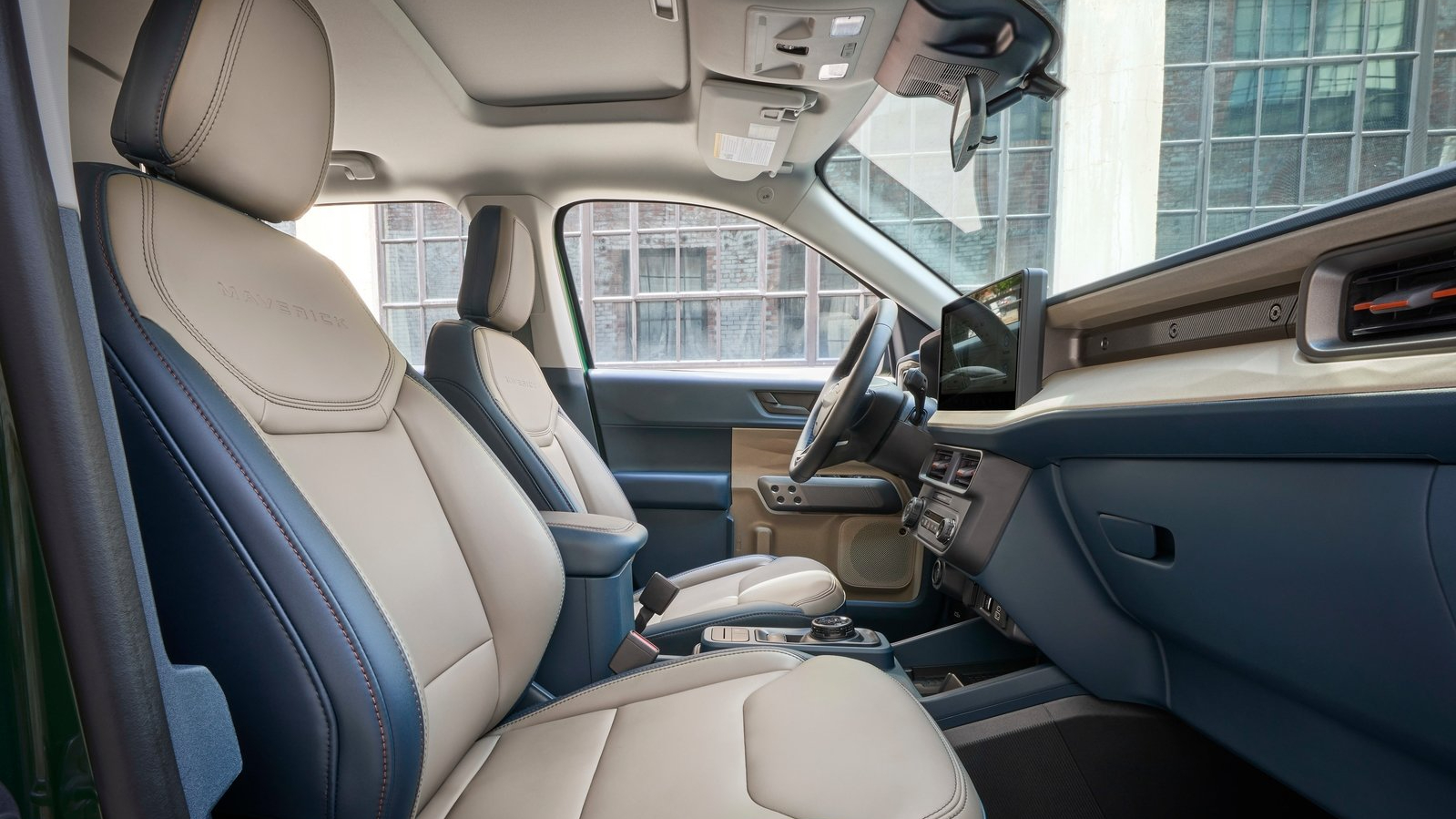
Inside, it’s impossible to ignore the new infotainment screen. Gone is the Maverick’s previous eight-inch display (shared with the Bronco Sport) and the weird cubby hole that sat next to the screen, with a 13.2-inch touchscreen taking its place. Annoyingly, it’s so big that the screen remains off-center to the climate controls below. Aside from Sync 4 with wireless Apple CarPlay and Android Auto, tech updates are rounded out with the addition of an optional 360-degree camera and Ford’s Pro Trailer Backup Assist feature.
Naturally, the 2025 Maverick’s improvements come with higher pricing than last year. The base XL now starts at $27,890 including destination, a far cry from the $19,995 MSRP that was originally quoted when the truck launched in 2022. At the other end, the Tremor starts at $41,390 with the EcoBoost turbo-four and all-wheel-drive standard.
BMW’s New Hybrid M5 Is… Heavier And Slower Than Before?
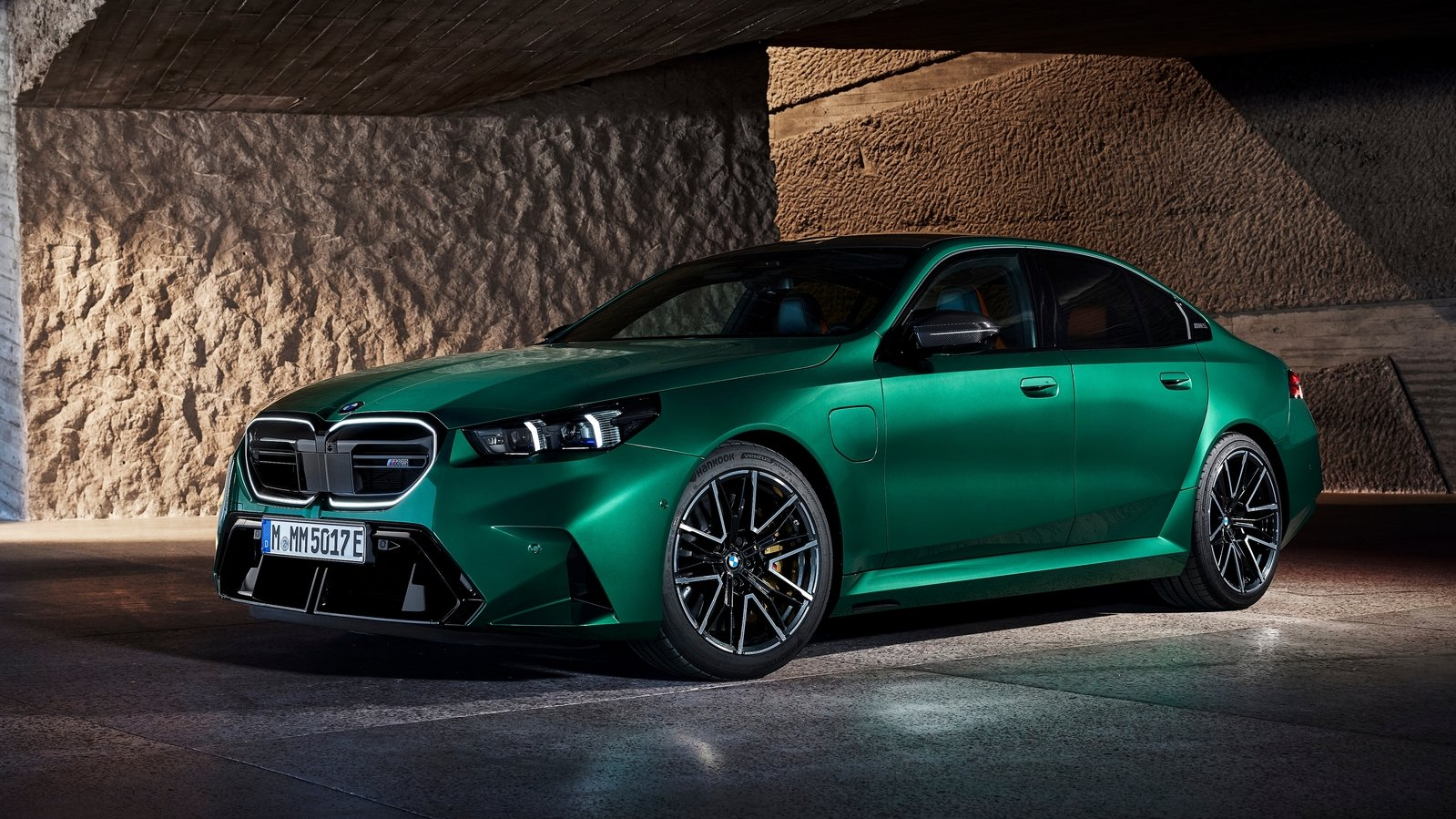

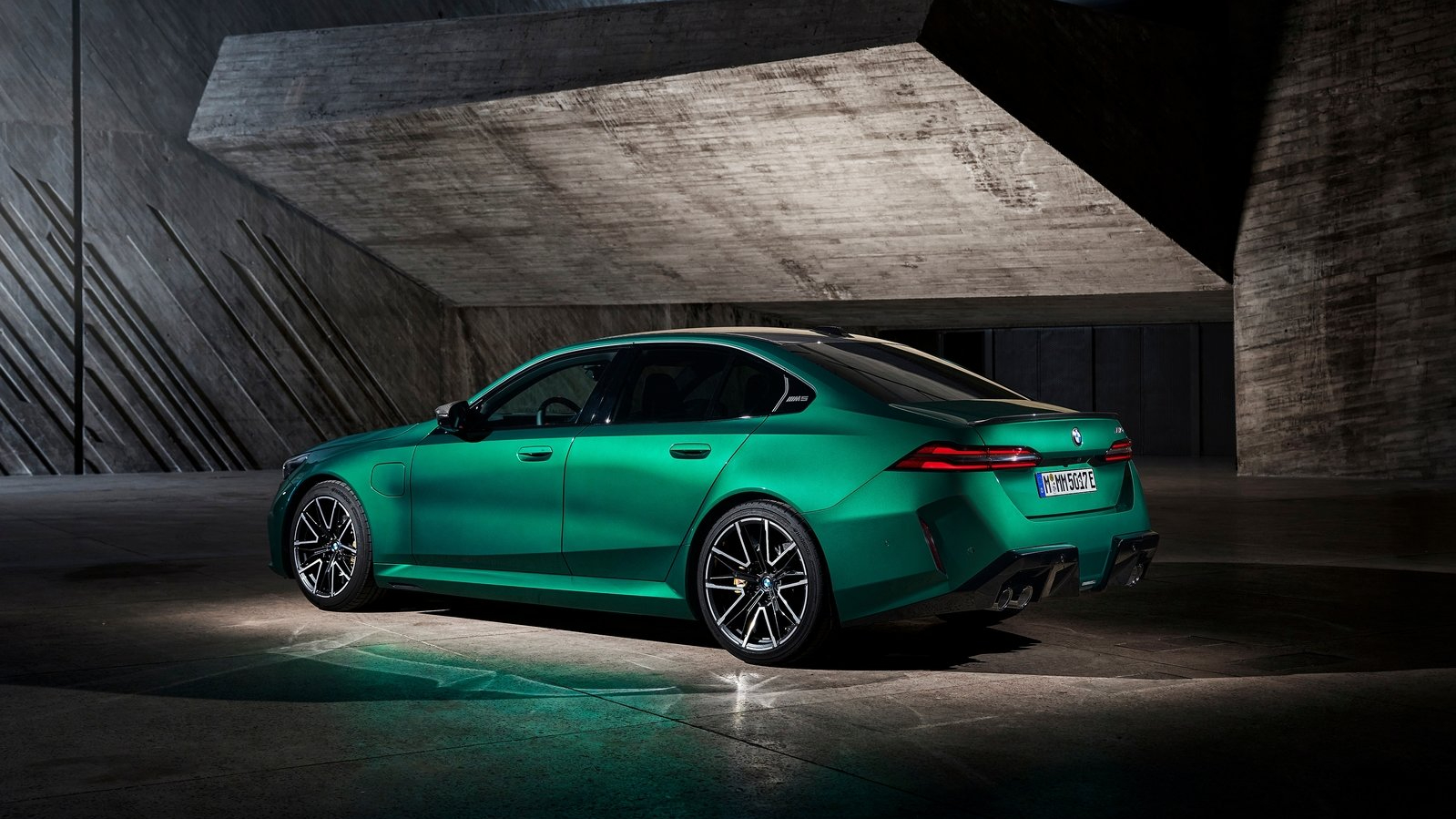

The G90 BMW M5 takes the whole “green car” initiative quite literally in more ways than one. For the first time, BMW’s big super-sedan features a plug-in hybrid system, as well as the Isle of Man Green paintwork of the current G80 M3. Among other things, the new M5 is also insanely heavy.
For 2025, the M5 shares the XM SUV’s powertrain setup but with even more power. The 4.4-liter twin-turbo V8 engine is pared with a permanently excited synchronous electric motor, which together generate a combined 717 horsepower and 738 pound-feet of torque. Both figures are substantially greater than the outgoing M5 CS; over 100 in each respectively.
It’s a shame, then, that all the extra power is effectively written off by the weight of the hybrid and all-wheel-drive systems. The whole car is slightly larger in exterior dimensions too, but it’s mainly what’s underneath to blame for the new M5’s curb weight of 5,390 pounds. Not only is it over half a ton heavier than the outgoing M5, it’s heavier than the fully-electric BMW i5 M60 xDrive or even the Tesla Model X. Despite the electric motor’s instant torque benefit, the claimed 0-60 mph time of 3.4 seconds is slower than the old car as well.
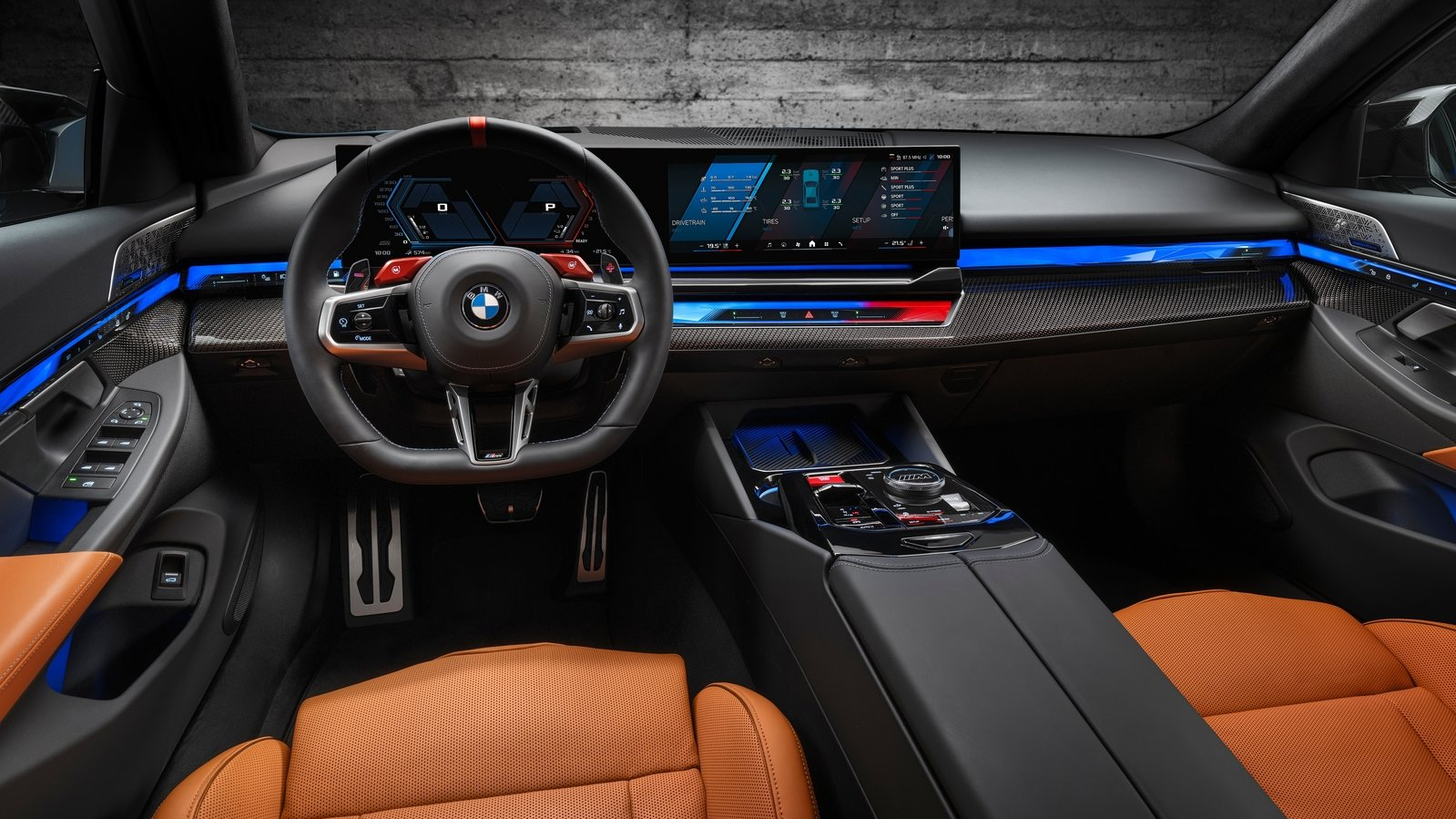
Unsurprisingly, the new M5 boasts a more extreme appearance than the standard 5-Series, with tons of carbon fiber trim and a more aggressive front bumper. Wider fenders mark the M5 as greater than standard models with the wheel arches measuring a full 3.0 inches wider at the front and 1.9 inches at the rear. The rear end is also highlighted by quad exhaust tips. The cockpit is largely similar to the lesser models however, despite with unique seats and carbon fiber trim.
The G90 M5 is scheduled to make its global debut at the Goodwood Festival of Speed in July. It will enter production the same month. Pricing for the seventh-generation car is set to start at $120,675, roughly a whopping $9,000 more than the F90 generation. One potentially saving grace? A wagon version is already confirmed for here in North America.
Mk7 VW Jetta & GLI Get Another Facelift, Keep The Manual Alive
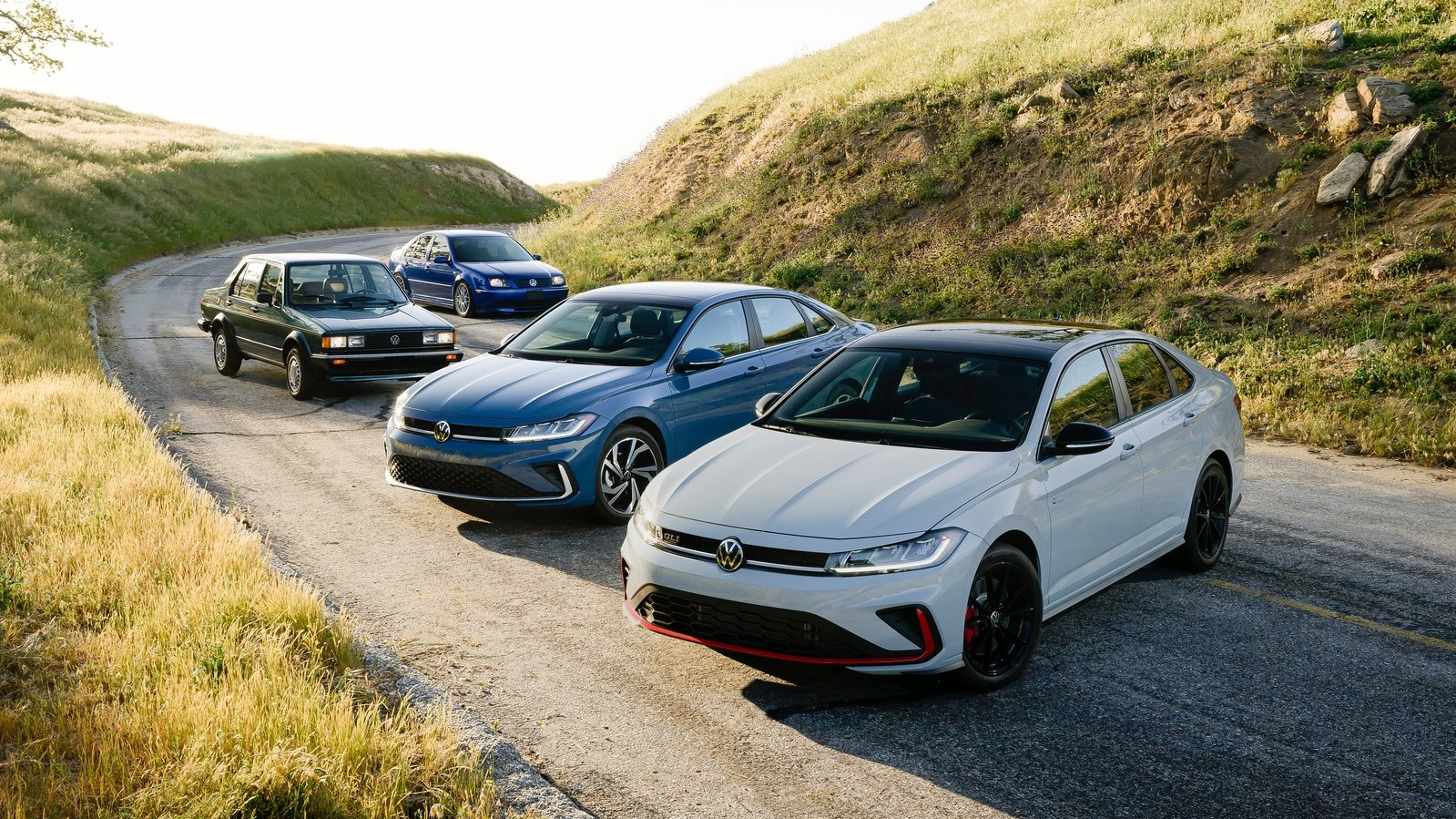
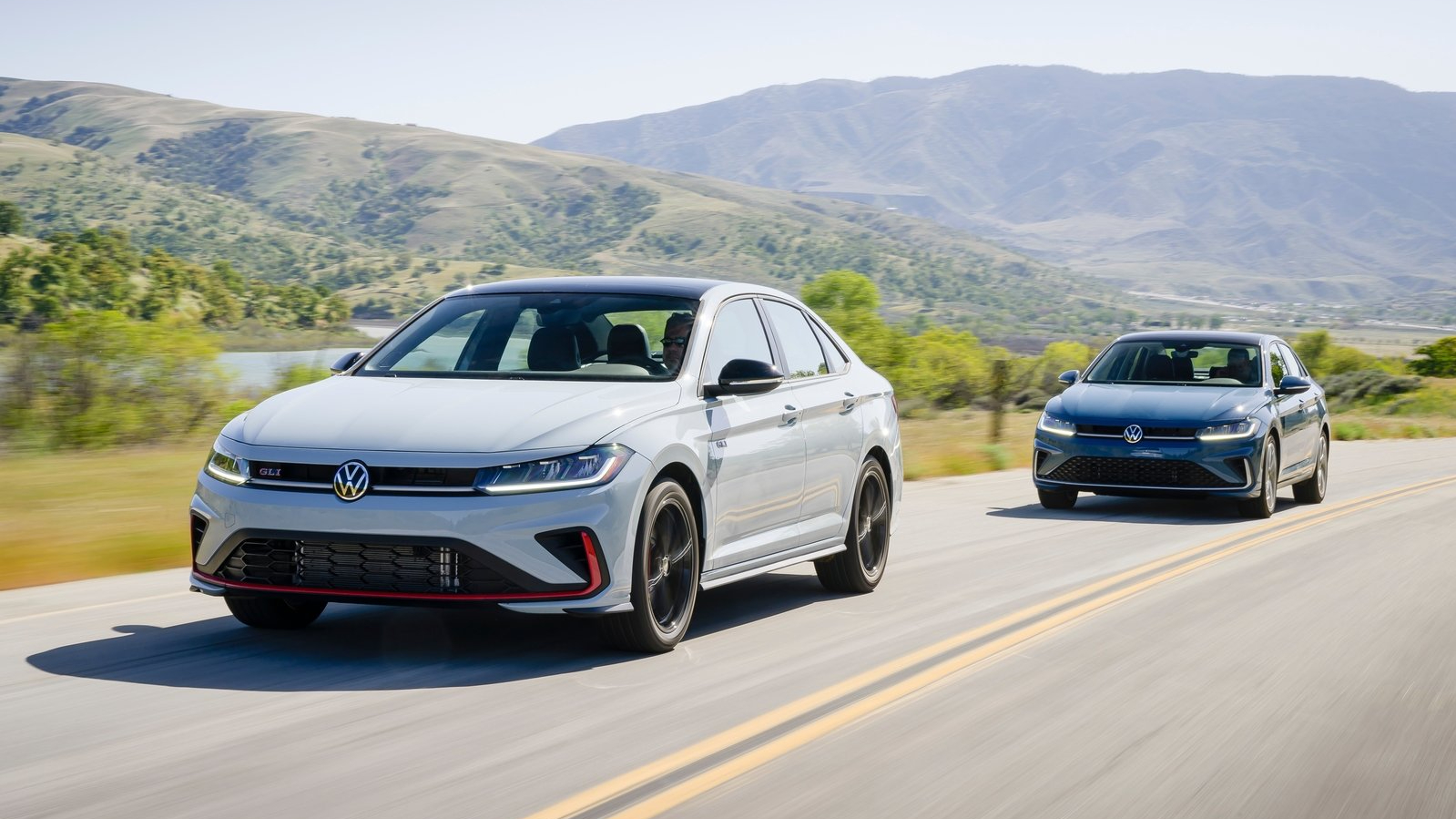


While Volkswagen’s sales primarily rely on its SUV lineup as with most other brands nowadays, the compact Jetta sedan is still going strong. Through the first quarter of 2024, the Jetta was actually VW’s third-bestselling model and saw sales surge 185 percent year-to-date. In an effort to keep that momentum going, the 2025 model year brings a second facelift for the Mk7 generation.
Exterior changes mimic the rest of the Volkswagen lineup, with LED light bars connecting both the headlights and taillights side to side. The front end is entirely new versus the 2024 model, whereas the side and rear profiles are mostly similar to the outgoing car aside from the updated lights. New wheel designs are on offer for every trim level including new black wheel packages for the SE and GLI, while two new paint options (Monterey Blue and Monument Grey) are available.
Inside, the top section of the Jetta’s dashboard has been overhauled to again match VW’s other latest designs, with three horizontal slats and the infotainment screen sitting more forward than before. Speaking of the display, an 8.0-inch unit is now standard across the lineup, as is dual-zone climate control with (unfortunately) capacitive touch buttons. The steering wheel retains physical controls, luckily.
VW has also added more standard content to the SE trim, including wireless Apple CarPlay, wireless charging, SiriusXM radio, and new perforated Microcloud leatherette seats in a Seawall Blue/Storm Gray color combination. Additionally, SEL models now offer a Brown/Titan Black color combo. All Jettas now come with the automaker’s IQ.Drive system as standard, which includes driver-assistance features such as automatic emergency braking, blind-spot monitoring, adaptive cruise control, and lane-keeping assist.
Powertrain options remain unchanged for 2025, meaning the turbocharged 1.5-liter inline-four continues to supply 158 horsepower and 184 pound-feet of torque to the front wheels through an eight-speed automatic transmission. The performance-oriented GLI still offers a 228-horsepower, 2.0-liter turbo-four, but the big news is the retention of the optional six-speed manual gearbox, unlike on the recently-updated Golf GTI hatch.
While full pricing isn’t available yet, the entry-level Jetta S with an automatic transmission actually comes in at $240 less than the 2024 model, at $23,220. The 2025 Jetta should hit dealerships in the third quarter of this year.
 Also Andrew
Leave a comment