
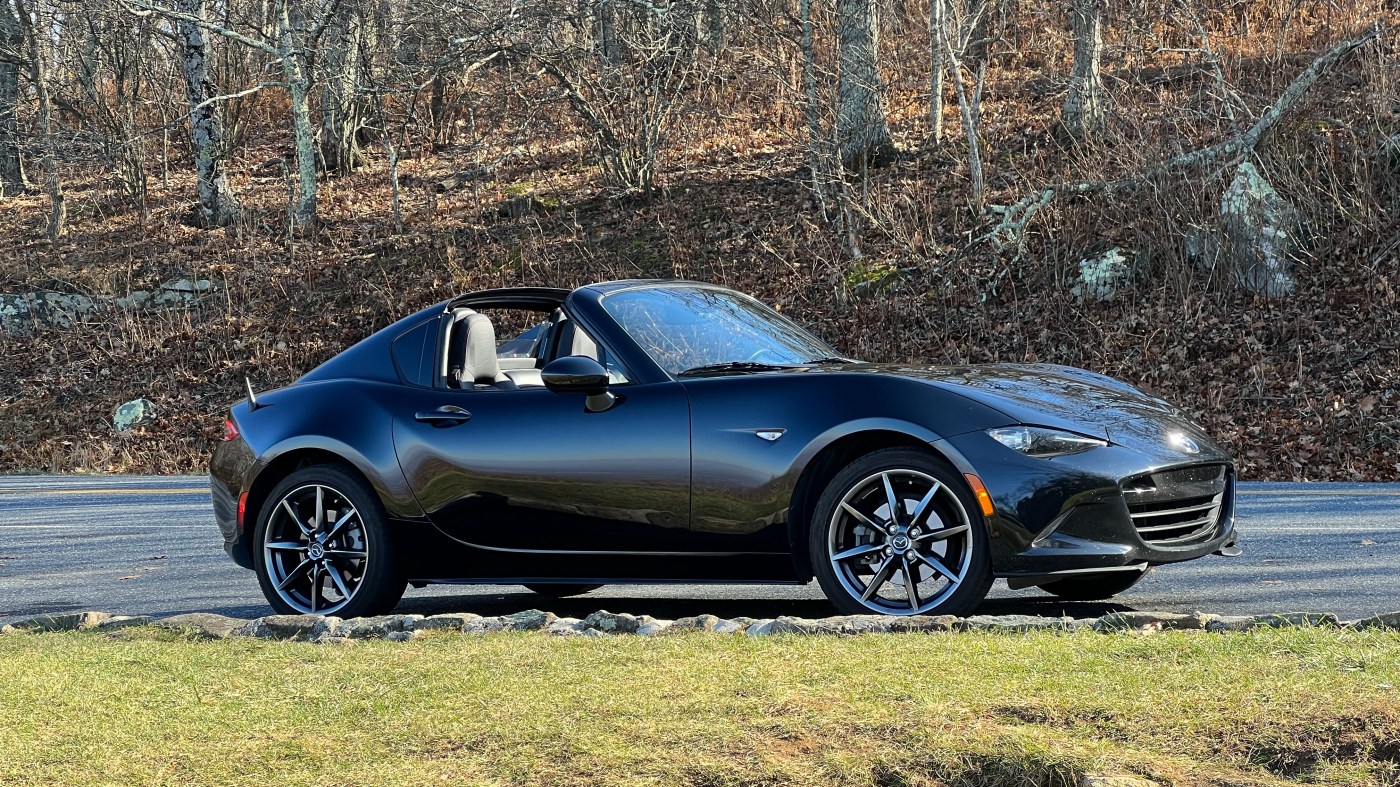
In December of last year, I made the decision to list my Mazda Miata RF on Turo as a way to potentially help cover expenses while I wasn’t driving it as much over the winter.
For those that don’t know, Turo is essentially an Airbnb for cars; a peer-to-peer car rental marketplace that offers a far wider variety of vehicles than the typical rental companies, and can be particularly appealing to car enthusiasts.
Online, there’s no shortage of both positive and negative stories regarding Turo rental experiences from both hosts and guests alike. I’ve used Turo several times as a guest, including the Mustang Mach-E and Mk8 GTI I reviewed last year, but never been on the other side of it. So after my first six (almost seven) months of being a Turo host, what was renting out my Miata like?
Markets and Seasonality
First, I want to get this out of the way: it’s only logical that certain types of cars will perform better at certain times of the year, and some markets will always be bigger than others — it’s just a given. From December through March, I was living in a much smaller area than I am now, and of course the appeal of a rear-wheel-drive convertible is lessened in colder weather.
December
To be honest, I can’t remember whether I listed the Miata at the end of November or beginning of December, but either way, its first trip didn’t take place until the end of December. The car was actually supposed to have two rentals in the last week of the month, one from the 20th to 24th and another the 29th to 30th.
Unfortunately, I got my days completely mixed up while being out of town, and had to cancel the first trip about two hours before the start time because the guest was unresponsive and I was over two hours away from home and the car at that point. The second scheduled trip, and technically my first ever rental, went flawlessly. The renter and his wife were on time, pleasant to talk to, and had no issues at all.
At $55 a day, the trip paid out $66 net due to the pickup/dropoff times and Turo taking their cut of the earnings. Not bad for very minimal work, but a far cry from the $171 I missed out on by having to cancel the other booking.
February – March
I know what you’re thinking: wait, what about January? Well, the car didn’t get rented a single time in January, so there’s nothing to talk about.
February turned out to be a surprisingly good month, as I had one guest pick up the car on February 5th and end up requesting two extensions to his trip, for a total of about 10 days. The guy initially told me he was in town for something school-related, but based on the driving information provided by my Bouncie tracker, it appeared he was primarily using the car for gig work (DoorDash, etc.).
This is technically against Turo’s policy, but I didn’t really mind since I’ve used the car for the same purpose previously as well, and hey, he’s paying me anyway. After the car was eventually returned, it was filthy on the outside but suspiciously clean on the inside. Smoking of any kind is also against Turo’s policies, but can be notoriously difficult to prove for claims. The car smelled fine when I got it back, but after a couple days of sitting out in the sun, the odor began to reveal itself. Luckily, it wasn’t super strong, and a multitude of air fresheners, charcoal bags, and deep cleaning since then seem to have taken care of it.
One other flawless trip took place at the end of February, for total earnings of $347 for the month, including two reimbursements for mileage overage and gas costs. The suspected smoking, DoorDashing renter has since been banned from Turo as far as I can tell; his profile is no longer visible when I view my trip history.
The Miata only went on one trip in March, for a net income of $90. I had absolutely no complaints about this trip either.

April – May
Immediately after moving in April, the Miata went out on its longest trip so far, an 18-day rental to a very nice gentleman who happened to be a high-up exec at Advance Auto Parts. He (or presumably his company) paid for delivery to RDU airport, but due to a last-minute schedule change ended up requesting that I drop the car off at the Advance headquarters in Raleigh, which was not a big deal.
With most lower-end cars, Turo allows a mileage limit of 200 miles per day, meaning that theoretically this 2.5-week rental could’ve seen over 3,000 miles. Much to my delight, upon picking the car up from the guest’s hotel, I noticed that he had only driven about 200 miles for the entire trip. Upon looking at the tracker info, it appeared to mainly get used as a commuter between said hotel and the Advance HQ, as expected.
The Miata went on four separate trips in May, three of which were almost back-to-back right in the middle of the month. Between the 12th and 19th, it was enjoyed by three separate guests, the last of which was another RDU airport delivery. My friend Mike was nice enough to assist with drop-off on this one, as I was going out of town for my girlfriend’s college graduation.
The final weekend of May, the car was rented by a family friend outside of the Turo platform. Typically, I wouldn’t do this without an LLC and commercial insurance in place, but for someone we already knew, it was perfectly fine. He also paid me $80 for a two day rental (higher than what I would’ve netted on Turo) and let me review his 2023 Tundra TRD Pro as well, so I’d say it was a good deal.
All of this combined for the Miata’s most successful months so far by a long shot. All in, April and May’s earnings totaled $893, minus buying Mike dinner for helping out with the airport delivery and buying gas for the Tundra loan.
June – July
As of writing/filming, we are almost to the end of June, with one successful and two cancelled trips thus far. The former was a 6-day rental right at the beginning of the month, which was actually slightly extended from the initial booking. Aside from the car being quite dirty on the outside and one of my air vent pieces snapping off, that trip was excellent.
One of the other bookings cancelled well in advance and I honestly don’t remember what their reason was, but it’s frankly irrelevant anyway. The other cancellation I actually still got paid for, as the guest no-showed.
The car was scheduled to be picked up at noon on a Friday, and around 10:30 AM I messaged the guy to let him know it was ready for pickup, as well as providing parking location details and the code for the key lockbox. He responded shortly after saying he would likely pick the car up mid-afternoon, which I had no problem with.
Come 9:30 at night when I arrive home from work, the car hasn’t moved. After an attempt to contact the guest, I had Turo support cancel the trip for me. The support agent told me I could actually report a no-show after the first hour, and it had been almost 10 hours, which I felt was plenty of time for the guest to at least inform me of a change of plans. Since the trip was technically cancelled by the guest after the scheduled start time, I still got paid most of the earnings, which ended up being $66.
As of now, we have one more trip coming up at the end of June, and two scheduled for July. June should end up netting $264, and July is currently projected to net $372. There is also one rental already booked for September, but that’s too far out to worry about yet.

Protection and Add-ons
For the unfamiliar, Turo offers five levels of protection plans for hosts to choose from. Each plan offers an increasing percentage of earnings (less that Turo takes out from each trip) at the cost of less protection and a higher deductible.
On the low end, you have the 60 plan, which allows you to keep 60 percent of your earnings in exchange for having the most coverage and a $0 deductible. At the other end of the scale is the 90 plan, which allows you to net 90 percent of your earnings, but has a $2,500 deductible and less benefits. Liability coverage is the same for all five plans, but only the 60 plan covers things like any exterior wear and tear (door dings, scratches, wheel repairs, etc.) and offers the benefits of a $50/day replacement vehicle allowance and loss of hosting income protection if necessary.
Thus far, I’ve been on the 60 plan the entire time. After ten trips, I’ve only had one thing that would’ve been worth filing a claim for; the air vent trim piece that I mentioned previously. Of course, the smoking one would’ve been a claim too if I had a way to prove it, but the air vent I actually had the opportunity to submit one and chose not to.
On that percentage basis, it would arguably make a ton of sense to switch to a higher-earning plan, but I still don’t want to get burned by one really bad case. With a car that’s going for $55-60 per day, the difference from stepping up to the 75 plan would be less than $10 a day anyway; just barely enough to cover the $250 deductible after a whole consecutive month of renting.
Turo also allows you to offer add-ons that guests can purchase, such as pre-paying for gas, or camping gear, coolers, etc. With the Miata, I’ve only offered the prepaid refuel (at $45 per trip, roughly the cost of a full tank) and unlimited mileage at either a daily or per-trip rate. So far, my take rate has been zero on these add-ons.
Conclusion
Ultimately, I feel safer renting out the Miata than I would any number of other cars. It’s very unlikely anybody’s going to rent it for a cross-country road trip, or to take it racing, or anything like that. The majority of the guests I’ve had have been car enthusiasts in one way or another, and some even had cool vehicles themselves. I get the feeling that most people who are choosing to rent the Miata are doing so because they know what it is, not just because it was the cheapest or most available option. And every guest so far has raved about how much they liked the car and how fun it is.
Now, is renting the Miata worth it from an investment standpoint? Absolutely not. There’s only been one month so far where it’s fully covered the loan payment on the car, but that’s fine — I didn’t buy it solely to rent out. I bought it because I genuinely love driving the car myself as well. Purely from a business standpoint, I wouldn’t recommend choosing a Miata as a Turo car, but from a car enthusiast sharing with other enthusiasts standpoint, it’s been great overall.
| Vehicle Tested | 2017 Mazda MX-5 Miata RF Grand Touring |
|---|---|
| Color | Jet Black Mica / Black Leather |
| Drivetrain | 2.0L NA I4, 6-spd manual, Rear wheel drive |
| HP / Torque | 155 horsepower / 148 lb-ft |
| Curb Weight | 2,430 lbs (est.) |
| 0-60 mph | 6.1 seconds (est.) |
| EPA Fuel Econ | 26 city / 33 hwy / 29 combined |
| MSRP | $35,520 (est.) |
 Also Andrew
Leave a comment