

As far as “first-gen” electric cars go, the Mini Cooper SE might be one of the best. Of course I’m partial to the BMW i3, having owned one briefly, but the Mini actually improves upon a few key areas of its cousin while also taking a bodystyle that more people are comfortable with being seen driving.
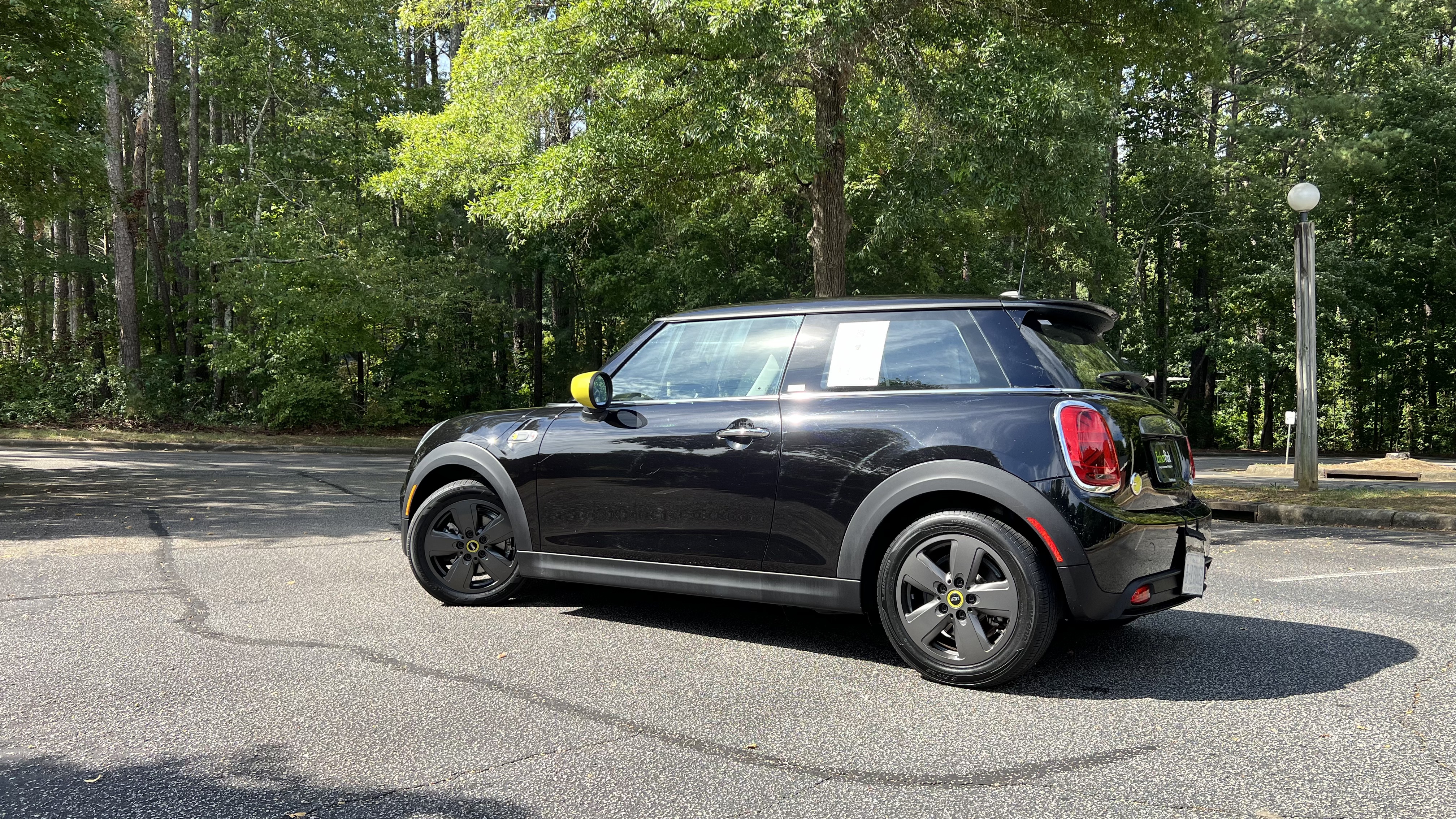
Love it or hate it, the i3 was a weird looking car. Personally, its unique form factor was appealing, but I’m likely of the minority there. While the Mini Cooper certainly has its own stereotypes, it’s a much more widely recognized shape and one that doesn’t stand out to the average driver in an odd way. The SE is virtually identical to the other versions of the 2-Door Hardtop, minus wheel designs and the optional yellow accent trim of this particular car — Mini’s way of shouting that you have the electric version. The “E” logo is also present on the charge port cover to make sure it’s not mistaken for an old-fashioned fuel door, even though it’s the exact same size, in the same place, and otherwise the same part as every other Mini.
One potential disadvantage of the SE versus the i3 is the lack of rear doors. In fact, the i3’s rear-hinged rear doors were of particular appeal to me as they’re not found on any other modern hatchback. While the Mini Hardtop is also available in a four-door configuration (albeit with traditional doors) the SE trim is limited to the two-door. For livability that’s maybe not as great, but I’ve never loved the appearance of the four-door Hardtop versus the Clubman or other Mini models. Besides, shorter is better for driving experience, and the SE is actually about 3 inches shorter than my Mazda Miata RF.
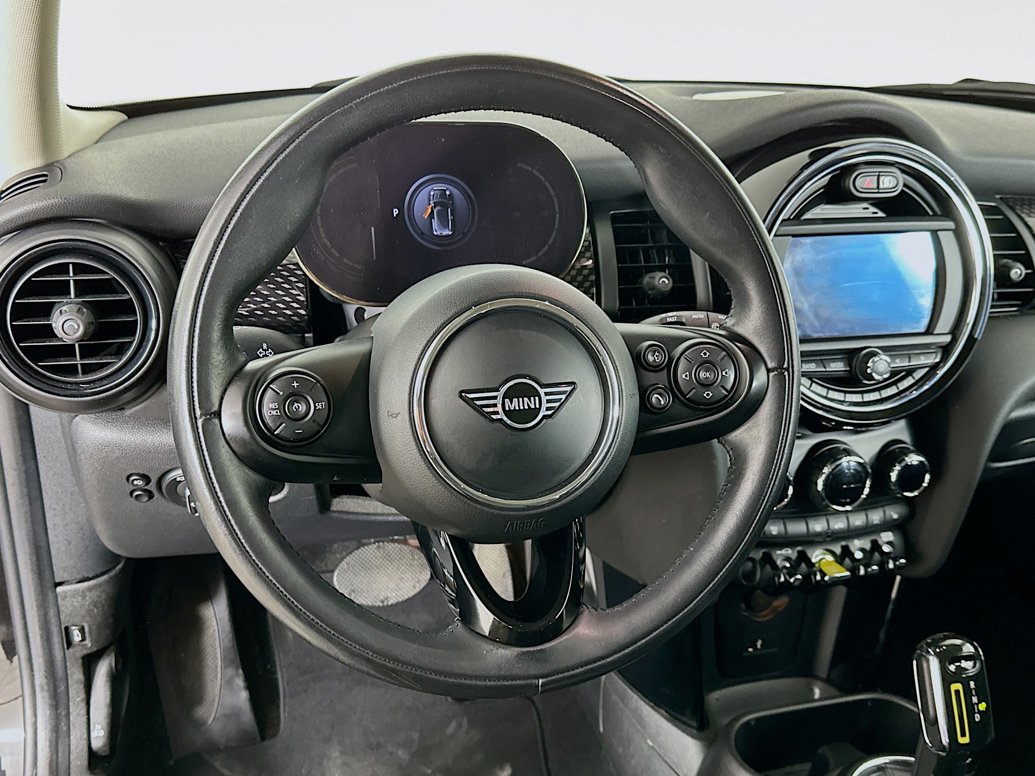


Inside, it’s more of the same: the SE is pretty indistinguishable from an ordinary Cooper S, save for the yellow start-stop switch and gear selector accents. The layout is classic Mini, with an illuminated circular surround around the infotainment screen, circular air vents, and a row of toggle switches down below. But since we’re in the modern era now, you also have a fully-featured digital gauge cluster display rather than having the speedometer in the center of the dash.
In old-school BMW fashion, the interior is a little light on modern safety technology; there’s no adaptive cruise control or even blind-spot monitoring. But remembering the SE’s starting MSRP in 2021 was around $30,000, that becomes more acceptable. Honestly, for a mid-$30k price point (or actually under 30 with the federal EV tax credit), the SE’s interior has great materials and build quality — and it gets even better when you consider this one and others are now on the market for around $18-20,000 secondhand. In fairness, all the basic comfort features are still present as well as a couple surprising ones too, like dual-zone climate control (a little unnecessary in a car this small) and thigh-cushion extenders on both front seats.
On the road, Minis have always been known for their go-kart-like handling. Other than the lack of a gas engine to provide aural theatre, the SE is no different. It’s marginally heavier than a traditional Cooper S, but at 3,100 pounds it isn’t any worse off than a Volkswagen Golf GTI. Just like every other Mini Cooper, you sit low down, it’s incredibly nimble, and the steering is super quick. Despite the extra weight, the SE’s 0-60 time is about a tenth of a second quicker than the gas-powered S thanks to the electric motor’s torque curve. The traction control is rather invasive, but maybe that’s for the better, as it’s only front-wheel-drive after all.

The reason the Mini Cooper SE is referred to as a “first-generation” EV is due to the rather small battery pack, and as a result, a range figure that’s far shorter than average these days. The SE shares the majority of its drivetrain components with the BMW i3, which first came out about a decade ago. The battery is marginally bigger than the standard i3’s pack, but there’s no gas-generator backup like in the BMW.
That said, charging is relatively quick due to the smaller amount of energy required (35 minutes to 80 percent on a DC fast charger or about 4 hours to 100% on a 7-kWh AC plug) and let’s be honest, 114 miles of EPA rated range is plenty for most people on a daily basis. While it won’t be a great road trip vehicle (the expectedly small back seats and cargo area also don’t help with that), the SE — much like the i3 — is still a great daily commuter car that happens to be more fun than the average Corolla or Honda Fit.
My daily travel is about to become 50-70 miles, which is perfectly doable as long as I have a place to plug in overnight. Unfortunately I don’t right now, making the SE essentially a no-go as I likely wouldn’t be able to even make two full days without charging. I recognize there are tons of other folks in similar situations to me, but provided you have even a basic wall outlet available to you at home, the SE could also be perfectly adequate.
| Vehicle Tested | 2021 Mini Cooper 2-Door SE |
|---|---|
| Color | Black with Yellow Accent / Black Leather |
| Drivetrain | 32.6-kWh battery, Electric motor, Front wheel drive |
| HP / Torque | 181 horsepower / 199 lb-ft |
| Curb Weight | 3,100 lbs (est.) |
| 0-60 mph | 6.1 seconds (est.) |
| EPA Range | 114 miles |
| MSRP | $35,220 (est.) |
 Also Andrew
Leave a comment