

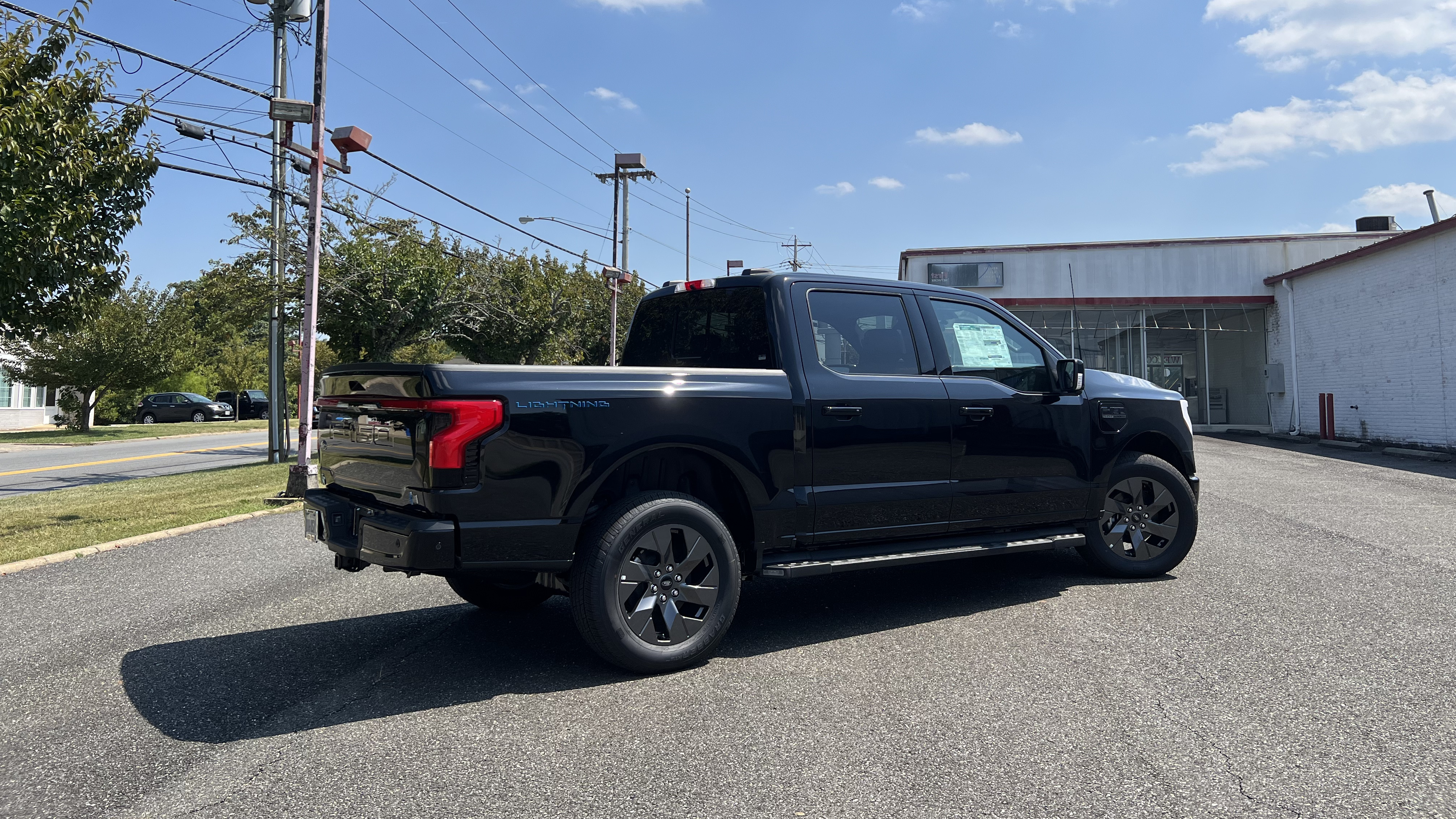


It seems like every time I review an electric car, the video tends to perform worse than expected. And my videos featuring pickup trucks are hit-or-miss. So maybe perfect then is a combination of the two: the F-150 Lightning.
Ford has made it clear that its electric vehicle focus is primarily redefining iconic nameplates, rather than attempting to revolutionize the industry with a brand new product. The Lightning is a perfect example of this: inside and out, it looks and feels like a lightly updated version of a regular F-150 — it’s familiar in all the ways that matter. Might I add, it’s also arguably a perfect use of the Lightning nameplate.
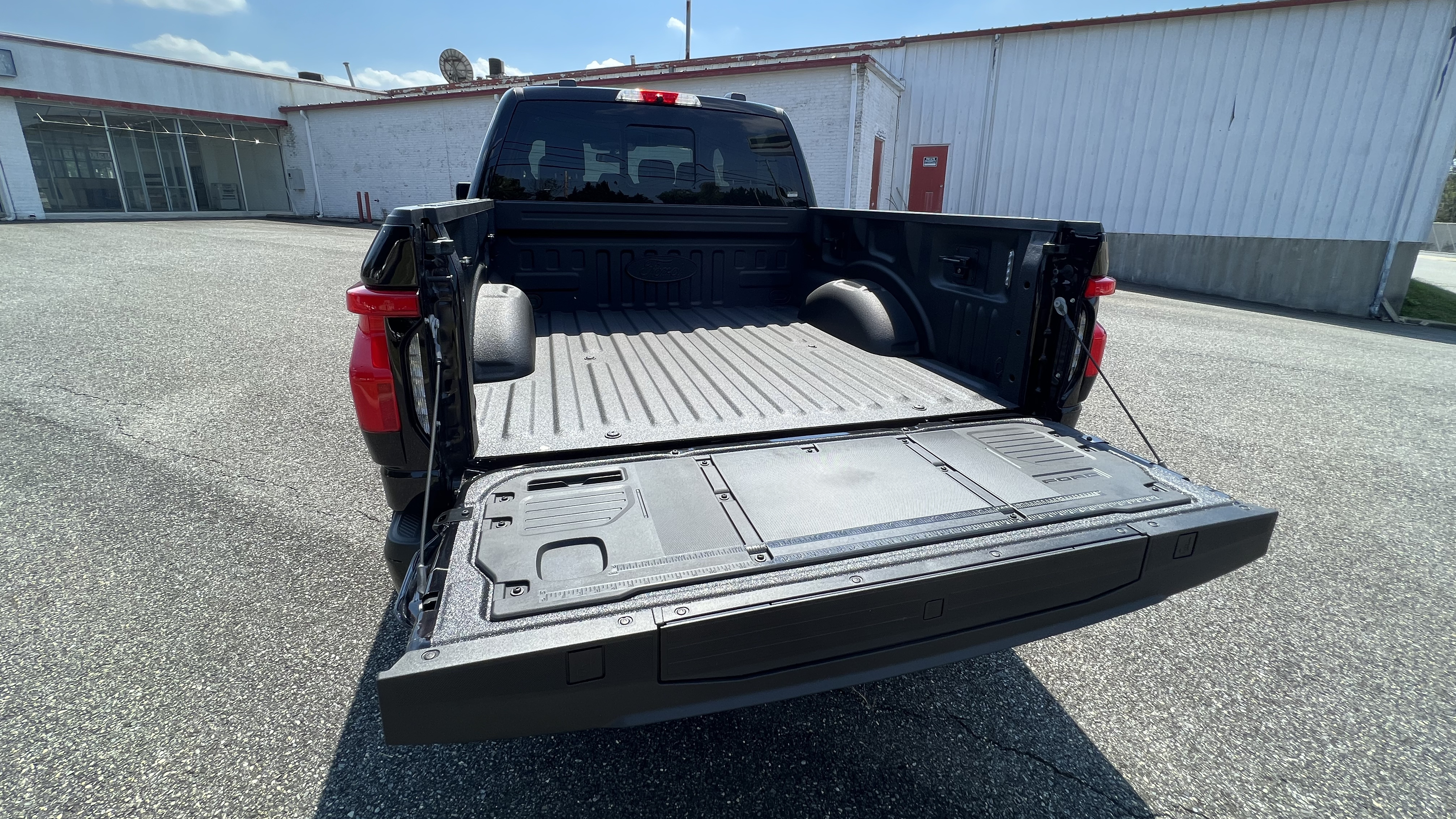
Unless you have a super keen eye, the Lightning can be easily mistaken for a gas-powered truck. It’s distinguishable with the light bars front and rear (well, on the higher trims anyway), badging throughout, and of course the charge port adorning the front fender. The 5.5-foot bed is exactly the same size as every other F-150, and offers the same functionality that Ford truck buyers have come to know, like the integrated step, work surface, and ProPower Onboard outlets. As such, accessories such as liners, covers, and toppers are readily available and easily compatible.
The biggest difference is the addition of a front cargo area, or Mega Power Frunk, as Ford calls it. In the space where an engine would normally be, you now have a 14-cubic-foot enclosed storage space with a power-operated lid. Other trucks offer similar solutions, such as the Rivian Gear Tunnel or Ram Boxes, but none are anywhere near the size of the Lightning’s frunk. It also features the same power outlets as the bed.


In 2023, the Lightning was available in four trim levels: Pro, XLT, Lariat, and Platinum. (Recently this has been revised to XLT, Flash, Lariat, and Platinum.) All Lightnings are built with the SuperCrew / short bed configuration and with a choice of two battery packs. The Standard Range battery offers 240 miles of range on a full charge, while the Extended Range bumps that number to 320 miles of EPA rated range. Both work with dual electric motors, with the smaller battery producing 452 horsepower and the larger one putting out 580 horsepower. Torque is a substantial 775 pound-feet with either.
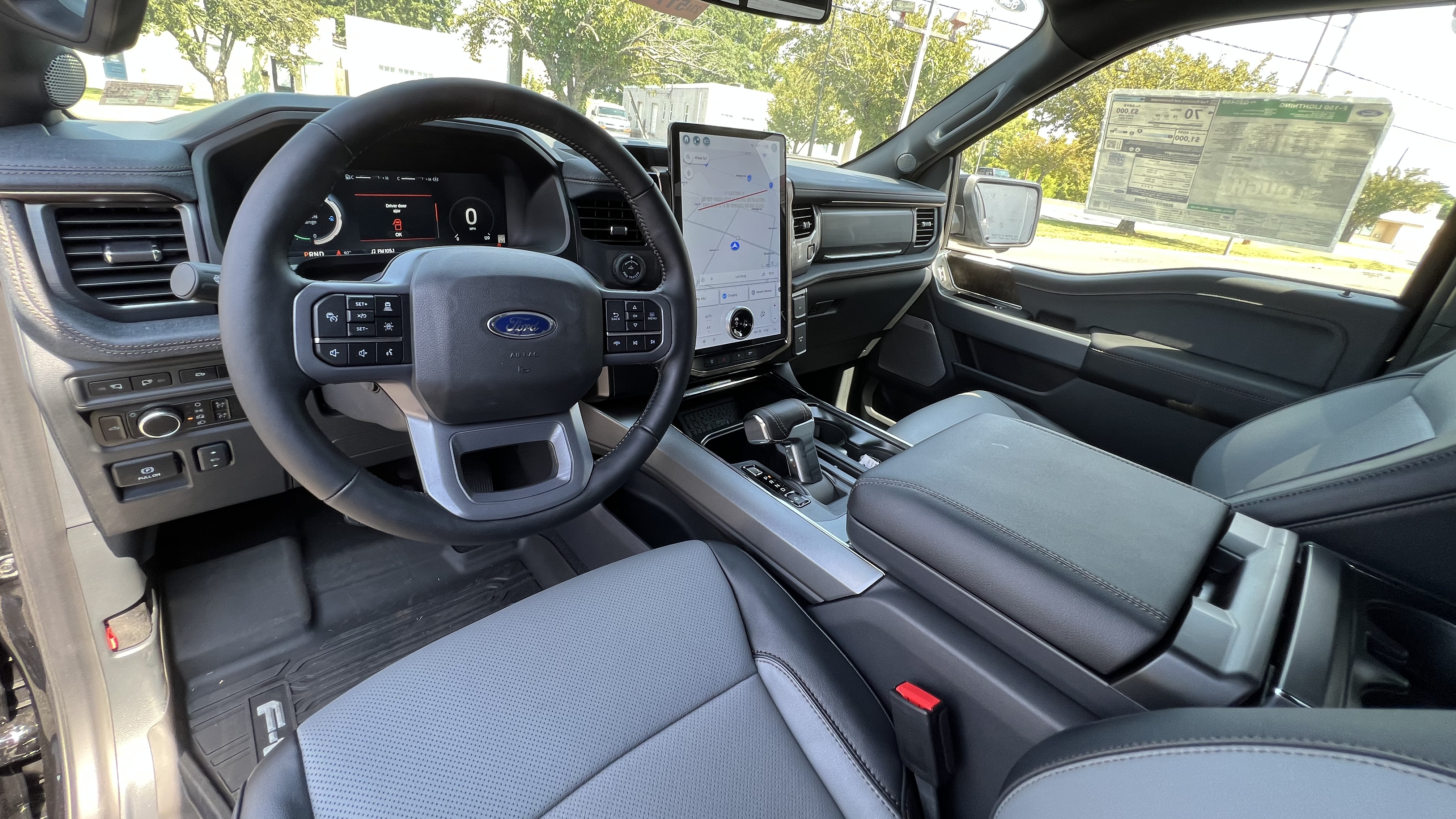
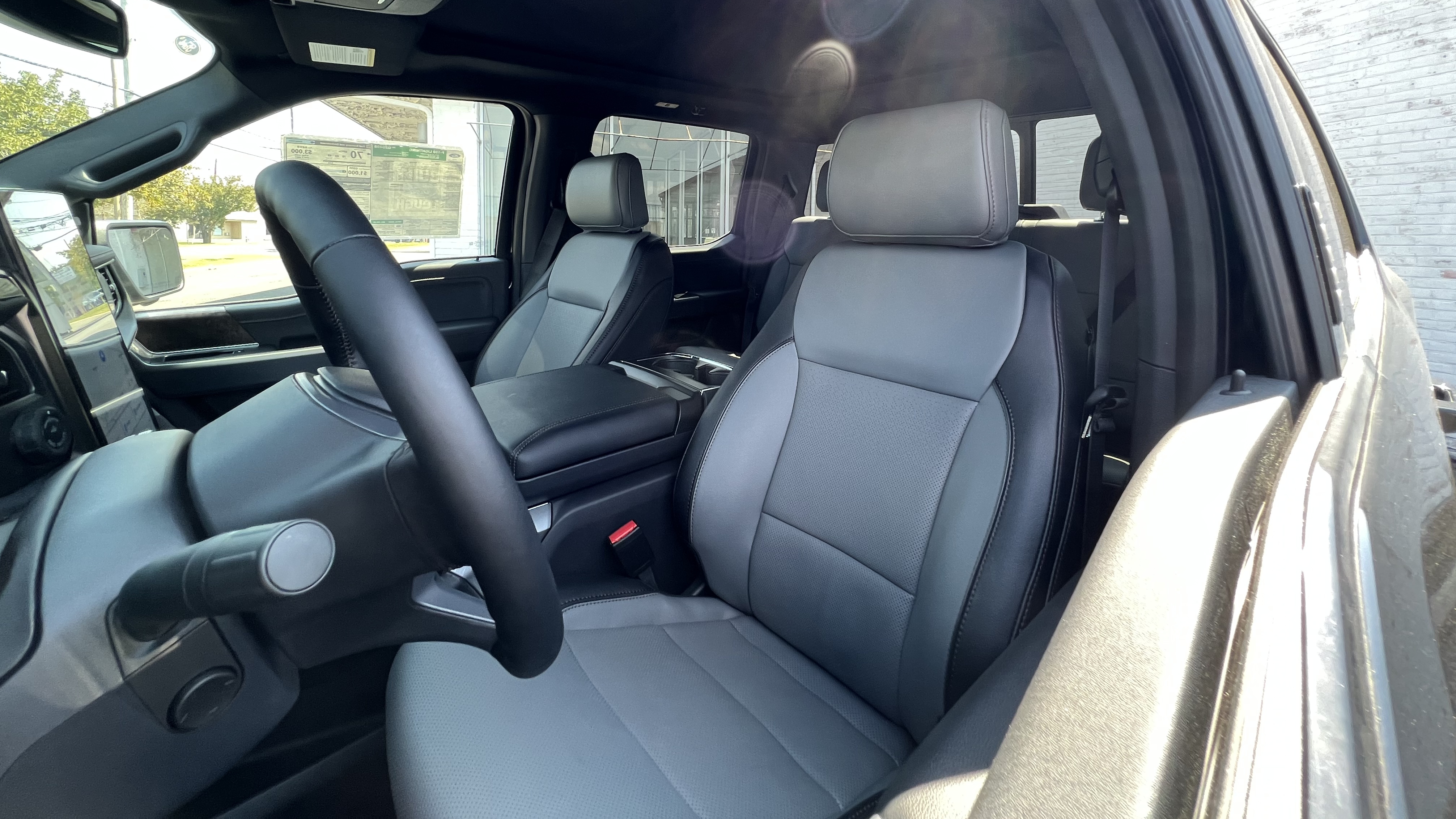
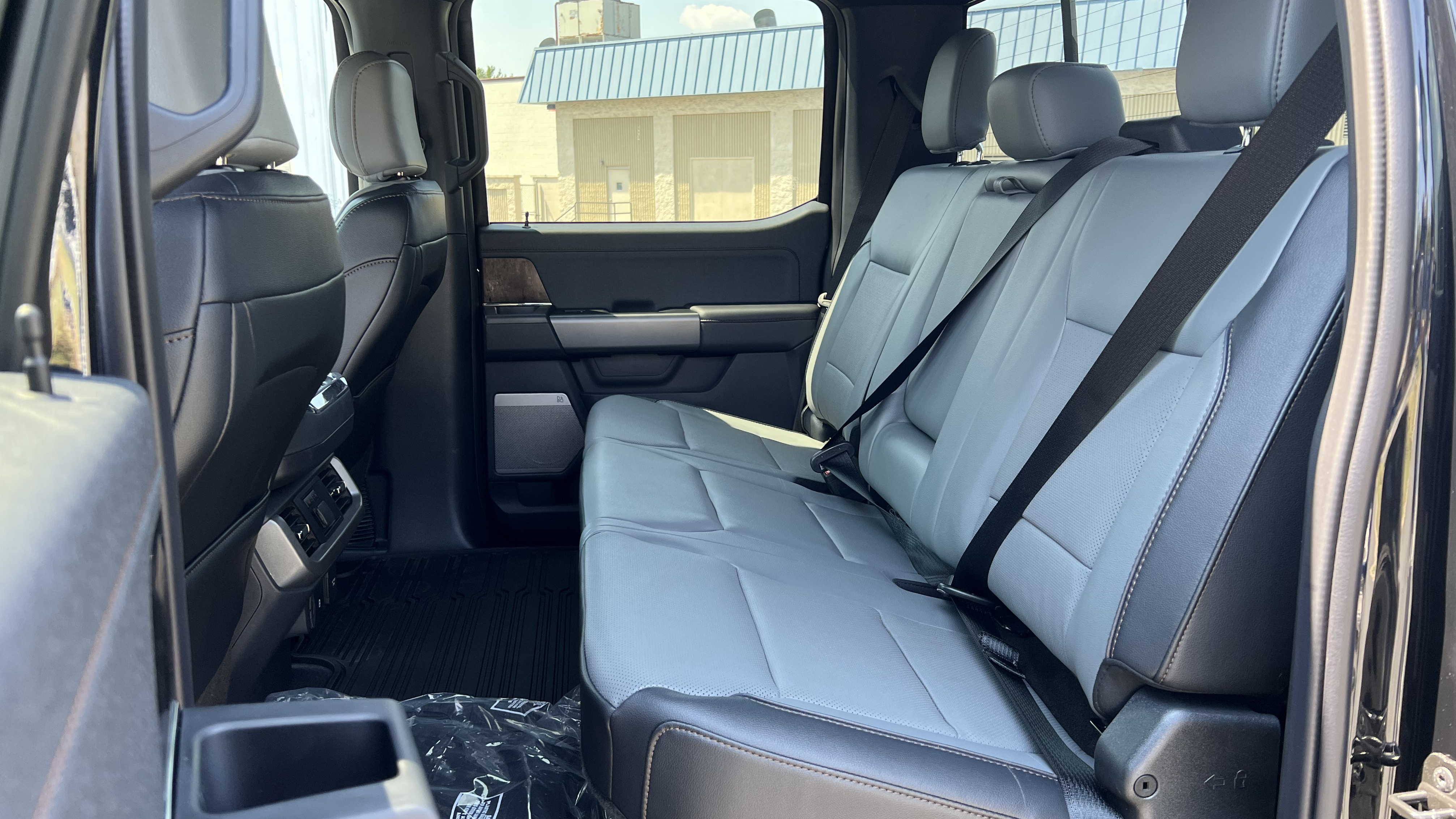
Inside, the cabin shares the same quality and comfort of the regular F-150. Rear seat space is identical, buttons and switchgear are laid out mostly similarly, and the seats are supremely comfortable. The most significant change is a vertical 15.5-inch touchscreen on the higher trims, similar to the Mustang Mach-E I tested in 2023. While the interface is still packed with information, settings, and frankly too many menus, software updates have improved the usability. I particularly like the additional functionality of the integrated knob that can now control both volume and climate control.
In Lariat trim, the Lightning comes with tons of optional extras; including Ford CoPilot 360 Assist, BlueCruise, heated and cooled leather seats, and more. Equipping the Tow Technology Package brings the added benefit of Pro Trailer Backup Assist just like Ford’s other trucks. Speaking of, in its top configuration, the Lightning is capable of pulling up to 10,000 pounds.
The XLT is a little more basic, but certainly not spartan. The cloth seats are only partially power-adjustable and you have to make do with the regular F-150’s puny 12-inch screen, but you still get a 360-degree camera, power-adjustable pedals, and all the basic safety features you’d expect. The interior still feels quality, despite the grey-on-grey-on-grey color scheme being a bit depressing. It definitely doesn’t feel like it has a nearly $25,000 cheaper MSRP than the loaded-up Lariat.
Driving impressions of the Lightning can frankly be summed up the same as most other EVs: holy cow it’s stupid quick, and that’s about it. Anyone who’s driven a regular F-150 will be immediately familiar behind the wheel of the Lightning, and that’s perfect. The electrification actually improves the driving experience because it’s quieter, has a lower center of gravity, and you have all the torque in the world. Even the less powerful Standard Range version does 0-60 in about 4 seconds.
The Lightning achieves its mission of simply being an EV version of an existing product (with the obvious exception of convenience when towing, of course). There’s no quirky details like the Rivian R1T, crazy styling like the Cybertruck, or party tricks like the Hummer EV, but that’s the point.
Unfortunately for Ford, the Lightning hasn’t been performing as well as they had hoped. Part of that is the electric car market weakening as a whole, but I suspect also partly due to its original pricing. Fortunately for consumers though, the typical EV depreciation has hit Lightnings hard. Reasonable mileage XLTs like the one I tested can now be had for around $40,000. It may not be as interesting as its competitors but the Lightning still has a lot to like, and the familiarity aspect is undoubtedly still worth a lot.
| Vehicle Tested | 2023 Lightning Lariat Extended Range | 2023 Lightning XLT Standard Range |
|---|---|---|
| Color | Agate Black / Black & Grey Leather | Agate Black / Dark Slate Cloth |
| Drivetrain | Dual electric motors, Single-speed transmission, Four wheel drive | Dual electric motors, Single-speed transmission, Four wheel drive |
| HP / Torque | 580 horsepower / 775 lb-ft | 452 horsepower / 775 lb-ft |
| Curb Weight | 6,360 lbs (est.) | 6,015 lbs (est.) |
| 0-60 mph | 3.8 seconds (est.) | 4.1 seconds (est.) |
| Range | 320 miles (EPA) | 240 miles (EPA) |
| MSRP | $81,810 | $57,490 |
 Also Andrew
Leave a comment